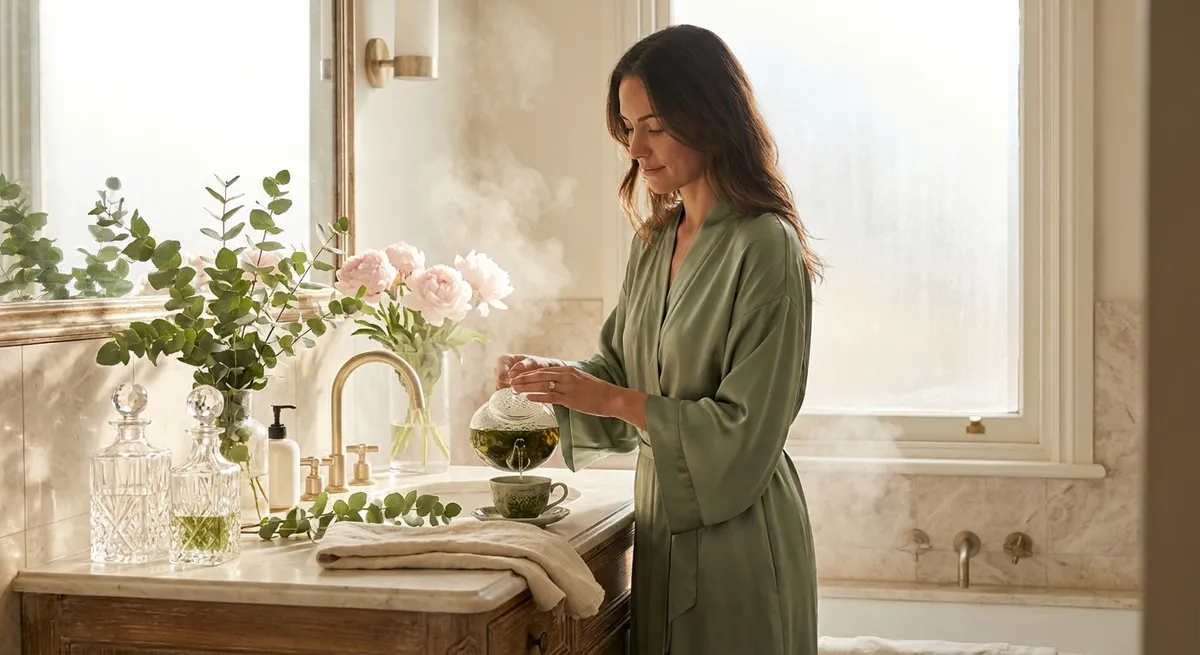
In a world that celebrates acceleration, cultivating a composed mind has become a quiet form of luxury. Natural remedies—when chosen with discernment and used with intention—offer more than “quick fixes.” They create a refined ecosystem around your nervous system: a way of living that is both biologically supportive and aesthetically pleasing. This is not about rustic folk cures or unexamined trends, but about curated, evidence-informed practices that feel as considered as a well-edited wardrobe. What follows is an elevated exploration of natural mental support, with five exclusive insights designed for those who regard their inner world as something to be artfully, not hastily, tended.
The New Lexicon of Calm: Rethinking “Natural Remedies”
“Natural” is not a synonym for simplistic. At its best, it suggests alignment—of body chemistry, environment, and ritual. Contemporary research on botanicals and lifestyle interventions offers a far more nuanced landscape than the vague promises often seen on supplement labels. Adaptogens, nervine herbs, and aroma-therapeutic oils are increasingly studied for their effects on cortisol, heart rate variability, and sleep quality, giving us a vocabulary that is both poetic and precise. Yet the real sophistication lies in how these tools are layered: timing a soothing tea with a dusk routine, pairing scent with a brief breath practice, or matching a specific extract to your personal stress signature. The modern connoisseur of calm is not chasing a miracle plant; they are designing a coherent, repeatable experience of nervous system ease.
Insight 1: The “Micro-Dose” Ritual – Understated Herbal Support
Many people think of herbal remedies in terms of bold doses and dramatic effects. There is a quieter, more elegant alternative: the micro-dose ritual. Instead of taking a large amount of a calming herb once a day, you introduce minimal, steady amounts at key inflection points—upon waking, before a demanding meeting, at late afternoon, and as evening settles. Mild nervines such as lemon balm, chamomile, and linden can be infused into lightly brewed teas or sophisticated non-alcoholic aperitifs, supporting the parasympathetic nervous system without sedation.
This approach respects that your nervous system does not operate in extremes; it shifts moment by moment. Strategically sipping 3–4 small, beautifully presented cups of herbal infusion throughout the day creates a sense of continuity rather than crisis management. It also allows for sensory refinement: choosing fine glassware, noticing the aroma, and linking each sip with a single slow breath. Over time, this repeated pairing becomes a cue for calm in the brain—conditioning that does not rely on willpower, but on carefully orchestrated consistency.
Insight 2: The Circadian Palette – Using Light and Plants in Concert
One of the most understated natural remedies for mental ease is the choreography of light. Your circadian rhythm dictates hormone release, mood, and cognitive sharpness, and it responds directly to the light you absorb, especially in the first and last 90 minutes of your day. Thoughtfully integrating plants into this light environment creates a “circadian palette”: you are not just living with greenery, you are arranging a visual and biological ecosystem that signals safety to your nervous system.
Morning exposure to natural light—preferably near a window, beside a tall leafy plant—can help anchor your internal clock, enhancing alertness and stabilizing mood. Evening, by contrast, calls for a softened visual field: indirect lamps, warm-toned bulbs, and shadowed corners framed by plants with generous leaves. This gentle, organic silhouette tells the brain that activity is tapering, encouraging the body to produce melatonin. The remedy, then, is not a pill, but the design of your visual world: a curated, plant-framed light environment that supports both aesthetic satisfaction and biochemical balance.
Insight 3: Aromatic Pairing – Fragrance as a Precision Instrument
Scent is often treated as an accessory to wellness, but neurologically, it is a direct line to memory and emotion. Essential oils like lavender, bergamot, and frankincense have been studied for their impact on anxiety and sleep, but their true power emerges when used with editorial restraint and exact pairing. Rather than diffusing multiple oils all day, choose one signature scent for each mental state you wish to cultivate—clarity, grounding, restoration—and reserve them exclusively for that context.
For example, you might assign a high-quality lavender or lavender-bergamot blend solely to your pre-sleep routine, used in a ceramic diffuser or on linen. During focused work, a crisp, herbaceous note—such as rosemary or peppermint—can become your clarity cue. Over time, your brain begins to associate each distinct aromatic profile with the desired mental state, shortening the time needed to “drop into” that mode. Crucially, keep the dosage minimal and the sourcing impeccable; a refined fragrance presence feels like an elegant whisper, not a perfumed announcement.
Insight 4: Nervous System Textures – Using Tactile Details as Therapy
Most discussions of natural remedies focus on what you consume or inhale. Yet your nervous system is also in continual dialogue with texture. The fabrics you wear, the surfaces under your palms, even the weight of a blanket can alter your sense of safety and soothe or stimulate your body. A considered tactile environment becomes a non-verbal remedy, continuously shaping your baseline level of tension.
Weighted blankets, for instance, have been shown to reduce anxiety in some individuals, likely by mimicking deep pressure touch associated with security. Beyond that, the cool glide of linen sheets, the softness of brushed cotton loungewear, or the smooth grain of a wooden desk can serve as subtle regulatory anchors throughout your day. When you feel your mental state beginning to fray, deliberately reaching for a familiar, comforting texture—a cashmere throw, a polished worry stone, a ceramic mug—creates a micro-interruption in the stress response. The elegance lies in curation: choosing fewer, higher-quality tactile elements that you experience repeatedly enough to become somatic signatures of calm.
Insight 5: Botanical Intervals – Intelligent Use of Adaptogens
Adaptogens are frequently discussed in sweeping, almost mythical terms, but a more refined approach treats them as seasonal and situational allies. Herbs like ashwagandha, rhodiola, and holy basil may help modulate stress responses and fatigue, yet they are not meant to be taken indiscriminately or indefinitely. The elevated strategy is to use them in intervals—4 to 8-week phases—aligned with specific demands in your life: a major project, a transition period, or a recovery window from prolonged strain.
Ashwagandha, for example, may be more appropriate in the evening for individuals needing support with sleep and overall stress load, whereas rhodiola can be energizing and better suited to earlier hours in those without pronounced anxiety. Consulting a knowledgeable clinician ensures compatibility with medications and underlying conditions. By treating adaptogens as you might a bespoke capsule wardrobe—selected deliberately, worn at the right time, and rotated—you avoid the dulling effect of constant use and maintain a sense of ritual gravitas. Each interval becomes a conscious chapter in your mental wellness narrative, rather than background supplementation you forget to notice.
The Art of Restraint: Editing Your Natural Wellness Rituals
In an era of endless options, true sophistication lies in editing. A dozen overlapping remedies, taken chaotically, erode both efficacy and pleasure. A lean, well-chosen suite of interventions—one or two botanical supports, a signature evening scent, a curated light-and-plant environment, and tactile anchors—can deliver far more impact with far less noise. The artistry is not in how much you add, but in how precisely you match each element to a specific purpose, time of day, and sensory experience.
Think of your natural remedies as you would a thoughtfully designed interior: every object has a reason to exist, a place to live, and a mood it reliably evokes. When you move through such a space, your nervous system recognizes coherence; it starts to relax, not because you forced it to, but because you consistently signaled safety, comfort, and gentle predictability. In that sense, mental wellness becomes not a project to finish, but a cultivated atmosphere—subtle, intentional, and quietly luxurious.
Conclusion
Natural remedies for mental wellness are most powerful when they transcend trend and become tailored, sensory-rich rituals. Micro-dosed herbal support, circadian-conscious light and plant design, precise aromatic pairing, intentional textures, and intelligently cycled adaptogens all represent a shift from generic “self-care” to a more polished, personal ecology of calm. This is wellness as quiet craftsmanship: each choice understated, each detail doing its part, all of it converging into a mind that feels both clear and deeply at ease. In that refined stillness, calm is no longer an escape from life—it becomes the backdrop against which your most discerning decisions are made.
Sources
- National Center for Complementary and Integrative Health (NCCIH) – Herbs at a Glance - Evidence-based overviews of commonly used herbs, including safety and potential benefits
- National Institutes of Health – Adaptogens: Tonic Herbs for Fatigue and Stress - Research review on how adaptogens may influence stress responses and fatigue
- Sleep Foundation – Light and Sleep - Explains how light exposure affects circadian rhythm, mood, and sleep quality
- Cleveland Clinic – Aromatherapy: Do Essential Oils Really Work? - Clinical perspective on essential oils, their uses, and limitations
- Journal of Sleep Medicine & Disorders – The Effect of Weighted Blankets on Insomnia and Anxiety - Study exploring how deep-pressure stimulation from weighted blankets may reduce anxiety and improve sleep
Key Takeaway
The most important thing to remember from this article is that this information can change how you think about Natural Remedies.