There is a quiet sophistication in tending to the mind with the same discernment one reserves for a well‑curated home or a tailored wardrobe. Natural remedies, when chosen with care and intention, can create an atmosphere of composure that feels both luxurious and deeply humane. This is not about quick fixes or wellness fads; it is about cultivating a refined relationship with the nervous system—one that honors slowness, subtlety, and evidence‑informed ritual.
Below, you’ll find five exclusive, elevated insights into natural supports for mental ease—each designed for those who value nuance, quality, and enduring calm over spectacle.
The Botanical Palette: Curating a Refined Calm
Natural remedies are most powerful when treated not as stand‑alone miracles, but as part of a considered “palette” that complements your lifestyle, personality, and existing supports.
Herbal allies such as chamomile, lavender, passionflower, lemon balm, and ashwagandha have been studied for their effects on anxiety and stress, yet their real elegance lies in how you assemble and experience them. A bespoke herbal tea blend in fine glassware at dusk, a lavender hydrosol lightly misted on linen, or a carefully sourced ashwagandha tincture taken with intention can shift the nervous system from agitation to receptivity.
This shift is subtle, but cumulative. Over time, the consistent, low‑intensity whisper of botanical support may help regulate cortisol levels, support sleep quality, and foster a more even emotional tone. The refined approach is not to chase intensity, but to design a gentle, sustained background of calm—like a soft instrumental piece playing just beneath the noise of the day.
The Ritual of Preparation: Transforming Remedies into Experiences
What distinguishes a premium wellness practice from a merely functional one is often the way in which it is done. The process of preparing a natural remedy can become a sophisticated ritual that signals safety and relaxation to the brain.
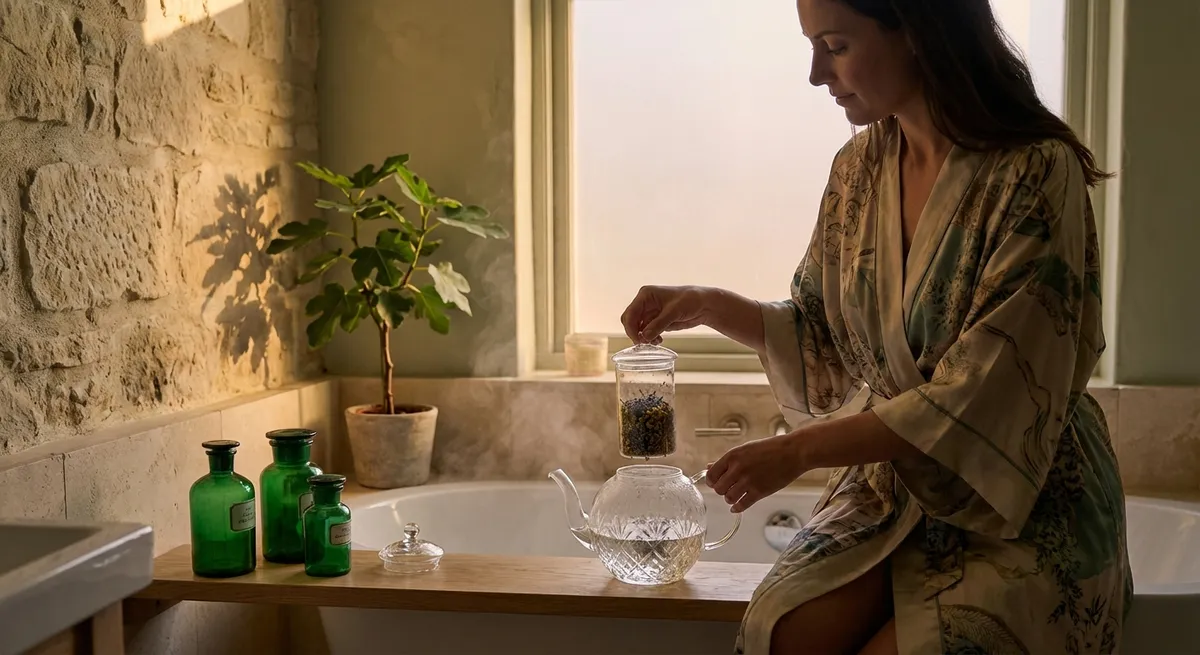
When you heat water slowly for an herbal infusion, choose a favorite cup, measure fragrant leaves with deliberation, and sit while it steeps, you are engaging multiple senses—touch, scent, sound, sight. This full‑sensory participation is not decorative; it is therapeutic. Research on mindfulness and sensory grounding suggests that the act of attentive preparation can reduce perceived stress and anxiety, sometimes as meaningfully as the remedy itself.
Consider establishing distinct micro‑rituals: an evening wind‑down tea served on a dedicated tray, a morning adaptogen tonic in a particular glass, or a Sunday night bath infused with magnesium salts and essential oils reserved only for that time. The brain begins to associate these cues with restoration. In doing so, your remedies evolve from “things you take” into experiences that elegantly bracket your day with calm.
Exclusive Insight 1: The more consistent the aesthetic and sensory language of your ritual (the same cup, the same scent, the same lighting), the faster your nervous system learns to relax on cue.
Quietly Potent: The Understated Power of Scent
Scent is one of the most discreet yet powerful natural tools for mental wellness. Unlike supplements, which must pass through digestion and metabolism, aromatic compounds engage the limbic system—the brain’s emotional center—almost immediately via the olfactory pathways.
Essential oils like bergamot, lavender, neroli, and frankincense have been studied for their anxiolytic and mood‑supporting potential. Yet their sophistication emerges when used with restraint: a single drop on the inside of the wrist, a minimal diffuser in a reading nook, or a scented sachet in a workspace drawer. Overuse can feel cloying; precise, minimal use feels elevated and intentional.
This is the paradox of premium calm: the impression should be barely there, but distinctly supportive. A refined aromatic practice allows you to adjust your mental climate discreetly—during a meeting, on a flight, or before sleep—without announcing to the world that you are “doing a stress intervention.”
Exclusive Insight 2: Pair one specific scent with one specific mental state (e.g., neroli for post‑work decompression). This one‑to‑one association can, over time, become a personalized, aromatic “shortcut” to that state.
Nervous System Literacy: Matching Remedies to Your Stress Signature
Not all stress is created equal, and not all remedies are appropriate for every nervous system. A sophisticated approach begins with understanding your personal “stress signature”: how your body and mind typically respond to overwhelm.
If your stress presents as agitation—racing thoughts, restlessness, irritability—you may benefit from remedies traditionally considered calming and grounding, such as lemon balm, passionflower, or L‑theanine from green tea. If your stress appears as mental fog, fatigue, or low motivation, gently supportive adaptogens like rhodiola or American ginseng (used cautiously and under guidance) may be more appropriate.
Equally important is timing. Some herbs are better as evening allies, others as daytime supports. Some work best in low doses taken consistently; others may be more situational. Consulting with a qualified practitioner—such as an integrative physician or clinical herbalist—elevates your routine from experimental to tailored.
Exclusive Insight 3: A premium remedy practice begins with assessment, not purchase. Keeping a brief two‑week “stress and support” journal—tracking mood, sleep, energy, and any natural remedies used—can reveal clear patterns and guide far more targeted, effective choices.
Subtle Stacking: Layering Natural Supports with Precision
One of the most refined strategies for natural mental wellness is “subtle stacking”: layering low‑dose, low‑intensity supports that complement one another rather than relying on a single, high‑impact product.
For example, consider a day built around graceful layers: a morning green tea for L‑theanine and gentle alertness, mid‑day exposure to natural light, a brief afternoon walk for endorphins, and an evening magnesium‑rich soak with soft music. None of these interventions is dramatic alone, but together they create an environment in which your nervous system can remain more stable and resilient.
This approach mirrors sophisticated design: harmony over statement, coherence over excess. It also has a practical benefit—by introducing one element at a time and observing its effects, you avoid overwhelming your system and can better understand what truly supports you.
Exclusive Insight 4: Aim to adjust your overall “stress ecosystem” by 5–10% in several places rather than 50% in one. Small, coordinated refinements across sleep, light, nutrients, movement, and botanicals often yield more sustainable calm than any single remedy promising drastic change.
Discretion and Discernment: When Natural Needs the Clinical
A truly elevated wellness practice is defined not only by what you add, but by what you recognize as beyond the scope of self‑care. There is a certain quiet strength—and luxury—in having access to professional support when needed.
Persistent anxiety, depression, insomnia, or cognitive changes warrant clinical attention. Natural remedies can be exquisite adjuncts to therapy, medication, or medical care, but they should not be expected to replace them in moderate to severe cases. The refined approach is integrative: using herbal and lifestyle supports to enrich, not substitute, evidence‑based treatment.
This discernment also applies to product quality. Sourcing from reputable brands that conduct third‑party testing, disclose exact dosages, and provide clear safety information is not simply a matter of taste—it is a matter of efficacy and safety. Premium calm, in this sense, is inseparable from premium standards.
Exclusive Insight 5: Consider creating a “personal wellness board”: a small, trusted circle that may include a primary care physician, therapist, and an integrative or functional practitioner. Using natural remedies within this framework transforms your routine from private experimentation into a curated, collaborative approach to mental stability.
Conclusion
Cultivating mental ease with natural remedies is less about discovering a single, miraculous plant and more about composing a life that feels gentle, deliberate, and deeply attuned to your nervous system. When approached with elegance—through sensory rituals, tailored choices, subtle stacking, and informed discernment—natural supports become more than supplements. They become a language of care you speak to yourself, day after day.
In that language, every measured cup of tea, every drop of oil, every magnesium‑rich bath is a quiet affirmation: calm is not an accident. It is something you are allowed to curate with intention, intelligence, and grace.
Sources
- [National Center for Complementary and Integrative Health (NCCIH) – Anxiety and Complementary Health Approaches](https://www.nccih.nih.gov/health/providers/digest/anxiety-science) - Overview of evidence for herbal and mind‑body approaches in anxiety management
- [Mayo Clinic – Herbal supplements and anxiety: A closer look](https://www.mayoclinic.org/diseases-conditions/generalized-anxiety-disorder/in-depth/anxiety-herbal-supplements/art-20046440) - Discusses common herbal remedies (e.g., chamomile, lavender, kava) and their safety considerations
- [Cleveland Clinic – Aromatherapy: Do Essential Oils Really Work?](https://health.clevelandclinic.org/essential-oils-101-do-they-work-how-do-you-use-them/) - Reviews mechanisms, uses, and cautions for essential oils in mental wellness
- [Harvard Health Publishing – Can L-theanine help you relax?](https://www.health.harvard.edu/mind-and-mood/can-l-theanine-help-you-relax) - Explores the evidence behind L‑theanine, green tea, and their effects on stress and focus
- [MedlinePlus – Ashwagandha](https://www.medlineplus.gov/druginfo/natural/953.html) - Provides research summary, dosage considerations, and safety profile for ashwagandha as a stress‑related supplement
Key Takeaway
The most important thing to remember from this article is that this information can change how you think about Natural Remedies.