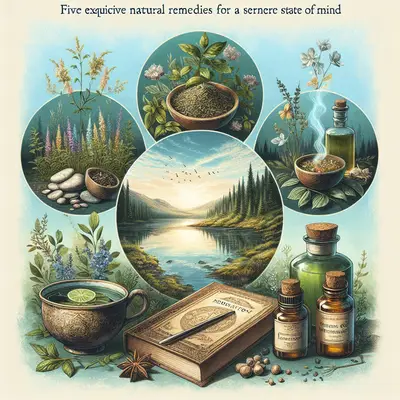
The modern mind is overloaded, yet the most refined solutions are often the quietest. Natural remedies, when approached with discernment rather than excess, can become a kind of private choreography—subtle, precise, and deeply effective. This is not about chasing instant calm, but about cultivating a composed inner climate through thoughtful, evidence-informed rituals. Below, we explore a suite of natural approaches, each elevated by one guiding principle: quality over quantity, intention over impulse.
The Art of “Micro-Dosing” Calm: Understated Rituals, Profound Effects
Natural remedies for mental ease are frequently misunderstood as grand interventions—a new supplement, a radical cleanse, an elaborate routine. In reality, the nervous system often responds best to gentle, consistent micro-adjustments. Think of these as micro-doses of calm, woven quietly through the day rather than administered in dramatic, one-off bursts.
Instead of an aggressive stack of botanicals, a single, high‑quality calming tea blend—chamomile, lemon balm, or lavender—taken at the same time each evening, can communicate safety and predictability to the body. A two‑minute inhalation of a grounding essential oil (such as bergamot or sandalwood) before stepping into a stressful meeting can act as a discreet anchor. Even light exposure becomes a natural remedy when consciously curated: ten minutes of early-morning daylight at the same window, every day, can support circadian rhythm alignment and, by extension, mood stability. These are not grand gestures; they are small, impeccably chosen ones that add up to a nervous system that feels perpetually less threatened, and thus more refined in its responses.
Nervous System Pairings: Matching Botanicals to Your Unique Stress Pattern
One of the quiet luxuries of modern herbalism is the ability to choose remedies that reflect your specific stress signature. Rather than selecting herbs at random or based on trend, a more sophisticated approach pairs nervous system patterns with particular botanicals.
For those who experience a racing, overactive mind—difficulty “switching off,” especially at night—gentle sedative herbs such as valerian, passionflower, or hops may be appropriate, used sparingly and ideally under professional guidance. For the chronically depleted, where stress presents as low motivation, brain fog, and a flattened emotional range, adaptogens such as ashwagandha, rhodiola, or holy basil can be supportive, helping modulate stress hormones over time rather than blunt them.
Anxious tension that settles in the body—tight jaw, clenched shoulders, shallow breathing—often responds well to nervines like lemon balm, skullcap, or linden, which soothe without heavy drowsiness. The key insight is selectivity: one or two herbs, chosen with precision and monitored for effect, are far more powerful than an indiscriminate cocktail. This is less about “more” and more about botanical curation that mirrors the nuance of your own emotional landscape.
Sensory Architecture: Designing a Calming Atmosphere as a Natural Remedy
Environment, when intentionally crafted, is itself a natural remedy. The sensory information you absorb—light, sound, scent, texture—constantly informs your nervous system’s sense of safety or threat. A sophisticated mental wellness practice involves designing what might be called “sensory architecture”: subtle adjustments that turn your home or workspace into a supportive, calming ally.
Warm, low, indirect lighting in the evening encourages melatonin production and signals to the body that it is safe to soften. A dedicated “quiet corner” with a single chair, a soft throw, and a small side table for a calming tea or tincture transforms restoration from an abstract idea into a physical destination. Curated sound—whether a specific classical playlist, nature sounds, or gentle ambient music—can act like a natural nervous system metronome, slowing internal tempo.
Scent becomes both ritual and remedy: a drop of high‑quality lavender or neroli essential oil on a tissue placed near your workspace, or a subtle diffuser running at low intensity in the early evening, can gently guide the mind away from agitation. None of these elements scream “therapy,” yet together they create a private sanctuary that gradually reconditions your nervous system to associate your space with composure rather than urgency.
The Luxury of Slowness: Reclaiming Food and Breath as Subtle Medicine
In the pursuit of calm, people often look outward—to supplements, to exotic herbs—before mastering two of the most accessible natural remedies: breath and nourishment, practiced with intention. What transforms them from routine into remedy is tempo.
Breathwork need not be dramatic or performative. A simple pattern—such as inhaling for four counts, exhaling for six—practiced discreetly throughout the day can gently coax the autonomic nervous system toward parasympathetic dominance. The extended exhale, in particular, is a biological cue of safety. Incorporating this pattern for just a few minutes before meals, during transitions, or prior to bed subtly lowers the background volume of stress.
Food, similarly, shifts from fuel to therapy when consumed slowly and with attention. Magnesium‑rich foods such as leafy greens, pumpkin seeds, nuts, and whole grains, along with omega‑3‑rich fish or plant sources like walnuts and flaxseeds, are continuously associated with mood support. When these are eaten in an unhurried, screen‑free setting, digestion improves, blood sugar stabilizes, and the body quietly registers abundance instead of scarcity. This combination of deliberate breath and deliberate nourishment creates an understated yet powerful sense of physiological sufficiency—an antidote to the chronic “not enough” that underlies much modern anxiety.
Personalized Boundaries as the Ultimate Natural Tonic
Among all remedies, one of the most overlooked—and perhaps the most luxurious—is the boundary. No tincture can compensate for a life lived in constant overextension. Thoughtfully setting and protecting energetic boundaries is, in many ways, the most potent natural nervous system intervention available.
This might look like instituting a digital sunset: devices off at a certain hour, replaced with analog, tactile activities such as reading, journaling, or gentle stretching. It could mean consciously reducing time with individuals whose presence leaves you drained and increasing time with those who evoke ease and authenticity. Even reconfiguring your calendar—placing buffer spaces between demanding commitments or designating one “rest‑protected” evening per week—acts as a structural remedy against burnout.
As these boundaries become non‑negotiable, stress stops being a continuous background state and instead becomes episodic—something that arises and resolves, rather than lingers and accumulates. Over time, this boundary-based approach allows all other natural remedies—herbs, breath, sensory rituals—to work more efficiently, because they are supporting a nervous system no longer under constant siege. In this sense, boundaries are not just psychological hygiene; they are a sophisticated, structural form of natural medicine.
Conclusion
Refined mental wellness is less about discovering a rare, miraculous remedy and more about composing a quiet, coherent system of small, intentional practices. A single thoughtfully chosen botanical, an environment orchestrated for calm, a breathing pattern that subtly shifts your physiology, nutrient‑dense meals eaten without haste, and boundaries that honor your limits—all of these are natural remedies in the truest sense.
When approached with discernment instead of desperation, these practices transform mental ease from something you chase into something you quietly embody. The result is not theatrical serenity, but a grounded, durable composure that feels both understated and profoundly luxurious.
Sources
- National Center for Complementary and Integrative Health – Herbs and Supplements - Evidence-based overviews of common botanicals such as valerian, chamomile, and lemon balm
- Harvard T.H. Chan School of Public Health – Fats and Health - Explains the role of omega-3 fatty acids and overall dietary patterns in brain and mental health
- National Institute of Mental Health – Caring for Your Mental Health - Outlines foundational practices for mental wellness, including stress management and lifestyle factors
- Cleveland Clinic – Breathing Exercises for Stress - Describes simple breathing techniques that support the nervous system and promote calm
- Sleep Foundation – Light and Sleep - Details how light exposure and evening environment influence circadian rhythms and overall mood
Key Takeaway
The most important thing to remember from this article is that this information can change how you think about Natural Remedies.