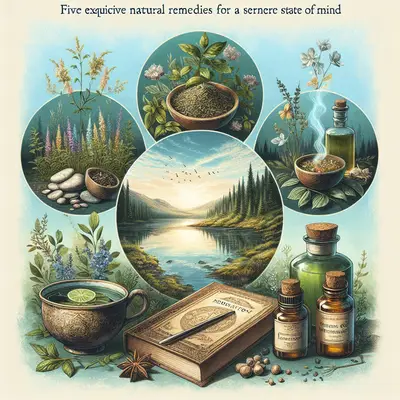
Modern life rewards acceleration, yet the mind restores itself only in conditions of deliberate slowness. Natural remedies, when chosen with discernment, offer more than symptom relief—they invite a refined way of living, where calm is curated as carefully as one’s wardrobe, home, or schedule. This is not about folk cures or wishful thinking, but about well-researched plant allies and sensory rituals that support a composed, attentive mind.
Below are five exclusive, elevated insights into natural remedies for mental wellness—less about quick fixes, more about cultivating a quietly sophisticated nervous system.
Reframing “Natural Remedies” as a Daily Nervous System Wardrobe
Most people approach natural remedies reactively—reaching for a calming tea only when overwhelmed. A more refined approach treats these tools as a “nervous system wardrobe”: specific pieces selected for context, intention, and subtle effect.
Instead of one all-purpose supplement, consider a curated rotation. A floral, low-caffeine infusion for late afternoon mental softening; a grounding adaptogen in the morning for steadier focus; a scent-based ritual reserved exclusively for transitions from work to rest. This rotation keeps the nervous system responsive yet not overstimulated, much like alternating between structured and relaxed tailoring depending on the day.
In this paradigm, each remedy has a role:
- Daytime clarity allies (such as green tea’s L-theanine or gentle adaptogens) support alert composure.
- Evening softeners (such as chamomile or lemon balm) usher the mind into a slower rhythm.
- Crisis tools (such as lavender essential oil or paced breathing with a familiar scent) become your “emotional formalwear” for high-pressure moments.
The sophistication lies not in owning many remedies, but in knowing exactly when and how to deploy a select few.
Insight 1: The Subtle Precision of Adaptogens for Mental Poise
Adaptogens are often marketed as cure-alls. A more nuanced, premium approach recognizes that each has a distinctive psychological “signature” and must be matched to the individual, not the trend.
- Ashwagandha (Withania somnifera) tends to suit the chronically overextended—those whose stress shows up as fatigue, irritability, or restless sleep. Its evidence base includes reductions in perceived stress and improvements in sleep quality, but its true luxury is in the way it can soften that constant inner “hum” of urgency.
- Rhodiola rosea has a brisker energy—supporting mental endurance, stress resilience, and cognitive function, particularly under pressure. It can feel like a well-tailored suit for the brain: structured, focusing, but not harsh.
- Holy basil (Tulsi) brings a more contemplative steadiness, often described as a lift in mood and clarity without stimulation, ideal for those whose stress shows up as low mood and mental fog.
The elegant practice is to introduce only one adaptogen at a time, at a modest dose, for at least two weeks. This allows you to discern its specific mental texture—whether it helps you feel quietly energized, deeply at ease, or gently uplifted. Think of it as a bespoke fitting for your nervous system.
Always consult a qualified practitioner if you are pregnant, breastfeeding, taking medications (especially for thyroid, blood pressure, or mood), or have medical conditions. A sophisticated wellness routine respects interaction risks as much as benefits.
Insight 2: The Quiet Power of Ritual Pairing—Botanicals Linked to Time and Place
The mind is profoundly shaped by association. One of the most underused high-level strategies in natural mental wellness is ritual pairing: consistently linking a specific natural remedy to a particular time, place, or mental state you wish to cultivate.
Consider:
- A single, signature evening infusion—for example, chamomile with a hint of lemon balm—taken only in the final hour before bed, in the same chair, under the same warm light. Over time, the brain learns that this particular flavor and setting mean “we are done for the day.”
- An “arrival ritual” after work—perhaps a few drops of a lavender-based tincture in water, followed by three minutes of unhurried breathing near an open window. The pairing of aroma, taste, and physical location sends a consistent signal of transition from performance to restoration.
- A focused-mind scent—such as rosemary or peppermint essential oil, diffused only during deep work sessions. Eventually, simply smelling this blend begins to nudge the mind into clarity mode.
This approach elevates simple herbs into neurosensory anchors. The plant itself matters; the predictable repetition matters just as much. Over time, the nervous system begins to anticipate calm or focus before the herbs fully take effect—your internal luxury, built through quiet consistency.
Insight 3: Aromatic Architecture—Designing a Calm-Forward Home Atmosphere
Natural remedies for mental ease are not limited to what you ingest. The air you inhabit is a powerful, often overlooked medium. A sophisticated home does not simply smell “nice”; its aromatic profile is intentionally curated to support distinct mental states in different spaces.
Strategic examples:
- Entryway calm: A subtle hint of bergamot or neroli can soften the transition from the outside world into the privacy of your home, signaling psychological safety and decompression.
- Living room restoration: A blend featuring lavender, cedarwood, or frankincense diffused at low intensity in the evening can gently reduce mental agitation without inducing drowsiness.
- Workspace clarity: Crisp aromatics such as rosemary or a hint of peppermint can enhance perceived alertness and task engagement.
- Bedroom serenity: Here, restraint is key—very minimal or no scent, or a barely-there note of Roman chamomile or sandalwood, reserved for nights when the nervous system refuses to unwind.
The premium detail is dosage and discernment. Overly strong fragrances, constant diffusion, or synthetic-heavy blends can become stimulating or even irritating. Opt for high-quality, well-sourced essential oils used intermittently—10–20 minutes of diffusion followed by a pause—rather than a nonstop scent backdrop.
Always dilute essential oils properly and avoid direct skin application without guidance. If you share your space, ensure the aromatic choices respect others’ sensitivities, pets, and children.
Insight 4: Tension as a Messenger—Using Topical Botanicals for “Micro-Interventions”
Mental strain often first appears as micro-tension—a tightened jaw, shallow breathing, raised shoulders, or a heavy brow. Instead of ignoring these physical signals, an elevated natural approach treats them as invitations for targeted, topical intervention.
Thoughtful practices include:
- Herbal balms for the jaw, temples, and neck: Products with arnica, St. John’s wort (for some people), or soothing aromatic oils like lavender and marjoram can be gently massaged into areas of habitual tension. The act of touch, combined with subtle scent, becomes a double remedy—neurological and mechanical.
- Warming compresses infused with chamomile or lavender: A cloth soaked in a warm herbal infusion and placed over the neck or shoulders can soften muscle guarding while quietly signaling safety to the nervous system.
- Hand rituals with a botanical cream: Slowly massaging the hands with a lightly scented cream (think frankincense, rose, or neroli at low concentration) can serve as a discreet stress reset during the day, especially for those in high-visibility roles who need quiet interventions, not dramatic withdrawals.
Rather than waiting for a full stress collapse, you attend to these small physical whispers early and often. Over time, your body begins to learn: “when tension arises, it is met with care, not force.” That expectation alone can gently reduce baseline anxiety.
Be cautious with any herbs that may cause skin sensitivity and always patch-test new topical products. For conditions like chronic pain or neurological disorders, coordinate with a healthcare professional.
Insight 5: Sleep as the Ultimate Luxury—Layering Natural Supports with Precision
Rest is the most understated luxury in modern life—and the most essential for mental health. Instead of relying on a single “sleep tea” or supplement, a sophisticated strategy is layering: light, complementary supports applied at different stages of the evening.
A refined sleep-support sequence might look like:
- Early evening (2–3 hours before bed):
- Pre-bed (30–60 minutes before):
- At the threshold of sleep:
A gentle, non-sedating infusion (such as lemon balm or passionflower) to signal the shift into a slower tempo while you still remain mentally clear enough for conversation or reading.
A second, slightly deeper intervention if needed—perhaps a low dose of magnesium (if appropriate for you) or a slightly more relaxing tea blend with chamomile and a modest amount of valerian root (noting that valerian can paradoxically stimulate some individuals).
A minimalist sensory cue—dimmed lights, a cool, quiet room, perhaps a brief inhalation of a familiar calming scent used only at bedtime. The emphasis here is on removing stimulation as much as adding remedies.
Instead of sedating yourself heavily one or two nights a week, the focus is on consistently lowering your nervous system’s “volume knob” most evenings. Natural remedies function best in this context: as gentle amplifiers of habits that already respect circadian rhythms—light exposure, meal timing, and digital boundaries.
Again, prior medical consultation is essential if you take prescription sleep medications, antidepressants, anti-anxiety medications, or have conditions like sleep apnea, heart disease, or pregnancy. The premium mindset is integrative, not impulsive.
Conclusion
Natural remedies, approached with discernment and elegance, become more than herbal curiosities. They form a quiet architecture around your life—shaping the air you breathe, the rituals that bookend your days, and the micro-moments in which you choose softness over speed.
This is mental wellness as a refined practice: knowing which adaptogen supports your particular nervous system, which scent means “you may rest now,” and which evening infusion gently tells your mind that nothing more is required of it today.
When calm becomes curated with the same care you devote to your environment, work, and relationships, natural remedies stop being accessories and start becoming an integral part of a composed, elevated inner life.
Sources
- National Center for Complementary and Integrative Health (NCCIH) – Herbs at a Glance - Evidence-based overviews of commonly used herbs such as chamomile, lavender, and valerian, including safety considerations
- NCCIH – Adaptogens: What You Need To Know - Explains what adaptogens are, how they are studied, and current evidence for stress and mental wellness
- Mayo Clinic – Stress Management - Outlines foundational principles of stress management that pair well with natural remedy strategies
- Johns Hopkins Medicine – Sleep and Mental Health - Discusses the relationship between sleep, brain function, and mental health, supporting the layered approach to evening routines
- Cleveland Clinic – Aromatherapy: Uses, Benefits & Side Effects - Reviews the use of essential oils for relaxation, mood, and stress reduction, including safety guidance
Key Takeaway
The most important thing to remember from this article is that this information can change how you think about Natural Remedies.