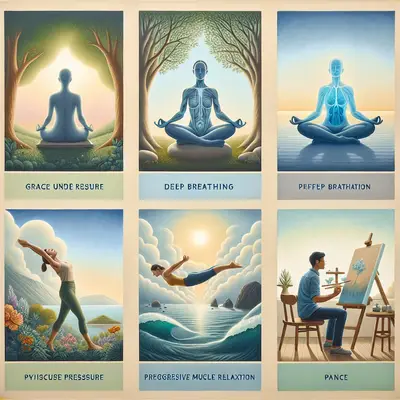
Stress need not be loud to be damaging. It can slip quietly into a beautifully curated life: inbox tidy, calendar color‑coded, wardrobe immaculate—yet the nervous system is quietly overclocked. At Calm Mind Remedies, we treat stress relief not as escape, but as an artful recalibration of a life already rich in intention. This is stress management for those who value nuance over noise, subtle shifts over drastic overhauls.
Below are five exclusive, elevated insights designed for discerning minds seeking composure that feels both cultivated and deeply authentic.
1. Rehearsed Recovery: Treat Calm as a Daily Performance You Train For
Most people rehearse only for pressure: the presentation, the negotiation, the crucial meeting. The refined approach is to rehearse for recovery with the same precision.
Instead of hoping calm appears when you need it, you deliberately train your body to return there on command. This means building micro‑rituals of decompression into your day, not just at the end of it. For example, design a 90‑second “recovery script” for transitional moments: after closing your laptop, stepping out of a meeting, or returning home.
Your script might include:
- One slow exhale to a count of eight
- A brief stretch that opens the chest and shoulders
- A quiet sentence you repeat internally: “Nothing is urgent in this breath.”
Neuroscience suggests that repeatedly pairing certain cues (like closing your laptop) with a calm practice helps your nervous system associate that moment with safety, not tension. Over time, these rehearsed recoveries function like a private backstage—always available, no reservation required.
2. Curated Sensory Minimalism: Editing Your Inputs, Not Just Your Schedule
Many stress strategies fixate on time management. A more elegant lens is input management. Your nervous system is not overwhelmed by hours alone, but by the density and intensity of sensory and informational input.
Begin with a “sensory audit” of your day:
- Morning: How many notifications, sounds, or visual demands greet you within 30 minutes of waking?
- Workday: How often are you exposed to cluttered screens, harsh lighting, or overlapping tasks?
- Evening: Are you winding down with genuine quiet, or just swapping work emails for streaming and scrolling?
The refined approach is to curate your inputs with the selectivity you’d bring to art on your walls or wine in your cellar. This might include:
- A deliberately quiet first 20 minutes upon waking—no headlines, no feeds
- Neutral lighting and a calm desktop aesthetic to reduce visual agitation
- A strict cap on “micro‑checking” apps that fragment attention and heighten background stress
By reducing irrelevant input, you create a mental gallery with fewer, higher‑quality pieces. The result is not austerity, but a nervous system that finally has room to exhale.
3. Precision Rest: Elegant Pauses That Actually Repair the Nervous System
Not all rest is restorative. Scrolling in bed or half‑watching a show while answering messages qualifies as “time off” on your calendar, but your nervous system registers ongoing work. Precision rest is rest that measurably shifts you from a stress state toward regulation.
Think of precision rest as therapeutic micro‑luxuries: simple, evidence-informed practices done with meticulous quality rather than quantity. Examples include:
- NSDR (Non‑Sleep Deep Rest) modalities: guided body scans or yoga nidra that coax the brain into deeply restorative states
- Elevated stillness: reclining with eyes gently closed, no phone, for 7–10 minutes, focusing solely on the sensation of breathing or the weight of your body on the surface
- Calm craft: low‑stakes, rhythmic activities like slow brewing tea, polishing silver, arranging flowers, or hand‑writing a note
The key is full psychological permission: no multi‑tasking, no productivity guilt, no quiet negotiations about what you “should” be doing instead. In a culture that glorifies exhaustion, guilt‑free slowness becomes a quietly radical—and profoundly regulating—act.
4. Strategic Stress: Designing When You’re Willing to Be Under Pressure
Sustained high performance without thoughtful stress design leads to a life that feels perpetually urgent. A more cultivated strategy acknowledges that stress is sometimes chosen—then arranges it with discernment.
Instead of treating stress as something that “happens” to you, experiment with:
- Stress zoning: assigning specific portions of your week as “high‑output windows” and protecting the surrounding time as low‑demand recovery zones
- Intensity pairing: never scheduling two high‑stakes commitments back‑to‑back without a deliberate decompression pocket in between
- Expectation choreography: clearly communicating to colleagues or family when you are in a “focused pressure block” versus a “receptive, available” state
By designing where and when you will tolerate heightened pressure, you reclaim authorship over your nervous system. Stress becomes seasonal, not perpetual—like a well‑curated calendar of events rather than an endless open bar of obligations.
5. Nervous System Etiquette: How You Treat Your Body in Private
There is a quiet form of sophistication that has nothing to do with aesthetics and everything to do with how you speak to and care for yourself when no one is watching. Think of it as nervous system etiquette—the standard of courtesy you hold toward your own biology.
Refined nervous system etiquette might include:
- Respecting thresholds: not treating your body as an endless resource to be “pushed through,” but listening when tension, headaches, or irritability appear as early signals
- Choosing language that soothes rather than spikes: replacing “I’m drowning” or “This is a disaster” with “This is a heavy stretch, and I’m moving through it one decision at a time”
- Honoring biological basics without drama: prioritizing sleep, hydration, and nutrient‑dense meals as non‑negotiable, not as treats you earn after overwork
These gestures may seem modest, but they collectively communicate safety to your nervous system. Over time, stress recovery ceases to be a crisis project and becomes more like a quietly impeccable daily standard—no spectacle, just consistency.
Conclusion
Sophisticated stress relief is less about doing more and more about doing the right less. It is the art of removing the unnecessary pressure points, refining the remainder, and treating your nervous system as an asset to be exquisitely maintained, not endlessly exploited.
When you rehearse recovery, curate your inputs, practice precision rest, design your stress, and uphold nervous system etiquette, calm stops being an occasional retreat. It becomes the default setting from which you choose your life—with clarity, discernment, and a sense of inner luxury that no external chaos can easily disturb.
Sources
- American Psychological Association – Stress Effects on the Body – Overview of how stress impacts different body systems and why regulation matters
- National Institute of Mental Health – 5 Things You Should Know About Stress – Evidence-based explanations of stress, its risks, and basic management approaches
- Harvard Health Publishing – Relaxation Techniques: Breath Control Helps Quell Errant Stress Response – Details on how controlled breathing can support nervous system regulation
- Cleveland Clinic – Yoga Nidra for Sleep and Relaxation – Explanation of non-sleep deep rest practices like yoga nidra and their benefits
- Centers for Disease Control and Prevention – How Sleep Affects Your Health – Clinical perspective on sleep as a foundation for managing stress and overall well-being
Key Takeaway
The most important thing to remember from this article is that this information can change how you think about Stress Relief.