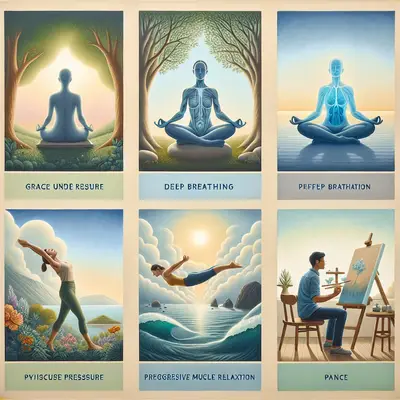
Stress, for the discerning mind, is rarely loud. It arrives as a subtle tightening of the day: a calendar that feels too full, a mind that refuses to dim, a nervous system quietly overclocked. True relief is not about escape; it is about cultivating an interior environment so considered, so well‑designed, that pressure meets poise instead of panic. This is stress relief as an art form—anchored in science, executed with elegance.
Below, you’ll find five exclusive, elevated insights into stress relief: not quick fixes, but refined practices that respect your intelligence, your time, and your standards.
The Precision Pause: Designing Micro-Intervals of Psychological Recovery
Modern stress rarely comes in dramatic waves; it accumulates in micro-tensions. Addressing it effectively means working at the same granular scale. The “precision pause” is a deliberate, miniature reset woven into the architecture of your day—60 to 120 seconds of intentional decompression that interrupts the automatic slide into overwhelm.
Unlike generic breaks, a precision pause is engineered. You define its beginning and end, its sensory contours, and its purpose. For example, you might pair a specific object (a certain pen, a particular glass, a single piece of jewelry) with a two-minute ritual: exhale fully, relax the jaw, lengthen the spine, soften the gaze, and ask a single question—What actually requires my energy in the next hour? This question acts as a filter, immediately reducing cognitive clutter.
Neuroscience supports the potency of short, deliberate pauses. Brief breaks support sustained attention and performance, particularly when we step away from task-related stimuli rather than simply switching to another screen. Over time, these curated intervals train your nervous system to recognize that stillness is available within a demanding day, not just on the other side of it.
Sensory Editing: Curating an Environment That Lowers Cortisol Quietly
Stress relief is often pursued through effort—more techniques, more practices, more doing. But one of the most efficient levers you can pull is environmental: editing what your senses are forced to process. This is not about minimalism for its own sake; it is about metabolic elegance. Every sensory input costs your brain energy. Excessive visual noise, harsh lighting, erratic soundscapes—all quietly raise the baseline of physiological stress.
Begin with visual density. Clear a single surface in your primary workspace so that, within your field of vision, at least one area communicates order. This serves as a visual exhale. Next, address light: cool, stark lighting may be productive but can increase physiological arousal. Introducing warmer, indirect light in the evening—desk lamps, wall sconces, or under-cabinet lighting—aligns more closely with your circadian rhythm and can support better sleep quality, an essential buffer against chronic stress.
Sound is often the most neglected. If silence is not possible, choose a consistent, non‑intrusive soundscape: high‑quality white or brown noise, soft instrumental music, or nature sounds. Research suggests that natural soundscapes (such as gently moving water or birdsong) can measurably reduce stress markers and improve mood. Sensory editing is not about dramatizing calm—it is about removing friction so your nervous system spends less energy defending itself from your surroundings.
The Discerning “No”: Boundaries as a Luxury of Self-Respect
For many high-functioning individuals, stress is not caused by a lack of capacity but by a lack of selectivity. The most refined form of stress relief is, in many cases, the most unglamorous: a well‑delivered, unapologetic “no.” Not defensive, not elaborate—simply clear. Boundaries can be understood as the architecture that protects your best attention, your deepest focus, and your capacity for genuine presence.
Instead of thinking of boundaries as restrictions, consider them as curation. A museum does not display every object it owns. It chooses what aligns with the integrity of the space. You can adopt the same stance with your time. Before accepting a new demand, ask: Does this justify the depletion it may create? Does it serve what I have already chosen to honor? If the answer is “no,” then your refusal is not selfish; it is maintenance of quality control over your life.
Psychologically, clear boundaries reduce role ambiguity and emotional overload—both well-documented contributors to chronic stress. Practically, they also decrease the micro-resentments and subtle self-betrayals that keep the nervous system in a mild, ongoing state of agitation. To make boundaries sustainable, pair them with a refined communication style: brief, gracious, and final. For example, “I appreciate the invitation; I’ll need to decline to protect existing commitments.” Clarity itself is calming—for you and for others.
Nervous System Literacy: Reading Your Signals Before They Escalate
Stress does not become overwhelming in a single leap; it moves through stages. Nervous system literacy is the ability to recognize those stages early and intervene with precision. This is more sophisticated than labeling everything as “stress.” It’s about developing a nuanced vocabulary for your internal climate: slightly wired, subtly irritable, quietly flat, mentally scattered, emotionally saturated.
Each state corresponds to a different physiological pattern. A racing mind paired with shallow breathing calls for something different than emotional numbness and fatigue. When you can name your specific state—I am in sympathetic overdrive versus I’m edging toward burnout—you can match it with a tailored response instead of deploying generic “relaxation.” For example, a mildly activated, restless state may respond well to brisk walking or a short bout of physical exertion, while a depleted, shut‑down state may require low-stimulation rest: low light, weighted blanket, no conversation, and no performance required.
By treating your internal signals as data rather than drama, you shift from reactivity to stewardship. Over time, this literacy allows you to intervene earlier, when small adjustments—ten minutes outdoors, a single tough conversation, a simplified evening—prevent the kind of stress spiral that can take weeks to unwind.
Ritualized Closure: Ending Your Day with Deliberate Psychological Completion
One of the most insidious forms of stress today is unfinishedness: the sense that nothing is ever truly complete, that your mind must remain in constant low‑level vigilance. A refined antidote is ritualized closure—a brief, consistent, end‑of‑day practice that signals to your nervous system: For today, this is enough.
This is not merely “writing a to‑do list” or closing your laptop. It is a deliberate, almost ceremonial transition out of performance mode. Choose a concise sequence you can perform most evenings: for example, clear your desk of everything nonessential, capture three key tasks for tomorrow, and write a single sentence that acknowledges what did get done. Then, change something tangible in your environment—dim a specific light, switch to warmer lighting, or play a particular piece of music that only accompanies the end of your workday.
Psychologically, this creates a boundary between your professional and personal identities, reducing the tendency to mentally rehearse work problems late into the night. Physiologically, it supports the wind‑down of the stress response system so that your body can transition toward rest, digestion, and repair. Ritualized closure does not require perfection in your schedule; it simply requires consistency in your signal: The day is over. Restoration may begin.
Conclusion
Stress relief, at its highest level, is not a separate activity you bolt onto an already crowded life. It is a quiet redesign of how you move through your day: the precision of your pauses, the elegance of your environment, the courage of your boundaries, the nuance of your self‑understanding, and the grace with which you end. These five insights are not quick fixes; they are instruments. Used consistently, they transform calm from a rare event into a refined, daily standard.
Stress may be inevitable. Being ruled by it is not.
Sources
- American Psychological Association – Stress Effects on the Body – Overview of how chronic stress affects multiple body systems
- National Institute of Mental Health – 5 Things You Should Know About Stress – Evidence-based explanation of stress, its impacts, and coping strategies
- Harvard Health Publishing – Mindfulness and Stress – Discussion of how brief, intentional mental practices can improve attention and reduce stress
- Mayo Clinic – Job Burnout: How to Spot It and Take Action – Insight into the role of boundaries, workload, and recovery in stress and burnout
- National Institutes of Health – Nature and Mental Health – Research review on how exposure to natural environments and soundscapes can reduce stress and support mental well‑being
Key Takeaway
The most important thing to remember from this article is that this information can change how you think about Stress Relief.