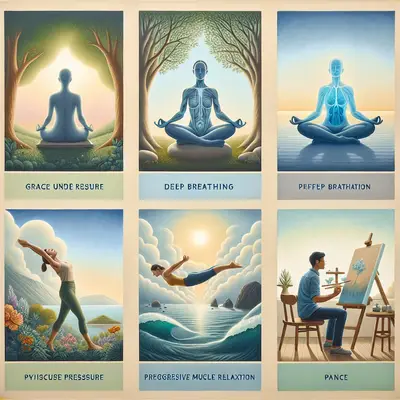
In an age that glorifies urgency, genuine calm has become a rare, almost luxurious state. Stress is no longer a brief disruption; for many, it is the background noise of daily life. Yet equilibrium is not a myth reserved for retreats and sabbaticals—it can be cultivated quietly, with discernment and intention. What follows is an elevated approach to stress relief: not quick hacks, but refined practices designed for thoughtful minds who expect more from their well-being than generic advice.
Redefining Stress: From Enemy to Intelligent Signal
Stress is often framed as an adversary to be conquered, but physiologically, it is an exquisite design—your body’s intelligent alarm system. When you experience pressure, your nervous system mobilizes energy, focus, and alertness. The problem arises when this mobilization never fully turns off.
A more refined approach begins with reinterpreting stress as information rather than failure. Instead of asking, “How do I get rid of this?” ask, “What is this response attempting to protect or prioritize?” This subtle shift transforms stress from a vague sense of overwhelm into a specific signal that can be responded to with precision.
Consider distinguishing between three categories: productive stress (which supports performance), misplaced stress (out of proportion to the situation), and chronic stress (persistent and unaddressed). Productive stress may be welcomed and harnessed; misplaced stress asks for perspective; chronic stress demands structural change. By classifying stress rather than collapsing it into a single monolithic feeling, you begin to regain agency—and with agency comes calm.
This reframing does not deny discomfort; it refines your relationship to it. Over time, you learn to recognize: “This is my system trying to protect me,” which softens self-criticism and opens the door to more elegant interventions.
Ritualized Transitions: The Overlooked Architecture of Calm
For many high-functioning individuals, the greatest stressor is not the workload itself, but the absence of clean transitions between roles and demands. You shift from work to home, from caregiving to email, from digital to in-person, without a psychological threshold. The result is a continuous mental blur that feels like living in one long, unpunctuated sentence.
A sophisticated stress strategy treats transitions as design elements, not afterthoughts. Just as a well-composed space uses lighting and texture to mark different zones, your day can be curated with small but deliberate thresholds that signal the nervous system: “We are changing modes now.”
Examples of refined transition rituals include:
- A two-minute breathing pattern at the end of your workday, practiced in the same chair, with the same posture, to cue closure.
- A brief “decompression walk” after intense meetings—no phone, just a slow stroll, allowing mental residue to settle.
- A signature soundscape or playlist reserved only for winding down (never mixed with work sessions), so your brain associates it with deactivation.
- A simple hand-washing ritual when arriving home—using water temperature, scent, and texture as sensory markers that you are entering a new chapter of the day.
These micro-rituals require little time but provide a powerful message to your nervous system: there is a beginning and an end to effort. Over weeks, this architecture of transitions becomes a quiet but profound stress protectant.
The Art of Selective Attention: Curating Your Cognitive Landscape
Not all stress comes from what you do; much of it arises from what you allow to occupy your attention. In a world of infinite inputs, attention is a form of interior real estate—and most people sublet it to the loudest bidder: notifications, headlines, and the emotional weather of others.
A more discerning approach treats attention like a curated gallery, not an open marketplace. This is not simply “avoiding the news” or “reducing screen time,” but developing an intentional hierarchy of what is allowed into your mental field and when.
Three refined practices can shift this dynamic:
Time-Bounded Exposure
Rather than passively grazing on information throughout the day, designate precise windows for consuming news, email, or social media. Outside those windows, these inputs are not “forbidden,” they are simply “out of season.” This restores a sense of sovereignty and reduces ongoing low-grade agitation.
Emotional Distance Labelling
When encountering distressing or provocative content, silently label it with a short phrase: “Not my crisis,” “Interesting, not urgent,” or “This matters, but not right now.” This does not trivialize real issues; it helps your nervous system distinguish between what requires immediate activation and what can be acknowledged without full physiological engagement.
Daily Cognitive Curation
Once per day, ask: “What deserves my best attention tomorrow?” Write down three to five items—personal or professional—that merit deliberate focus. By choosing in advance what truly matters, you reduce the mental clutter that fuels stress through constant, low-level decision fatigue.
This is not about retreating from the world, but about interacting with it from a steady center. When your cognitive landscape is curated rather than chaotic, your stress responses become sharper, more proportionate, and less exhausting.
Nervous System Literacy: Tailoring Calm to Your Biology
Refined stress relief is not one-size-fits-all; it is highly personal. Two people can receive the same advice—deep breathing, for example—and have very different outcomes. The missing piece is nervous system literacy: understanding how your body specifically enters and exits states of activation.
The autonomic nervous system has two principal branches often simplified as “accelerator” (sympathetic) and “brake” (parasympathetic). Elegant stress management recognizes that your goal is not to live with the brake pressed constantly, but to move fluidly between activation and restoration.
Begin by identifying:
- Your personal markers of activation (e.g., jaw clenching, shallow breath, compulsive checking, racing internal dialogue).
- Your natural regulators—the sensory inputs or movements that reliably downshift you (e.g., warm showers, firm touch, slow exhale, dim light, being near trees or water, rhythmic music).
Instead of adopting random wellness trends, build a bespoke “calm portfolio” rooted in your physiology. For instance:
- If your stress expresses as agitation and restlessness, slow, weighted sensations (a heavy blanket, grounding your feet on the floor, holding a warm mug) may be more effective than fast movement.
- If your stress manifests as shutdown or numbness, gentle activation—walking, light stretching, upbeat but not jarring music—may serve you better than lying still in silence.
By experimenting and noting what reliably shifts your state within 5–10 minutes, you gradually assemble a set of tailored, efficient interventions. Over time, your body begins to trust that you will respond intelligently to its signals, which in itself can reduce anticipatory anxiety and chronic tension.
Invisible Boundaries: The Subtle Power of Protected Space
Stress often escalates not because of a single dramatic demand, but due to boundary erosion—your time, attention, and energy leaking into spaces that were never meant to hold them. High-responsibility individuals are especially susceptible, because they are capable and therefore frequently asked to bend “just a little.”
A sophisticated boundary does not announce itself loudly; it operates quietly, as an internal rule of design. Rather than thinking in absolutes (“I must say no to everything”), think in terms of protected zones—areas of your life where stress is not allowed to be the default setting.
Examples of invisible but powerful boundaries:
- A specific hour each evening during which you are unreachable for non-emergencies—clearly, calmly communicated in advance, then upheld consistently.
- A firm limit on how many emotionally demanding conversations you’ll have in a single day, even with people you care about deeply.
- A personal rule around not making major decisions when you are in a heightened stress state—delaying them until after a brief recovery ritual.
Boundary work is not about rigidity, but about clarity. When your system recognizes that certain parts of your day, your body, and your relationships are reliably protected, a background layer of vigilance starts to recede. The mind rests more easily when it knows there are non-negotiable sanctuaries woven into your schedule.
Conclusion
For those who value a composed, intentional life, stress relief is less a set of tricks and more a deliberate craft. It involves reinterpreting stress as an intelligent signal, designing transitions with care, curating your cognitive inputs, tailoring calm practices to your own biology, and upholding subtle yet firm boundaries.
None of these shifts are theatrical. They do not require dramatic withdrawals from life or elaborate routines that collapse under real-world pressure. Instead, they refine the way you move through your existing days, adding layers of design where there was once only default.
Over time, the cumulative effect is striking: your nervous system learns that intensity can coexist with composure, that ambition need not cancel out ease, and that calm, when crafted with discernment, becomes not a rare escape but a signature quality of how you live.
Sources
- [American Psychological Association – Stress Effects on the Body](https://www.apa.org/topics/stress/body) – Overview of how stress impacts different bodily systems and why chronic stress is significant
- [National Institute of Mental Health – 5 Things You Should Know About Stress](https://www.nimh.nih.gov/health/publications/stress) – Clear explanation of what stress is, types of stress, and when it becomes problematic
- [Harvard Health Publishing – Understanding the Stress Response](https://www.health.harvard.edu/staying-healthy/understanding-the-stress-response) – Detailed look at the physiology of stress and the role of the autonomic nervous system
- [Mayo Clinic – Chronic Stress: Can it Cause High Blood Pressure?](https://www.mayoclinic.org/diseases-conditions/high-blood-pressure/expert-answers/stress-and-high-blood-pressure/faq-20089440) – Insight into long-term health consequences of unmanaged stress
- [Cleveland Clinic – Autonomic Nervous System: What It Is and How It Works](https://my.clevelandclinic.org/health/body/23288-autonomic-nervous-system) – Explanation of sympathetic and parasympathetic functions relevant to nervous system literacy
Key Takeaway
The most important thing to remember from this article is that this information can change how you think about Stress Relief.