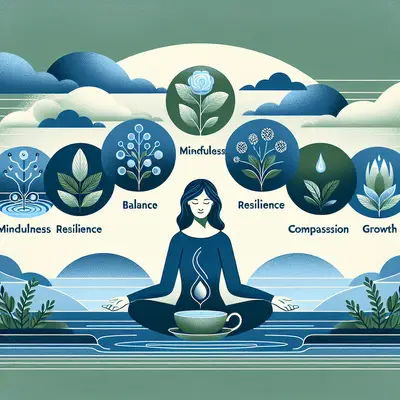
Mental wellness is often treated as an emergency exit—something we reach for only when life feels unbearable. Yet in a world of constant alerts and invisible pressures, calm is no longer a luxury; it is the quiet infrastructure of a life well-lived. At Calm Mind Remedies, we treat mental wellness as a refined, daily practice: subtle, intentional, and beautifully designed to sustain you, not just rescue you.
This piece explores mental wellness as a form of quiet luxury—less about escape, more about elegant, sustainable choices. Woven through are five exclusive insights that go beyond generic advice and invite you to curate a more composed, resilient inner life.
Mental Wellness as a Private Standard, Not a Public Performance
Mental wellness is not how serene you appear to others; it is the private standard you hold for the way your inner world feels. Many people unintentionally outsource their emotional barometer to external validation—productivity metrics, social approval, or how “together” their life looks. True wellness, however, is a discreet calibration: how you recover from stress, how you speak to yourself when no one is listening, how you respond to disappointment when nothing can be posted, shared, or praised.
The most grounded people often do not announce their practices. Their poise is built from consistent, unglamorous decisions: protecting sleep as if it were currency, declining conversations that are emotionally expensive, and resisting the pressure to be constantly accessible. Mental wellness, at its most refined, is less about being impressive and more about being internally stable—especially when your world is quiet and no one is watching.
Exclusive Insight #1: Treat your emotional state as a private quality standard, not a public image. When you decide that your inner steadiness matters more than how composed you appear, you naturally begin to invest in restoration rather than performance.
Curated Input: Designing What Your Mind Is Allowed to Absorb
We obsess over what we apply to our skin or add to our diet, yet allow our minds to be flooded with unfiltered noise. The mind is exquisitely responsive to input: tone of voice, choice of words, the emotional climate of a room, the rhythm of your daily information stream. Much like a refined wardrobe, the quality of what you consume mentally becomes the fabric of your inner life.
Curating your input is not about withdrawal from the world; it is about intentional selection. This can look like limiting your daily news intake to one trusted source, scheduling specific times for digital check‑ins, and consciously balancing difficult information with content that is restorative or deeply meaningful to you. Over time, your mind becomes less reactive and more discerning—no longer at the mercy of every headline, comment, or notification that demands an immediate emotional response.
Exclusive Insight #2: Establish a “mental intake policy” with the same care you’d apply to a fine collection. Decide which voices, platforms, and topics are allowed daily, weekly, or rarely. This elevates mental wellness from vague intention to a quietly powerful boundary.
Rituals of Transition: The Overlooked Architecture of Calm
Most people focus on what fills their schedule, not on how they move between moments. Yet the transitions—between work and home, online and offline, day and evening—often determine whether your mind feels scattered or composed. Without intentional transitions, the nervous system stays in a subtle state of “ongoing emergency,” never quite receiving the signal that it is safe to rest.
Refined mental wellness often shows up as micro‑rituals: a two‑minute pause in the car before entering the house, a deliberate change of lighting at dusk, or a specific beverage that marks the end of work and the beginning of personal time. These cues tell the body and mind that the “chapter” has changed. Just as a well‑designed space uses thresholds to separate rooms, intentional transitions demarcate your inner experiences so they do not bleed into one continuous blur.
Exclusive Insight #3: Design at least two daily transition rituals—one to open the day, one to close it. These do not need to be elaborate; they need to be consistent. Thoughtful transitions quietly train your nervous system to differentiate between effort and exhale.
Emotional Minimalism: Reducing Mental Clutter with Discerning Care
Minimalism is often discussed in terms of belongings, but the more profound version is emotional: reducing the mental clutter that quietly exhausts you. Emotional clutter can look like unresolved micro‑resentments, habitual overcommitment, or keeping relationships that consistently leave you dysregulated. It is not dramatic enough to demand intervention, but heavy enough to dull your days.
Emotional minimalism does not mean becoming detached or indifferent. It is about recognizing which situations, people, and habits repeatedly generate more emotional cost than value. This may involve consciously choosing fewer, deeper relationships; simplifying your obligations; and releasing roles you outgrew but still perform out of habit. The result is a quieter, clearer emotional landscape where your energy is directed toward what genuinely matters—rather than diffused across a hundred unexamined obligations.
Exclusive Insight #4: Perform a quarterly “emotional declutter” of your commitments and alliances. Ask: What consistently drains me without meaningful return? Reducing these quiet leaks is one of the most elegant, underappreciated forms of self‑care.
Nervous System Literacy: The Refined Skill Behind True Resilience
Resilience is often glorified as endurance—pushing through, staying productive, not “breaking.” In reality, refined resilience is nervous system literacy: understanding how your body signals stress and how to bring it back to equilibrium before exhaustion sets in. This is not dramatic self‑soothing; it is subtle, ongoing self‑regulation.
Learning your personal stress signatures—shallow breathing, tightened shoulders, racing thoughts, irritability—allows you to intervene early. Techniques such as slow, extended exhalations, brief grounding practices (like naming specific sensory details in your environment), or stepping outside for light and fresh air can be surprisingly potent when used preventatively rather than as last‑resort measures. Over time, this literacy transforms your relationship with stress: it becomes a message to respond to, not a wave to drown in.
Exclusive Insight #5: Treat your nervous system like a highly tuned instrument, not an afterthought. Pay close attention to your earliest stress signals and respond with small, deliberate adjustments. This transforms resilience from surviving chaos into artfully managing your internal climate.
Conclusion
Elegance in mental wellness is not about expensive retreats or perfectly curated morning routines. It is found in the quiet precision of your daily choices: how you filter what reaches your mind, how you transition between roles, how much emotional clutter you agree to carry, and how early you respond to the whispers of your nervous system instead of waiting for it to shout.
When you begin to treat your inner life as something worthy of thoughtful design—as precious, finite, and deserving of refinement—mental wellness stops being a distant ideal and becomes a daily luxury you quietly protect. Not for display, but for depth. Not to impress, but to inhabit your own life with greater ease, clarity, and understated strength.
Sources
- National Institute of Mental Health – Caring for Your Mental Health – Overview of evidence‑based approaches and principles for maintaining mental health
- Harvard Health Publishing – Understanding the Stress Response – Explains how the nervous system reacts to stress and why regulation practices matter
- American Psychological Association – Building Your Resilience – Research‑informed guidance on developing resilience skills and emotional recovery
- Mayo Clinic – Mindfulness Exercises – Practical, clinically informed techniques for calming the mind and supporting mental wellness
- Centers for Disease Control and Prevention – Mental Health – Public health perspective on mental health, stress, and protective lifestyle factors
Key Takeaway
The most important thing to remember from this article is that this information can change how you think about Mental Wellness.