In a world saturated with quick fixes and overstimulating wellness trends, there is a quieter path: a considered, elegantly simple approach to calming the mind through nature’s subtler remedies. This is not about chasing yet another “hack,” but about curating a small, intentional repertoire of practices that feel as composed as they are effective. Think of it as mental wellness with the sensibility of a well-designed space—nothing excessive, everything deliberate.
Below, you’ll find a refined perspective on natural remedies for mental clarity and calm, with five exclusive insights tailored for those who value discretion, quality, and depth over noise.
The Philosophy of Understated Calm
Natural remedies are often misunderstood as either rustic folk cures or elaborate rituals. In reality, the most effective approaches tend to be elegantly minimal. True mental ease comes not from adding more to your day, but from editing—removing friction, lowering internal noise, and allowing the nervous system to recalibrate.
This philosophy favors precision over abundance. A single high-quality herbal infusion, prepared with care, can be more impactful than a shelf of supplements used at random. A three-minute, carefully structured breathing practice may outshine a 60-minute, unfocused meditation. In this framework, each remedy—botanical, sensory, or behavioral—is selected for its capacity to bring the mind back to a poised, sustainable baseline.
By approaching natural remedies as a curated collection rather than a scattered experiment, you create an internal environment that feels less like self-improvement and more like self-curation: thoughtful, intentional, and quietly luxurious.
The Sensory Apothecary: Engaging the Nervous System Through the Senses
The nervous system responds exquisitely to sensory detail. One of the most underutilized natural remedies is not a single herb or vitamin, but the strategic orchestration of your sensory landscape.
Gentle olfactory cues—such as a pure essential oil of lavender, bergamot, or Roman chamomile—can reduce perceived anxiety by signaling safety to the brain. Even more subtly, a consistent scent used only during “unwinding” can train the nervous system to associate that aroma with decompression. This is conditioning as a wellness instrument: sophisticated, repeatable, and deeply personal.
Visual input matters just as much. Soft, indirect lighting, warm color temperatures in the evening, and eliminating harsh blue light before bed support melatonin production and emotional regulation. The tactile dimension is equally powerful: a weighted blanket, a textured throw, or a favorite cashmere sweater can provide grounding input to the body, reassuring an overtaxed system.
Think of your environment as a sensory apothecary. By refining light, scent, sound, and touch, you subtly instruct your mind to transition from vigilance to ease—no elaborate rituals required.
Botanical Composure: Herbs as Subtle Nervous System Allies
Herbal remedies for mental wellness are most effective when treated as allies, not miracles. The goal is not sedation, but composure: herbs that gently support stress resilience, mood stability, and sleep quality.
Adaptogens such as ashwagandha and rhodiola are often used to modulate the body’s stress response, potentially improving the way you handle daily pressure. They work gradually, making them well-suited to those who prefer a steady, understated shift rather than a dramatic jolt. L-theanine, a natural amino acid found in green tea, can promote a calm yet alert state—ideal for those who want focus without the edge.
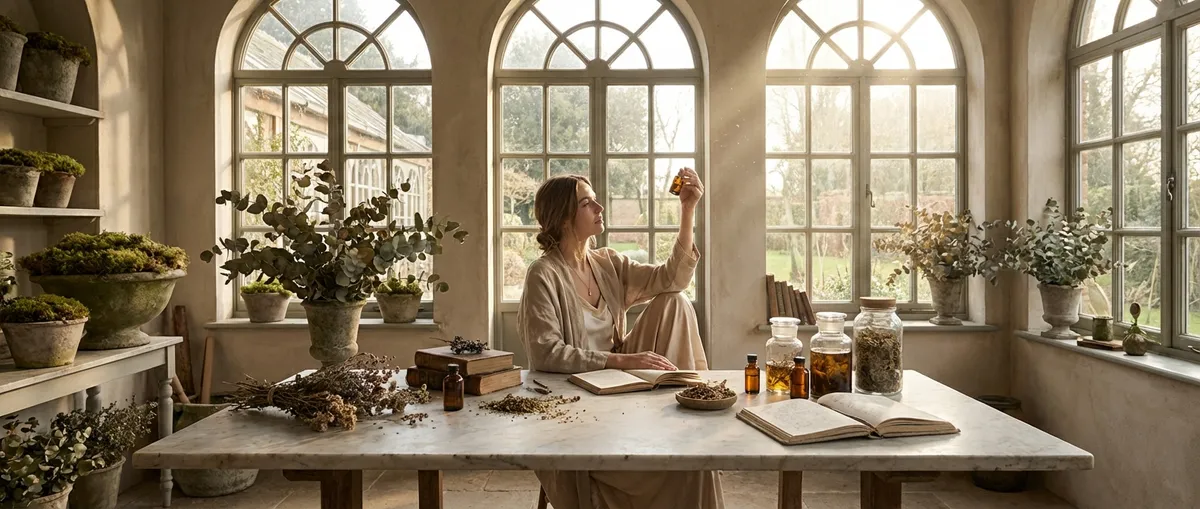
For evening rituals, a carefully chosen herbal infusion—chamomile, lemon balm, or passionflower—can become a nightly signal to disengage from productivity mode. The effect is twofold: the botanicals themselves support relaxation, and the act of preparation becomes a gentle boundary between your public and private mental states.
Quality is critical. Opt for single-origin or carefully blended herbal products from reputable sources, ideally with third-party testing. A smaller number of verified, high-grade botanicals is far more sophisticated—and effective—than an overflowing cabinet of uncertain powders.
The Rhythm Remedy: Natural Cycles as a Mental Health Technology
One of the most elegant “natural remedies” requires no supplements at all: alignment with your own biological rhythms. Your circadian system is a deeply sophisticated piece of internal technology, and respecting it may be the most premium form of self-care available.
Morning exposure to natural light, ideally within the first hour of waking, helps anchor your internal clock, benefiting mood, alertness, and sleep quality. Brief time outdoors—on a balcony, by a window, in a garden—signals to your brain that the day has begun, stabilizing cortisol patterns and sharpening focus.
Equally important is the evening descent. Dimming overhead lights, avoiding intense mental tasks late at night, and establishing a consistent pre-sleep routine all help the nervous system downshift. When this rhythm is honored, many anxiety symptoms soften not through force, but through steady, physiological coherence.
This is the quiet power of rhythm: rather than fighting your body with willpower, you collaborate with it. The result is mental steadiness that feels earned, not imposed.
Five Exclusive Insights for the Discerning Mind
For those who value exceptional mental wellness practices, the following insights offer a more nuanced lens on natural remedies—subtle shifts that can markedly elevate everyday calm:
- Treat calm as an ambient setting, not a peak state.
Instead of chasing dramatic moments of relaxation, aim for a slightly more composed baseline throughout the day. Micro-practices—such as three slow exhalations before opening your inbox or one minute of eyes-closed breathing between meetings—create a gently upgraded “default state” that feels natural rather than performative.
- Use contrast wisely: pair stimulation with deliberate decompression.
If your day involves high stimulation—intense screen time, rapid decision-making, constant messaging—counterbalance it with intentional low-stimulation pockets. Five minutes in silence, no music, no phone; a quiet walk without a podcast; tea without multitasking. Contrast, not constant intensity, keeps the nervous system supple.
- Upgrade one daily habit instead of adding five new ones.
Rather than trying to implement multiple remedies at once, refine one habit you already have. Transform your nightly screen scroll into a short herbal tea ritual. Elevate your morning coffee into a mindful, unhurried moment in natural light. Single, well-designed upgrades are far more sustainable—and more luxurious—than a cluttered routine.
- Curate your mental inputs like a private collection.
Your media diet is one of the most powerful “natural remedies” or stressors, depending on how it’s handled. Consider tightening access: fewer push notifications, higher-quality content, and designated windows for news consumption. Protecting your cognitive space in this way can feel as elegant as curating art for a gallery: selective, intentional, and deeply personal.
- Prioritize recovery as highly as performance.
The most effective natural remedies often fail not because they’re weak, but because they’re overshadowed by relentless output. When you give recovery—sleep, downtime, unstructured thought—equal legitimacy to your professional and personal goals, remedies like gentle movement, breathwork, and botanicals start working at their full potential. This is the mature, sophisticated evolution of self-care: honoring restoration as a core metric of success.
Integrating Natural Remedies with Discretion and Intelligence
The true luxury in mental wellness is not owning the most tools, supplements, or devices—it is understanding yourself well enough to choose only what you genuinely need. A high-impact, minimal set of natural remedies, integrated with subtlety into your existing life, will always feel more sustainable than an elaborate regimen you can’t maintain.
Begin with what feels most intuitive: perhaps a single botanical tea in the evening, a brief morning light ritual, or a small restructuring of your sensory environment. Observe your mind’s response with the same refined attention you would give to a well-crafted object or a carefully designed space.
Over time, these understated practices accumulate into something quietly profound: a nervous system that trusts you, a mind that feels less hurried, and a daily life that holds just a bit more grace around the edges.
Conclusion
Natural remedies for mental wellness are at their most powerful when approached not as a trend, but as an ongoing, intimate conversation with your own nervous system. By favoring precision over excess—refined botanicals, curated sensory inputs, aligned rhythms, and intelligent boundaries—you create a version of calm that feels deeply tailored and inherently dignified.
This is mental wellness as a form of quiet craftsmanship. No spectacle, no overwhelm—just a composed, thoughtful relationship with the natural forces that have always been available to steady the mind.
Sources
- [National Center for Complementary and Integrative Health (NCCIH): Stress, Anxiety, and Complementary Health Approaches](https://www.nccih.nih.gov/health/providers/digest/stress-anxiety-and-complementary-health-approaches-science) - Overview of evidence for herbal supplements, meditation, and relaxation techniques for anxiety and stress
- [Harvard Health Publishing: Herbs and Supplements for Stress](https://www.health.harvard.edu/mind-and-mood/herbs-and-supplements-for-stress) - Discussion of ashwagandha, chamomile, and other botanicals for stress and sleep support
- [Cleveland Clinic: Circadian Rhythm](https://my.clevelandclinic.org/health/articles/12148-circadian-rhythm) - Explanation of circadian biology and how light, sleep, and daily habits influence mood and health
- [Sleep Foundation: The Importance of Morning Light](https://www.sleepfoundation.org/circadian-rhythm/morning-light) - Details on how morning light exposure helps regulate circadian rhythms and improve sleep and mood
- [Mayo Clinic: Aromatherapy](https://www.mayoclinic.org/healthy-lifestyle/consumer-health/in-depth/aromatherapy/art-20036282) - Evidence and guidance on using essential oils like lavender for relaxation and stress reduction
Key Takeaway
The most important thing to remember from this article is that this information can change how you think about Natural Remedies.