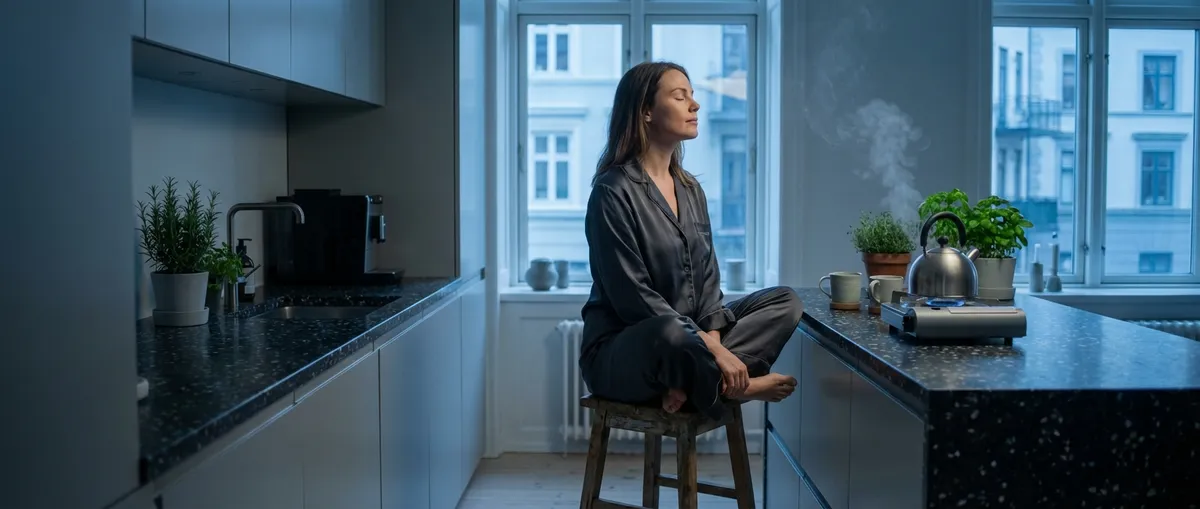
Meditation is often spoken about as if it belongs only to mountaintops and monasteries. In reality, it is far more intimate and immediate: a discreet refinement of how you inhabit your own life. Done well, meditation is not an escape from reality but a quiet enhancement of it—a subtle tuning of perception, emotion, and attention that elevates the texture of your days. For a discerning mind seeking calm without cliché, meditation can become less of a “practice” and more of an understated art of living.
Below are five exclusive, nuanced insights into meditation—designed for those who value depth, precision, and a more elegant approach to mental wellness.
1. Meditation as Cognitive Curatorship, Not Just “Stress Relief”
The familiar narrative frames meditation as an antidote to stress. That is true, but it is also limited. A more refined view sees meditation as curatorship of attention: a deliberate choice about which thoughts, sensations, and emotions are allowed premium space in your awareness.
In meditation, you’re not fighting thoughts; you are quietly reassigning importance. A worry appears, and rather than granting it executive authority, you observe it and return to the breath or chosen anchor. This repeated act of not-following is an act of curation. Over time, your brain learns that not every mental notification requires opening.
Neuroscience supports this: regular meditation is associated with changes in brain regions tied to attention regulation and emotional processing. Practically, this means you maintain sharper mental clarity in negotiations, in delicate conversations, and during complex decision-making. Meditation becomes less of a relaxation ritual and more of a quiet, daily upgrade to your cognitive operating system.
2. The Luxury of Slowness: Micro-Meditations Between Moments
Luxury is often mistaken for excess, but its most exquisite form is space: room to breathe, think, and feel without rush. Micro-meditations create this sense of space in the in-between moments of your day—no incense, no cushion, no elaborate setup.
Consider the 30 seconds after you park your car, the 60 seconds while your coffee brews, the brief elevator ride between floors. In each of these transitions, you can briefly shift into observation: three slow breaths, noticing the coolness of the inhale, the softness at the top of the exhale; a quick scan of the body for tension, released quietly without theatrics.
These micro-practices do not replace longer, formal sessions, but they weave mental composure into the architecture of your routine. The result is not dramatic transformation on a single day, but a gentle recalibration over many days: you become the person who responds rather than reacts, who pauses rather than rushes, who occupies their life with a certain unhurried precision.
3. Emotional Refinement: Using Meditation to Distinguish Mood from Reality
One of the most underrated benefits of meditation is emotional literacy—the ability to distinguish “I feel this” from “this is true.” Without that distinction, mood easily masquerades as reality. A fatigued morning can become “my life is off track.” A moment of social discomfort can become “I am inadequate.”
Meditation trains you to watch emotional weather patterns without fully becoming them. You notice the quickening pulse when you read an email, the contraction in your chest during a difficult conversation, the subtle restlessness before bed. Instead of immediately constructing a story, you label: “tension,” “anxiety,” “anticipation.” The emotion is acknowledged yet not enthroned.
Over time, this disciplined noticing refines your responses. Disappointment no longer requires a dramatic narrative. Irritation no longer dictates your tone. You begin to experience feeling states the way a connoisseur experiences flavors: with discernment, curiosity, and proportion. The elegance lies not in feeling less, but in being less commanded by what you feel.
4. Precision in Practice: Designing a Meditation Ritual That Matches Your Mind
Many people abandon meditation not because it “doesn’t work,” but because the practice they chose doesn’t align with how their mind naturally moves. A refined approach involves selecting methods with precision, rather than accepting a generic, one-size-fits-all routine.
If your mind is intensely verbal and analytical, a simple breath focus may feel like wrestling with a commentary track. You might benefit from gently guided meditations, mantra repetition, or contemplative inquiry—practices that give the thinking mind a structured task rather than demanding instant silence.
If your experience is more sensory or visual, body scans or visualizations—such as imagining the breath moving through different regions of the body—may feel more intuitive. Those who are already reflective may find loving-kindness or compassion-based meditations particularly transformative, translating their introspective nature into warmth rather than rumination.
The refinement lies in treating meditation like fine tailoring: adjust the cut, fabric, and fit until it suits your mental architecture. A practice that fits you well becomes easier to maintain, and consistency is where the deeper, more subtle benefits accumulate.
5. From Isolation to Integration: Letting Meditation Quietly Shape Your Conduct
Meditation reaches its most elegant form when it stops being something you “do” and starts gently influencing how you conduct yourself in the world. The aim is not to become serenely detached from life, but to be fully engaged with a steadier inner center.
You might notice it first in conversation: a split-second pause before responding, a greater willingness to listen without rehearsing your reply. Then in conflict: the capacity to name your boundary clearly without escalating the tone. In ambition: pursuing excellence with commitment, but without the desperation that turns striving into self-erasure.
This is meditation as integration, where your practice becomes visible not through spiritual language or overt rituals, but through a kind of composed presence. You show up more fully to your work, your relationships, your private moments. The mind feels less like a noisy room to escape from and more like a well-appointed space in which you actually enjoy spending time.
Conclusion
Meditation, at its most refined, is less about dramatic enlightenment and more about a series of quiet, compounding upgrades: to your attention, your emotional precision, your sense of pace, and your conduct. It is an understated discipline, but its effects are anything but subtle.
For the person who values both inner calm and outer excellence, meditation offers a rare combination: a way to preserve your clarity in a demanding world while cultivating a quieter, more deliberate relationship with your own mind. In that sense, meditation is not an escape from life—it is a sophisticated way of living it more fully, and more beautifully.
Sources
- National Center for Complementary and Integrative Health (NCCIH) – Meditation: In Depth - Overview of meditation practices, potential benefits, and current research
- Harvard Health Publishing – Mindfulness Meditation May Ease Anxiety, Mental Stress - Summarizes research on how mindfulness and meditation affect stress and anxiety
- American Psychological Association – Mindfulness and Meditation - Explores psychological mechanisms and clinical applications of meditation and mindfulness
- Mayo Clinic – Meditation: A Simple, Fast Way to Reduce Stress - Practical discussion of meditation types, benefits, and getting started
- National Institutes of Health – Brain Imaging Studies of Meditation - Research article examining how meditation influences brain structure and function
Key Takeaway
The most important thing to remember from this article is that this information can change how you think about Meditation.