Modern life often mistakes speed for success and constant noise for relevance. Yet the mind, when treated with discernment, responds best to subtler signals: the quiet of a room prepared with intention, the specific warmth of an herbal infusion, the precise rhythm of breath and light. Natural remedies, when chosen with care and used with consistency, become less about “quick fixes” and more about cultivating a mental environment in which calm is not an exception—but the default.
Below are five exclusive, nuanced insights into natural mental wellness practices designed for those who see self-care not as indulgence, but as an elevated standard.
1. The Micro-Dose Evening: Gentle Plant Support Without Sedation
Many people reach for herbal remedies only when they are already overwhelmed—too stressed to think or too exhausted to sleep. A more refined approach uses sub-sedative “micro-dose” levels of botanicals throughout the evening, long before crisis mode.
Rather than a single, heavy cup of sleepy-time tea at night, consider a progression of lighter herbal support:
- Late afternoon: a mild infusion of lemon balm or tulsi (holy basil) to take the sharp edge off post-work overstimulation without compromising clarity.
- Early evening: a modest cup of chamomile or linden blossom, allowing the nervous system to downshift gradually.
- Pre-sleep: very small amounts of valerian, passionflower, or lavender—enough to signal rest, but not so much that you wake groggy or dependent on them.
This low, steady approach respects your natural sleep architecture instead of forcing it. When taken consistently, these gentle intervals can train your system to anticipate quiet earlier in the evening. The result: a smoother descent into sleep and a mind that feels supported rather than shut down.
2. The Temperature Signature of Calm: Using Heat and Cold with Intent
Most discussions of natural calm revolve around herbs and supplements, yet the body’s temperature regulation system is one of the most powerful “levers” for mental ease.
Instead of thinking of heat and cold as basic comfort tools, treat them as precise instruments:
- Contrast Hydrotherapy at Home: A warm shower (not scalding) followed by 20–30 seconds of cool water on the neck, shoulders, and legs can gently stimulate circulation, then allow a rebound effect of relaxation. When repeated, it can heighten body awareness and help the mind “return” from scattered thinking.
- Targeted Warmth for Cognitive Overload: A warm compress on the chest or upper back, combined with slow breathing, sends parasympathetic signals that the body is safe. This is particularly effective before demanding mental tasks or after emotionally charged conversations.
- Cool Face Immersion (or a Cold Cloth): Briefly cooling the face—especially around the eyes and cheeks—can activate the “dive reflex,” slowing the heart rate and helping reset emotional arousal. It is a discreet, natural way to regain composure in moments of acute stress.
Each of these approaches uses temperature as a refined language: a way to “speak” directly to the nervous system without words, supplements, or screens.
3. Botanical Pairing: Matching Herbs to Emotional Texture, Not Just Symptoms
Most wellness advice treats stress as one flat concept. Yet the emotional reality is more textured: some days feel sharp and anxious, others heavy and dull. The most elegant use of natural remedies is not about asking, “What’s good for stress?” but “What is the quality of my stress today?”
Consider pairing herbs by emotional texture:
- For Wired, Restless Energy: If your mind races and your body can’t settle, nervine relaxants like passionflower, lemon balm, or skullcap may be appropriate. They gently soften overactivity without erasing alertness.
- For Worry and Rumination: When thoughts loop and won’t release, consider lavender (tea, tincture, or aroma) and chamomile. Their traditional use includes easing both mental and digestive tension, which often travel together.
- For Emotional Fatigue or Flatness: On days when everything feels dull and effortful—more gray than frantic—gentle adaptogens such as rhodiola (earlier in the day), ashwagandha, or tulsi may help build resilience rather than just dampen sensation.
- For Social Overload: After sustained interaction or performance, a combination of magnesium (through food or a supplement, if appropriate), a mild lavender infusion, and quiet time away from screens can help recalibrate overstimulated senses.
This nuanced matching of plant to feeling allows your remedies to be as sophisticated as your emotional life, rather than one-size-fits-all.
4. Circadian Elegance: Aligning Natural Remedies with Light, Not Just Time
We often think of routine in terms of clock time—8 a.m. versus 10 p.m.—but the body responds even more deeply to light time: when daylight rises, peaks, and fades. Harnessing this can turn natural remedies into a kind of circadian choreography.
A more elevated approach:
- Morning Light + Gentle Stimulation: Expose your eyes (without sunglasses if safe) to natural morning light for 5–15 minutes. Pair this with a modest green tea or matcha ritual. The combination of light, low-dose caffeine, and L-theanine (naturally present in tea) can promote alert calm rather than jittery wakefulness.
- Midday as a Nervous System “Check-In”: Instead of powering through the middle of the day, treat it as a reset. A brief walk outdoors, even in a city, paired with deep nasal breathing and perhaps a small serving of tulsi or peppermint tea, can prevent the cumulative stress that erupts at night.
- Evening Light Hygiene + Herb Support: As the light fades, consciously dim screens and overhead lighting. Shift to warmer, lower illumination and reserve calming herbal support (chamomile, linden, lemon balm) for this low-light period only. Taken under softer light, these remedies reinforce your body’s innate sense that the day is complete.
Rather than seeing natural remedies as independent from lifestyle, this approach weaves them into the body’s most ancient rhythm: dark and light, wake and rest.
5. The Ritual of Refinement: Turning Remedies into Repeatable Sensory Signals
The potency of a natural remedy is not only chemical; it is also contextual. When you take an herb the same way, at the same time, in a similar environment, the brain begins to associate that ritual with a particular state of mind. Over time, the ritual alone can evoke calm—even before the first sip or breath.
To elevate your remedy into a refined signal:
- Use Dedicated Objects: Reserve a specific mug, small bowl, or spoon for your evening tea, or a particular diffuser for your calming essential oil blend. These items become visual cues of tranquility.
- Be Precise with Preparation: Measure your herbs, water temperature, and steep time with care. This small act of precision—choosing 5 minutes of steeping over “whenever I remember”—cultivates a sense of mastery and intention that is itself calming.
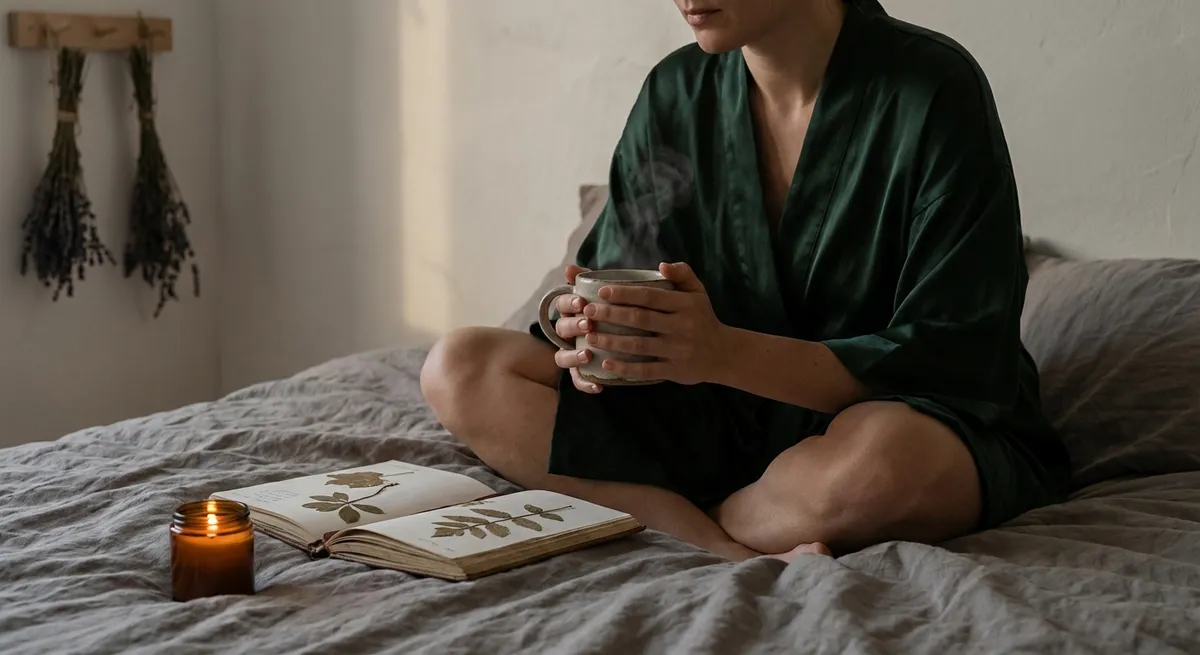
- Engage Multiple Senses: As the tea steeps or the oil diffuses, notice sound (the kettle, the room’s silence), scent, temperature, and the sensation of your body in the chair. These sensory details encode a predictable experience of safety in your nervous system.
- End with a Single Linking Gesture: Perhaps you always exhale slowly before your first sip, or place your hand over your heart for two breaths. When repeated, this becomes a subtle neural “bookmark,” connecting your natural remedy to a specific, internal feeling of ease.
In time, this ritual refinement allows you to rely less on more remedies and more on the depth and consistency of a few well-chosen ones.
Conclusion
Natural remedies for mental wellness are most powerful when they move beyond emergency use and into the realm of daily refinement. Thoughtful micro-dosing of botanicals, deliberate use of temperature, emotional texture–based herb pairing, alignment with natural light, and the creation of sensory rituals together form a quiet, resilient architecture for calm.
This is not about perfection or constant stillness; it is about offering your mind a more dignified landscape in which to rest—a setting in which composure feels less like a performance and more like your most natural state.
Sources
- [National Center for Complementary and Integrative Health – Herbs at a Glance](https://www.nccih.nih.gov/health/herbs-at-a-glance) - Evidence-based overviews of common herbs such as chamomile, lemon balm, lavender, and valerian, including safety and usage.
- [Mayo Clinic – Sleep tips: 6 steps to better sleep](https://www.mayoclinic.org/healthy-lifestyle/adult-health/in-depth/sleep/art-20048379) - Discusses sleep hygiene practices that complement gentle herbal support and evening rituals.
- [Harvard Health Publishing – Blue light has a dark side](https://www.health.harvard.edu/staying-healthy/blue-light-has-a-dark-side) - Explains how light exposure affects circadian rhythm and sleep, relevant to timing natural remedies with light.
- [Cleveland Clinic – Hydrotherapy: What It Is, Types, Uses & Benefits](https://my.clevelandclinic.org/health/treatments/22272-hydrotherapy) - Outlines how water temperature and hydrotherapy can influence circulation, muscle tension, and relaxation.
- [NHS (UK) – Complementary and alternative medicine](https://www.nhs.uk/conditions/complementary-and-alternative-medicine/) - Provides guidance on the safe, informed use of natural and complementary approaches for wellbeing.
Key Takeaway
The most important thing to remember from this article is that this information can change how you think about Natural Remedies.