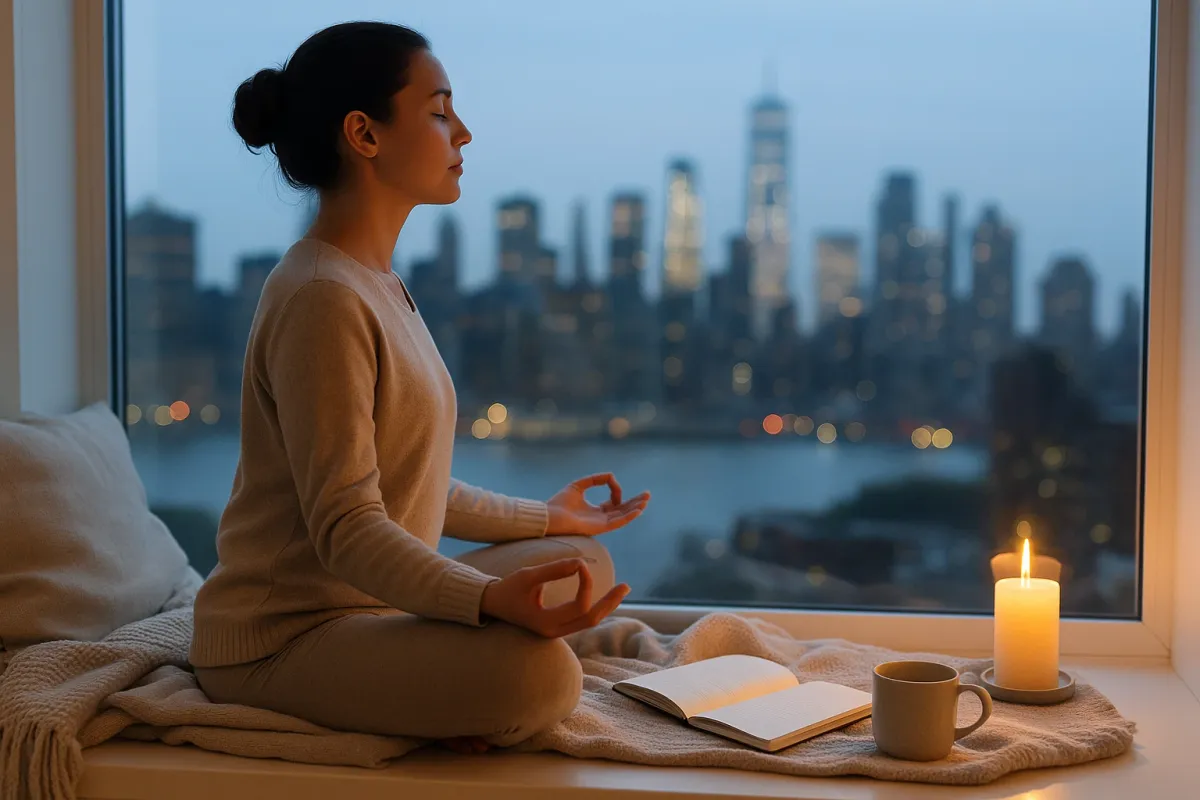
There is a particular kind of exhaustion that doesn’t show on the calendar or in your step count—it shows in how loudly the world feels. As social media circulates posts like Bored Panda’s trending “Introvert Problems” compilation, millions of people are quietly admitting what they rarely say out loud: ordinary life can feel like a permanent sensory onslaught. For introverts, highly sensitive professionals, and anyone whose nervous system feels frayed, the joke posts land because they’re also a confession—“I am overstimulated, and I don’t know how to come down.”
Meditation has long been sold as a performance upgrade: focus better, do more, think faster. But for the quietly overwhelmed, the true luxury is not speed—it is spaciousness. In a culture that treats constant availability as a virtue, refined mental wellness means reclaiming the right to be inward, unhurried, and selectively present. Inspired by the rising visibility of introvert experiences online, this is a guide to meditation as a private sanctuary rather than another task on your optimization list.
Below are five exclusive, subtly powerful insights—designed for those who cherish solitude, depth, and a more elegant way of being with their own minds.
1. Turn “Social Battery” Crashes Into A Deliberate Descent
The viral language of “social battery” captures something deeply physiological: after prolonged conversation, commutes, open-plan offices, or even endless group chats, the nervous system remains in a low-grade state of vigilance. For introverts, this is less about shyness and more about energy economics—every interaction is a micro‑withdrawal from a limited account.
Meditation can transform these crashes from accidental collapses into intentional landings. Instead of scrolling yourself into a numb trance after a draining day, try a 7‑minute “descent practice.” Sit comfortably, close your eyes, and imagine an elevator leaving the lobby of the day and moving slowly down ten floors. With each “floor,” feel one layer of social residue loosen: other people’s expectations, remembered conversations, performance, helpfulness. You silently note, “Releasing.” The key is not to “clear the mind,” but to give your inner life permission to reclaim the foreground. Over time, your nervous system begins to associate post‑social fatigue not with collapse, but with a deliberate ritual of return—rest becomes exquisite rather than accidental.
2. Redefine Meditation As Selective Attention, Not Self‑Erasure
Many introverts avoid meditation because popular imagery suggests obliterating thought, merging into cosmic oneness, or sitting in enforced blankness. For a mind that already processes the world deeply, this can feel like being asked to disappear. Yet, contemporary cognitive science describes attention not as on/off, but as highly selective. What you attend to becomes your reality for that moment.
A more refined meditation frame is this: you are curating a private gallery of what deserves your attention. In practice, this means choosing one subtle, luxurious focal point—a single candle flame, the sensation of silk or cashmere against your skin, the faintest hum of a distant appliance. You’re not suppressing everything else; you’re allowing the chosen experience to be center stage while the rest drifts to the edges. This selective attention is powerfully introvert‑friendly—it honors your capacity for depth while shielding you from the tyranny of “everything, all at once.” Over time, the skill of selective attention during meditation spills elegantly into your day: you become far less available to noise, drama, and performative urgency.
3. Design A “Quiet-Forward” Environment As Carefully As A Capsule Wardrobe
The popularity of “Introvert Problems” memes underscores a shared truth: many environments are simply not built for inward‑oriented nervous systems. Instead of trying to meditate inside a space designed for extroversion—bright lights, constant notifications, visual clutter—treat your meditation sanctuary with the same discernment you might give a capsule wardrobe or a thoughtfully edited home.
Start with subtraction. Visual noise is mental noise. Remove three things from your meditation space that pull your attention outward—an over‑busy art print, a stack of unopened mail, a bright device screen. Replace them with one or two intentionally chosen items that signal calm luxury to your senses: a single well‑crafted ceramic bowl, a low, warm lamp, a natural fiber throw in a muted tone. Research in environmental psychology suggests that even small reductions in visual complexity can ease cognitive load. Your meditation then becomes less an act of heroic inner effort and more an effortless alignment with a space that is already whispering, “It is safe to soften.”
4. Use “Micro‑Retreats” To Repair From Digital Overexposure
The humor in the trending introvert posts often revolves around dread of crowded events, but in practice, many modern “crowds” are digital—group chats buzzing, feeds updating, notifications stacking. Your brain doesn’t distinguish neatly between in‑person and screen‑mediated input; both demand processing. For sensitive minds, this constant low‑level swarm can be more draining than a single, obvious social engagement.
Instead of waiting for an annual wellness retreat to reset your system, incorporate three to five “micro‑retreats” into your day—each no longer than three minutes. During a micro‑retreat, you do one thing only: step away from all input. No music, no podcast, no article, no replies. Close the laptop, place the phone face‑down in another room if possible, and sit or stand near a window. With eyes gently lowered or softly closed, let the mind do what it wishes while you keep returning your attention to one anchoring sensation: the feeling of breath at the tip of your nose, or the subtle weight of your body on the chair. The brevity is the point—it disarms the “I don’t have time” objection and prevents over-efforting. Over days and weeks, these tiny pockets of sensory sobriety begin to repair the baseline agitation that most people now accept as normal.
5. Treat Boundaries As A Meditative Practice, Not A Personality Flaw
One of the recurring themes in online introvert discourse is guilt: guilt for leaving a party early, declining a call, choosing a night in. Yet boundaries are not a quirk of temperament; they are the architecture of sustainable attention. Without them, even the most disciplined meditation practice frays because the rest of your life continues to flood you.
Integrate boundaries directly into your meditation as a formal practice. At the end of your sit, take 60–90 seconds to mentally review the next 24 hours and identify one situation where your energy is likely to be overdrawn: a meeting that tends to run long, a friend who calls without checking, a family obligation. Then, still in the afterglow of calm, silently rehearse one elegant boundary sentence you will use: “I’d love to give this my full attention; can we keep it to 30 minutes?” or “Tonight I need quiet to reset—I’ll be more present if we speak tomorrow.” Visualize yourself saying it with a settled body and unhurried tone. You’re not just fantasizing; you’re teaching your nervous system that self-protection and serenity can coexist. This shift—from boundaries as apologies to boundaries as extensions of inner stillness—may be the most luxurious mental wellness upgrade of all.
Conclusion
The viral rise of “Introvert Problems” content is more than a stream of relatable jokes; it is a quiet census of how many people are living slightly beyond their nervous system’s means. Meditation, approached with elegance and precision, offers not a trend, but a private standard of living for the mind—a way to feel less available to chaos and more available to yourself.
When you treat your attention as a scarce, precious resource, rest stops being an afterthought and becomes a form of quiet luxury. A deliberately designed corner, a three‑minute withdrawal from the digital crowd, a single well‑crafted boundary—these are not small acts. They are how an overstimulated world is gently re‑scaled to human proportions, one refined breath at a time.
Key Takeaway
The most important thing to remember from this article is that this information can change how you think about Meditation.