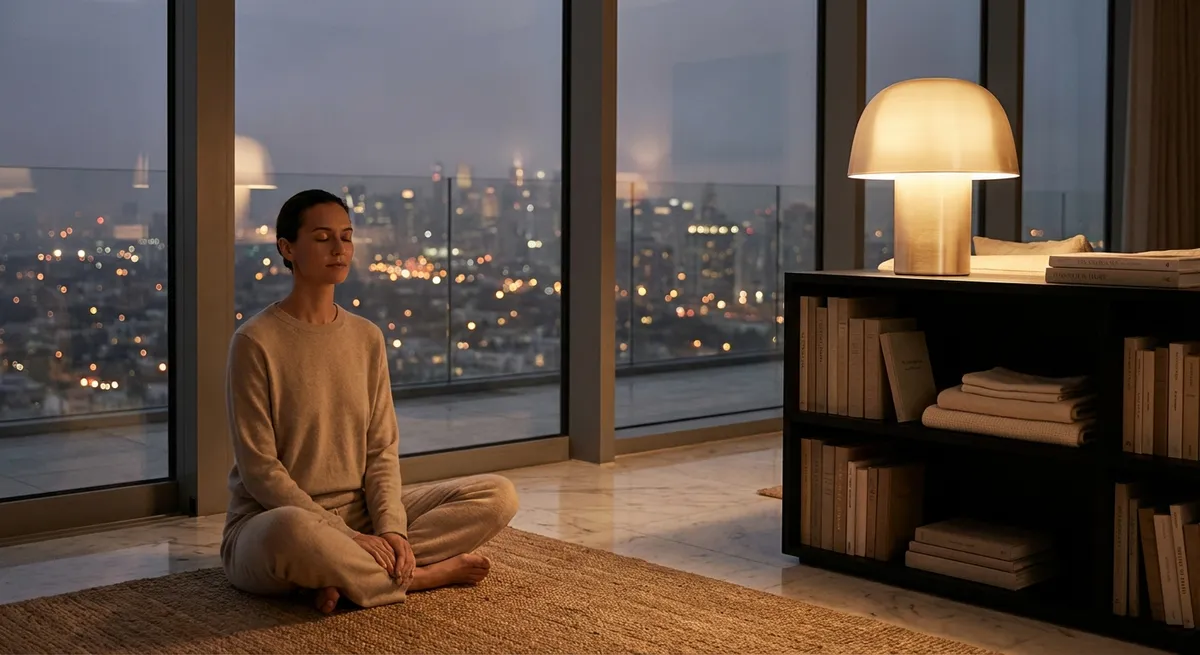
Meditation has slipped out of incense-filled rooms and into boardrooms, private members’ clubs, and quietly curated morning rituals. For the discerning seeker of mental wellness, it is no longer a fringe practice but an invisible status symbol: proof that you value inner clarity as highly as any external achievement. Done well, meditation is not about escape—it is about upgrading the quality of your attention so that your entire life feels more considered, more deliberate, and more exquisitely lived.
Below are five exclusive, nuanced insights that elevate meditation from a basic stress tool into a refined mental craft—one that aligns with a lifestyle of discernment, subtlety, and quiet excellence.
Meditation as Cognitive Curation, Not Just Relaxation
To approach meditation as merely “relaxing” is to miss its most potent value. At a sophisticated level, meditation functions as cognitive curation—a daily edit of your internal landscape.
Instead of letting every thought, notification, and opinion occupy prime real estate in your mind, meditation trains you to notice what deserves your attention and what is simply noise. Over time, this becomes a kind of tasteful minimalism for your inner world. You begin to experience fewer mental “open tabs,” less emotional clutter, and a heightened capacity to focus on what is genuinely meaningful.
Neuroscientific research supports this elevated view. Regular meditation has been associated with changes in brain regions linked to attention, emotional regulation, and self-awareness, such as the prefrontal cortex and the default mode network. What this means experientially is that you are less dragged by impulse and more guided by intention. In a culture that constantly competes for your focus, the ability to selectively direct attention is not only a wellness asset—it is a quiet luxury.
When you sit to meditate, consider adopting the mindset of a curator, not a consumer. You are not there to take in more, but to refine, edit, and gently release.
The Art of Micro-Rituals: Turning Transitional Moments into Sanctuaries
Most people think of meditation as something that requires a cushion, an app, and at least twenty uninterrupted minutes. Discerning practitioners know that some of the most powerful moments of practice live in the in-between spaces: the few breaths before a meeting, the pause after closing your laptop, the quiet interlude between parking the car and entering your home.
These micro-rituals are brief, intentional pockets of presence that elevate ordinary transitions into restorative sanctuaries. They might be as simple as:
- Three slow, silent breaths before answering a call
- A minute of observing the sensation of water while washing your hands
- A short body-scan while waiting for your coffee to brew
By weaving these fragments of meditation into your day, you create an elegant continuity of calm. Rather than confining serenity to one “formal” session, you allow your nervous system to reset multiple times, reducing the cumulative load of stress.
The refined aspect of micro-rituals lies in how discreet they are. They do not demand attention from anyone else; they are not performance, but inner calibration. Over time, these pauses become a signature of your presence—unhurried, composed, and subtly grounded, even when your schedule is full.
Nervous System Literacy: Meditation as Regulation, Not Escape
A sophisticated meditation practice includes an understanding of your nervous system—how stress, overwhelm, and calm are experienced biologically, not just psychologically. This is where meditation moves beyond vague “relaxation” into precise self-regulation.
Your nervous system operates through patterns of arousal and recovery. Under constant pressure—deadlines, emotional demands, digital overload—it can become stuck in chronic activation. Meditation offers a way to gently escort the body back toward balance, but only if approached with nuance.
Rather than forcing yourself into stillness, you learn to read your internal signals:
- Is your breath shallow and high in the chest, or low and grounded?
- Do your shoulders subtly grip, or can they be softened with awareness?
- Is your mind racing, or does it simply feel alert yet steady?
By observing without judgment, you begin to distinguish between healthy activation (focused, energized) and unhealthy overload (frazzled, panicked). This literacy allows you to choose meditation styles that fit your current state: breath-focused stillness when you are overstimulated, or gentle movement and walking meditation when sitting produces agitation.
This level of discernment transforms meditation from a blunt instrument into a tailored regulation tool—one that supports resilience, stable energy, and a more composed internal climate, regardless of external circumstances.
Attention as a Luxury Commodity: Where You Place It Shapes Your Life
In an era where even your attention is monetized, choosing where you place it becomes a defining act of personal sovereignty. Meditation trains you to treat your attention as a luxury commodity—finite, valuable, and not to be squandered.
Over time, you notice that the quality of your life is less about what you own and more about how you experience what you already have. A conversation becomes richer when you are fully present. A meal becomes more nuanced when you are not simultaneously scrolling. Even solitude becomes more nourishing when it is free from mental turbulence.
Meditation refines this capacity by teaching you three subtle skills:
- Sustained attention: Staying with a chosen object—breath, sound, sensation—without constantly being pulled away.
- Selective attention: Learning what to ignore, so that your inner space is not cluttered by every passing thought or external stimulus.
- Attentional flexibility: Moving your focus intentionally—from narrow detail to wide perspective—depending on what the moment requires.
These are the mental equivalents of having a finely tuned palate or a trained eye for design. You become more sensitive to what truly enriches you and more immune to what merely distracts. This is mental wellness not as a trend, but as a high standard of living.
Refining Your Inner Dialogue: Meditation as Discreet Self-Compassion
Beneath the surface of accomplishment and composure, many high-functioning individuals live with a relentless inner critic. Meditation, at its most elegant, is not only about watching thoughts—it is about refining the tone of your inner voice.
As you sit and observe, you start to hear the quality of your self-talk with startling clarity: the impatience, the quiet self-doubt, the harsh perfectionism. Instead of trying to silence these voices, you apply a more subtle art: replacing aggression with curiosity, and judgment with precise, honest kindness.
This does not mean indulging in empty affirmations. It means speaking to yourself as you would to a respected peer—clear, direct, but never cruel. Over time, meditation becomes a kind of private etiquette for the mind: you no longer tolerate internal language you would never direct toward someone you care about.
The mental health benefits are profound. Reduced self-criticism has been linked to lower anxiety, decreased depressive symptoms, and greater emotional resilience. But beyond clinical outcomes, there is an aesthetic shift: your inner world feels less abrasive, more civilized, more hospitable to your own presence.
In this sense, meditation becomes a discreet form of self-compassion, one that needs no public display. It is felt in the way you move through challenges—with quiet steadiness instead of inner hostility.
Conclusion
Meditation, when approached with nuance and discernment, transcends the clichés of “relax and clear your mind.” It becomes a sophisticated practice of cognitive curation, elegant micro-rituals, nervous system literacy, intentional use of attention, and refined self-dialogue.
This is meditation as quiet luxury: not ostentatious, not performative, but deeply integrated into the way you think, feel, and respond to the world. It is an invisible standard you hold for your inner life—a decision that your mind deserves the same level of care, intention, and refinement as any other aspect of your lifestyle.
When you next sit in stillness, let it be with this elevated awareness: you are not simply “taking a break.” You are crafting the conditions for a more composed, discerning, and deeply well-lived mind.
Sources
- [National Center for Complementary and Integrative Health – Meditation and Mindfulness](https://www.nccih.nih.gov/health/meditation-and-mindfulness-what-you-need-to-know) - Overview of meditation types, evidence-based benefits, and safety considerations from a U.S. government health agency.
- [Harvard Medical School – Mindfulness Meditation May Ease Anxiety, Mental Stress](https://www.health.harvard.edu/mind-and-mood/mindfulness-meditation-may-ease-anxiety-mental-stress) - Summarizes research on how mindfulness-based practices affect stress, anxiety, and emotional regulation.
- [American Psychological Association – Mindfulness Meditation: A Research-Proven Way to Reduce Stress](https://www.apa.org/topics/mindfulness/meditation) - Explores the psychological mechanisms behind meditation and its impact on attention, self-compassion, and mental health.
- [National Institutes of Health – Brain Imaging Studies of Meditation](https://www.ncbi.nlm.nih.gov/pmc/articles/PMC4895748/) - Peer-reviewed review article detailing how long-term meditation practice is associated with structural and functional brain changes.
- [Mayo Clinic – Meditation: A Simple, Fast Way to Reduce Stress](https://www.mayoclinic.org/tests-procedures/meditation/in-depth/meditation/art-20045858) - Practical, medically reviewed explanation of meditation’s effects on stress, emotional balance, and overall wellness.
Key Takeaway
The most important thing to remember from this article is that this information can change how you think about Meditation.