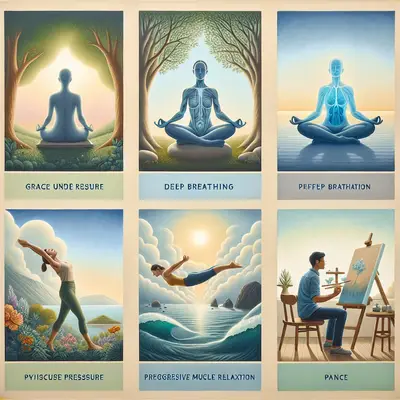
Stress, in a refined life, should be a fleeting visitor—not a permanent resident. Yet for many high-achieving, discerning individuals, tension has become the background noise of existence. This is not a call to abandon ambition or beauty; it is an invitation to pursue them without sacrificing your nervous system in the process. Think of stress relief not as a rescue mission, but as a cultivated, elegant ritual—an ongoing curation of how you inhabit your own mind.
Below are five exclusive, nuanced insights designed for those who value detail, discretion, and a quietly powerful sense of well-being.
Insight 1: Treat Your Nervous System Like a Bespoke Instrument
The modern nervous system is often handled like a machine—overworked, under-maintained, expected to perform on command. A more elevated approach is to treat it as a handcrafted instrument: sensitive, nuanced, and capable of extraordinary range when properly tuned.
Physiologically, stress is a choreography between the sympathetic nervous system (“fight or flight”) and the parasympathetic nervous system (“rest and digest”). Chronic stress is not simply “feeling busy”—it is a repeated over-activation of the sympathetic system, narrowing your emotional bandwidth and degrading your capacity for subtlety, focus, and delight.
What changes this is not grand gestures, but consistent, finely tuned signals to your body that it is allowed to stand down. Slow, diaphragmatic breathing, brief walking intervals between demanding tasks, and intentional pauses before major decisions all serve as micro-adjustments on this instrument. Over time, they refine your “baseline setting” from chronic tension to composed alertness.
This is less about relaxation as an event and more about recalibration as a lifestyle—so that stress is an occasional crescendo, not the entire score.
Insight 2: Curate Sensory Inputs the Way You Curate Your Interiors
Your environment is constantly telling your nervous system how urgently it should react. Many people invest meticulously in their visual surroundings but neglect the cumulative effect of sound, light, and tactile experiences on their stress levels.
Begin by auditing your sensory world. Notice the harsh overhead lighting that keeps your body in a low-grade “daytime vigilance” mode late into the evening. Observe the constant micro-jolts from notifications, each one a miniature “alert” signal to your brain. Pay attention to jarring soundscapes—traffic, abrupt ringtones, news headlines autoplaying in the background.
Then, curate. Opt for layered, softer lighting in the evening that signals transition toward rest. Replace sharp notification sounds with gentle tones—or disable nonessential alerts altogether. Consider a sound environment that feels composed: a restrained classical playlist, gentle nature sounds, or intentional silence in key parts of your day.
Over time, this sensory curation creates a subtle but profound stress-relief architecture. Your surroundings are no longer neutral; they become an ally, continuously whispering to your nervous system: “You may exhale here.”
Insight 3: Practice “Strategic Unavailability” as Emotional Protection
A sophisticated life often comes with constant access—emails, messages, expectations that you are perpetually reachable and responsive. Continuous availability, however, is a direct invitation to chronic stress. Refinement in the digital era includes the artful practice of strategic unavailability.
This is not about disappearing; it is about designing boundaries that safeguard your clarity and emotional steadiness. Examples include:
- Fixed, non-negotiable windows for deep work where messages are off or silenced
- Designated times for responding to non-urgent communications, rather than reacting in real time
- One evening per week with your phone in another room, allowing your mind to reset without interruption
Research consistently associates constant connectivity with increased anxiety and stress, not simply due to workload, but due to the inability to mentally “close the door.” Strategic unavailability is the psychological equivalent of a private members’ lounge for your mind—selectively accessible, thoughtfully filtered, and never overcrowded.
Once established, these boundaries send a powerful message to your nervous system: you are not on call for the world’s demands every minute of every day. That realization alone is deeply calming.
Insight 4: Use Precision Recovery Instead of Vague Relaxation
“Relaxing” is often treated as a vague, catch-all aspiration—watch something, scroll something, drink something, and hope the tension dissolves. A more elevated strategy is precision recovery: selecting stress-relief practices based on the specific state your body and mind are in.
For example:
- Mental Overload: When your mind is crowded with thoughts, opt for a single-task, grounding activity—journaling structured thoughts, a short session of mindful breathing, or a deliberate, device-free walk. These activities give your cognition a clear, singular focus, which eases overload.
- Physical Agitation: When you feel keyed up, jittery, or restless, it often calls for a controlled physical outlet—gentle yoga, stretching, slow strength training, or a brisk but measured walk. These regulate stress hormones and discharge excess energy.
- Emotional Heaviness: When the weight is emotional rather than purely cognitive, soothing inputs help—warm bathing rituals, comforting scents, a carefully chosen piece of music, or a calm conversation with someone who regulates rather than amplifies your emotions.
By matching the method to the moment, you reduce the sense of futility that often accompanies generic attempts to “calm down.” Precision recovery respects the complexity of your inner world and acknowledges that not all stress feels alike—so not all stress relief should look alike, either.
Insight 5: Elevate Consistency Over Intensity as the Ultimate Luxury
Luxury, at its best, is not about excess; it is about continuity—the ability to rely on a certain standard of quality day after day. Stress relief follows the same principle. A single, dramatic wellness retreat once a year cannot counterbalance a daily life structured around depletion.
Instead, imagine stress relief as a minimal, non-negotiable thread woven into each day:
- A two-minute breathing practice before opening your inbox
- A defined cut-off time for stimulating work in the evening
- A nightly transition ritual (closing screens, dimming lights, a warm beverage, a few pages of a thoughtfully chosen book)
- A weekly review of obligations where you ask, with precision, what can be delegated, postponed, or declined
These rituals do not need to be elaborate to be exquisite. The true luxury is that they happen consistently enough to change your baseline. Physiologically, small daily shifts in sleep quality, inflammatory markers, and stress hormones accrue. Psychologically, you begin to trust that you will care for yourself with the same reliability with which you meet external commitments.
Over time, this consistency creates a new internal identity: someone who does not wait until they are on the edge of burnout to intervene. Someone for whom calm is not a treat, but a standard.
Conclusion
Stress will never vanish from a meaningful, ambitious life—but its role can be redesigned. By treating your nervous system as a finely tuned instrument, curating your sensory environment, practicing strategic unavailability, choosing precision recovery, and elevating consistency over intensity, you create a private ecosystem of calm that travels with you.
This is stress relief as quiet sophistication: invisible to the casual observer, yet unmistakable in the way you move through the world—measured, clear, and internally unhurried, no matter how full your calendar becomes.
Sources
- [American Psychological Association – Stress Effects on the Body](https://www.apa.org/topics/stress/body) – Overview of how chronic stress impacts different body systems and why regulation matters
- [National Institute of Mental Health – 5 Things You Should Know About Stress](https://www.nimh.nih.gov/health/publications/stress) – Evidence-based information on stress, symptoms, and coping strategies
- [Mayo Clinic – Chronic Stress: Put Strategies into Action](https://www.mayoclinic.org/healthy-lifestyle/stress-management/in-depth/stress-relief/art-20044456) – Practical stress management techniques and lifestyle approaches
- [Harvard Health Publishing – Understanding the Stress Response](https://www.health.harvard.edu/staying-healthy/understanding-the-stress-response) – Detailed explanation of sympathetic and parasympathetic activation
- [Cleveland Clinic – Digital Detox: Why and How to Take a Break from Screens](https://health.clevelandclinic.org/digital-detox) – Discussion of how constant connectivity contributes to stress and how boundaries help
Key Takeaway
The most important thing to remember from this article is that this information can change how you think about Stress Relief.