Stress has become a kind of background noise—persistent, abrasive, and strangely accepted. Yet for those who value discernment, a turbulent inner world is not an inevitability; it’s a design flaw. Stress relief, approached with intention and elegance, becomes less about “coping” and more about quiet mastery—an artful curation of how you expend your attention, energy, and nervous system. This is not escapism. It is the deliberate choice to live from a composed center, even while life remains complex and demanding.
Below are five exclusive, high-level insights for those who view mental wellness not as a trend, but as a personal standard.
1. Treat Nervous System Regulation as a Daily Luxury, Not an Emergency Fix
Many people only engage stress relief once they are already overwhelmed. A more refined approach treats nervous system care the way a collector treats a prized object: protected, maintained, and never left to chance.
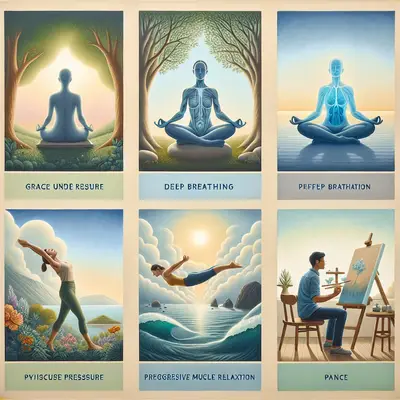
Begin by reframing “relaxation” as nervous system regulation. The goal is not merely to feel better in the moment, but to train your body to exit stress states more efficiently. Slow, measured breathing—particularly lengthening the exhale—has been shown to increase vagal tone, which supports a calmer baseline state. Instead of reserving these practices for crisis moments, thread them through your day in brief, intentional intervals: a two-minute breathing sequence before opening your inbox; a quiet pause after in-person meetings; a ritualized wind-down before bed that signals safety to your body.
The difference is subtle but powerful: you are not “taking breaks” as an apology to your nervous system; you are cultivating stability as a daily luxury. Over time, your stress response becomes less reactive, not because life is easier, but because your internal calibration is more expertly tuned.
2. Curate a Sensory Environment That Discreetly Lowers Cortisol
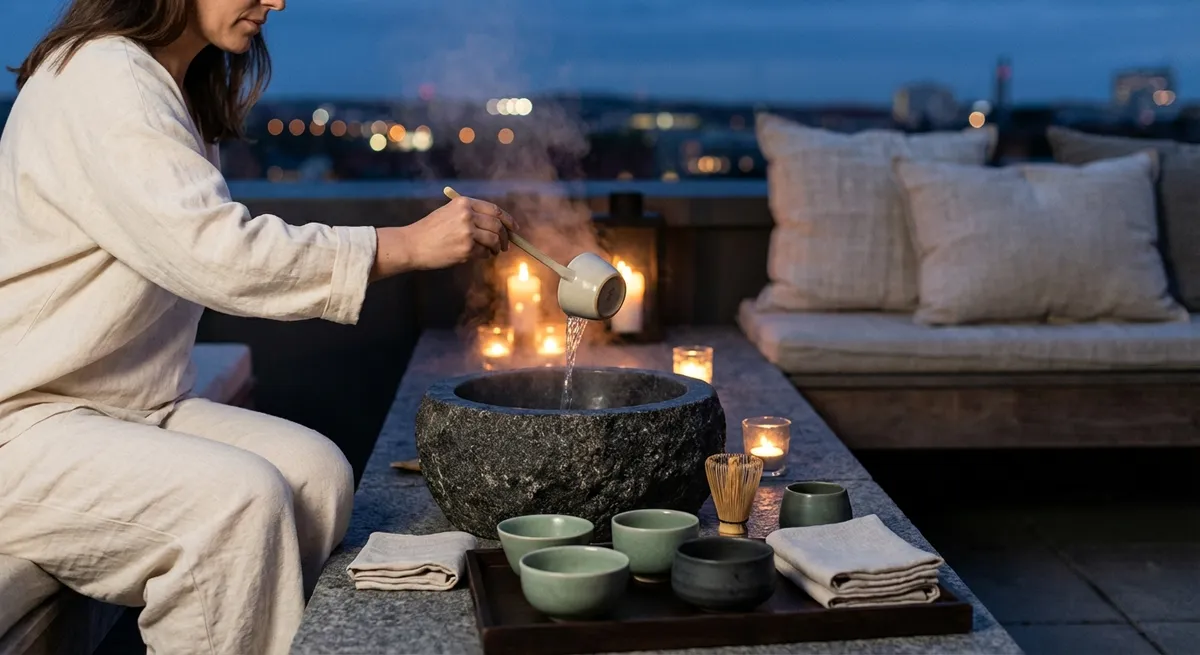
Refined stress relief starts in the physical world. The sensory details that surround you—light, scent, texture, and sound—are not decorative; they’re biochemical cues that inform your nervous system.
Light is a prime example. Exposure to natural light in the morning and a gentle dimming of artificial light in the evening helps synchronize your circadian rhythm, which in turn supports stress resilience and mood. Consider warm, layered lighting throughout your home and workspace rather than a single, harsh overhead source. Incorporate materials that feel grounding to the touch—linen, stone, untreated wood—alongside a restrained palette that favors calm neutrals with subtle, intentional accents.
Scent can act as an elegant, nearly invisible form of stress modulation. High-quality essential oils such as lavender, bergamot, or sandalwood, used sparingly, can create an olfactory signal that “this space is safe.” Even more impactful is the absence of sensory clutter: limit persistent notifications, harsh sounds, and visual chaos. The outcome is not simply a beautiful space; it’s an environment that quietly reminds your physiology that it does not need to be on high alert.
3. Design a Personal “Cognitive Decanting” Ritual
Our minds are holding far more than they were designed to: overlapping tasks, digital demands, ambient worries, and emotional residue from every interaction. Without a deliberate process to release and reorganize these inputs, stress compounds into mental noise. This is where a “cognitive decanting” ritual becomes invaluable.
Once a day—ideally in the evening—create a 10–15 minute ritual devoted to offloading mental content. Use a single, dedicated notebook or digital document; the consistency matters. Begin by listing everything occupying your mind: obligations, unresolved conversations, mild irritations, even half-formed ideas. Then, gently categorize: what requires action, what needs clarification, what simply needs to be acknowledged and let go.
The key is not perfection, but containment. By giving your thoughts a clear, external home, you relieve your brain from the need to rehearse them constantly. Over time, your cognitive decanting ritual becomes a psychological threshold between “day” and “after,” signaling to your mind that it is safe to downshift. The result is not only reduced stress, but a cleaner mental canvas for deeper sleep, more creative thinking, and genuinely restorative downtime.
4. Replace Vague Boundaries with Elegant, High-Integrity Agreements
Much stress originates not from what we do, but from what we allow—overcommitting, under-communicating, and silently negotiating with our own limits. A refined stress relief strategy includes the art of precise, graceful boundaries.
Rather than relying on generic advice to “say no more often,” consider crafting high-integrity agreements with yourself and others. For example: you may decide that you do not respond to non-urgent messages after a certain hour, or that you will not accept meeting requests without a clear purpose and end time. Communicate these limits with calm clarity, framing them as conditions that enable you to bring your best self to what truly matters.
The elegance lies in consistency. When your actions and boundaries align, you decrease internal friction—the quiet stress of self-betrayal. You become trustworthy to yourself. That trust reduces anxiety because you no longer live in fear of your own willingness to tolerate overwhelm. Stress relief becomes less about “managing” chaos and more about never granting chaos unchecked access to your time and energy in the first place.
5. Elevate Recovery to the Same Status as Achievement
For many high-functioning individuals, recovery is treated as a reward: something earned after exertion, squeezed into leftover hours. This mentality keeps the nervous system in a subtle, persistent state of threat—always bracing for the next demand. A truly elevated approach to stress relief places recovery on equal footing with performance.
Begin by identifying what genuinely restores you versus what merely distracts you. Passive scrolling or background entertainment may numb stress but rarely renew you. In contrast, structured recovery could involve unhurried movement like walking or gentle stretching, high-quality sleep, nourishing meals eaten without multitasking, or immersive hobbies that fully absorb your attention.
Schedule recovery with the same seriousness as important meetings. Protect it on your calendar. When you give your system predictable, high-quality restoration, your stress response becomes more efficient rather than chronically activated. You experience a quieter, more stable form of energy—less adrenaline, more grounded alertness. In this way, recovery is not in competition with ambition; it’s the infrastructure that allows you to pursue a demanding life without surrendering your mental clarity and emotional poise.
Conclusion
Stress will always exist, but the way it inhabits your life is negotiable. When you approach stress relief as an intentional, refined practice—anchored in nervous system care, sensory design, mental decluttering, precise boundaries, and elevated recovery—you move beyond coping into authorship. Your inner life begins to feel less like a reaction and more like a composition.
Quiet mastery does not mean a life without friction; it means possessing the inner architecture to meet that friction with steadiness, discernment, and grace. From this place, calm is not an escape from reality, but a sophisticated way of inhabiting it.
Sources
- [American Psychological Association – Stress: The Different Kinds of Stress](https://www.apa.org/topics/stress) – Overview of stress types, their effects, and evidence-based management strategies
- [Harvard Health Publishing – Understanding the Stress Response](https://www.health.harvard.edu/staying-healthy/understanding-the-stress-response) – Explains how stress affects the body and the role of the nervous system and hormones
- [NIH National Center for Complementary and Integrative Health – Relaxation Techniques](https://www.nccih.nih.gov/health/relaxation-techniques-what-you-need-to-know) – Reviews research on breathing, meditation, and other relaxation methods for stress reduction
- [Cleveland Clinic – Vagus Nerve and the Nervous System](https://my.clevelandclinic.org/health/body/21758-vagus-nerve) – Details on vagus nerve function and its role in regulating stress and relaxation
- [Mayo Clinic – Sleep and Mental Health](https://www.mayoclinic.org/diseases-conditions/insomnia/in-depth/sleep-and-mental-health/art-20046495) – Discusses the relationship between quality sleep, stress, and emotional well-being
Key Takeaway
The most important thing to remember from this article is that this information can change how you think about Stress Relief.