In a culture that prizes velocity, the true luxury is not more stimulation but less. A genuinely calm mind is not an accident; it is curated, like a considered wardrobe or a well-designed room. Natural remedies, when selected with discernment and used with intention, offer a quiet antidote to the invisible taxation of modern life. This is not about quick fixes, but about cultivating an unhurried inner climate—one that feels composed, clear, and quietly self-assured.
Below are five exclusive, nuance-rich insights into natural support for mental ease—crafted for those who prefer their wellness practices subtle, elevated, and effective.
The “Micro-Ritual” Philosophy: When Less is Intentionally More
Most people fail with wellness routines not because the tools are ineffective, but because the rituals are too elaborate to be sustainable. The refined alternative is the micro-ritual: small, precise practices that you can seamlessly layer into existing moments of your day.
Consider replacing a rushed morning scroll with a 90-second tea ceremony. Select a naturally calming tea—such as lemon balm, chamomile, or tulsi— and treat the preparation as a sensory reset: notice the scent of the leaves, the sound of the water, the warmth of the cup in your hands. By anchoring this ritual to something you already do (waking, sitting at your desk, or transitioning from work to evening), you create a dependable cue for the nervous system.
The elegance lies in the scale. Micro-rituals do not demand you “find time”; they simply refine time you already inhabit. Over weeks, these quiet, repeating signals teach your body that certain sensory inputs—specific tastes, scents, lighting, or textures—mean “safe, slow, and settled.” This is how natural remedies move from occasional indulgence to baseline support.
Botanical Pairing as an Art: Matching Herbs to Emotional Texture
Not all stress feels the same, and not all botanicals soothe in the same way. A sophisticated approach treats herbs less like generic “calm-down” tools and more like a curated apothecary for distinct emotional climates.
- When your mind feels wired but exhausted, adaptogens such as ashwagandha or rhodiola (used judiciously) can support the body’s stress response and resilience over time.
- When your stress is agitated or irritable, nervine herbs like passionflower or skullcap can help quiet mental overstimulation and soften the edges of the day.
- When your mood feels flat or overcast, scents like bergamot, rosemary, or sweet orange—whether in a diffuser or a simple inhalation from a handkerchief—can gently elevate and brighten without feeling artificially cheery.
The key is observation. Keep a private “calm ledger” for two weeks: note what you took (tea, tincture, or aromatherapy), when you took it, how you felt before, and how you felt 30–60 minutes after. Over time, you will notice patterns—certain botanicals that consistently take the sharpness off your anxiety or invite deeper exhalations before sleep.
This is wellness as connoisseurship: the attentive matching of natural remedies to your emotional nuance, rather than forcing your inner life into generic labels.
Sensory Curation: Designing a Nervous-System-Friendly Environment
Natural remedies are not only ingested—they are also inhaled, seen, heard, and touched. An elevated approach to mental calm is less about one perfect supplement and more about orchestrating a sensory environment that quietly supports your biology.
Begin with light. Whenever possible, allow natural light to dictate your day’s rhythm: bright, unfiltered sunlight in the morning (even 5–10 minutes by a window), and progressively warmer, dimmer light in the evening. This natural “light choreography” reinforces circadian rhythms that govern mood, energy, and sleep quality—often more effectively than any single relaxation tool.
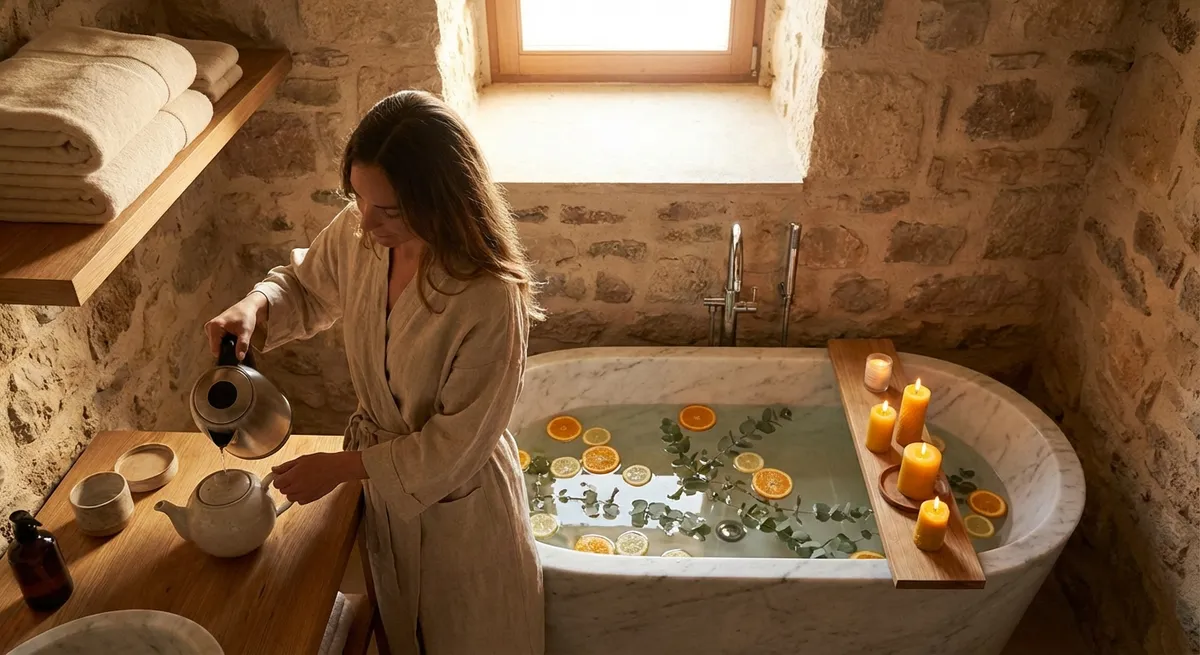
Layer in scent, but with restraint. A single high-quality essential oil—lavender, neroli, or vetiver—used sparingly can become a signature cue for your nervous system. Rather than diffusing all day, reserve it for specific moments: pre-sleep wind-down, bath time, or your evening journaling window. Consistency gives the aroma a conditioned, almost Pavlovian effect: “When I smell this, my body knows we are entering a slower state.”
Finally, texture matters. A weighted blanket, a cashmere throw, or a cool linen pillowcase can each become tactile anchors for calm. The objective is not visual perfection; it is sensory harmony. Your surroundings should feel like a subtle exhale—visually uncluttered, acoustically gentle, and olfactorily understated.
Slow-Breath Alchemy: Elevating a Simple Practice with Natural Support
Breathwork is often presented as a technique; here, it becomes a refined ritual when combined with carefully chosen natural companions. The power is in the pairing.
Select one short breathing pattern—such as a 4–6 second inhale, a brief pause, and a 6–8 second exhale. Practice it for three minutes while holding or interacting with a single natural element: a warm mug of herbal tea, a stone you enjoy the weight of, or even a small vial of your chosen essential oil.
For instance, an evening ritual might look like this:
- Prepare a cup of chamomile and lemon balm tea.
- Sit where you cannot see a screen; let your gaze rest on something neutral or comforting (a plant, a candle, a city view).
- With each exhale, gently extend the breath by half a second, smelling the steam from your cup periodically.
- Allow the warmth of the mug to be a tactile cue to soften your shoulders and jaw.
The tea offers phytochemical support. The warmth and aroma provide sensory cues. The breath regulates your autonomic nervous system. Together, this layered simplicity becomes an understated form of slow-breath alchemy—effortless enough to repeat nightly, refined enough to feel like an intentional ritual rather than a task.
The Elegance of Boundaries: A Natural Remedy Few Recognize
One of the most potent “natural remedies” is often overlooked because it is not something you can bottle or brew: boundaries. The nervous system is exquisitely sensitive to demands that exceed our capacity—whether social, digital, or emotional. Chronic overextension metabolizes into restlessness, poor sleep, and a persistent sense of mental noise.
Think of boundaries as environmental medicine. Just as you would avoid known allergens, consider gently limiting exposures that reliably inflame your inner state: late-night work messages, emotionally draining conversations at your most depleted times, or constant doom-scrolling through distressing news.
Support this boundary hygiene with subtle, natural anchors:
- Create a “digital dusk”: power down devices at a set time, then use a calming herbal tea, dim lighting, and perhaps a brief gratitude note in a journal as your closing ritual for the day.
- Designate one screen-free zone—your dining table or bedroom—and enrich it with tactile and sensory comforts instead: a soft throw, a favorite print, a discreet bedside carafe, a simple plant.
- Use a specific scent or piece of music only when you are engaged in restorative activities, such as stretching, reading quietly, or practicing breathwork.
By consistently reserving certain spaces, scents, and sounds for ease rather than urgency, you train your body to recognize and receive rest more quickly. Boundaries, in this sense, are not walls but frames—elegant containers that preserve your mental clarity and make every natural remedy more effective.
Conclusion
A calm mind is not a luxury reserved for retreats or rare weekends away; it is a daily craft, composed from small, deliberate choices. When approached with discernment, natural remedies offer more than “stress relief”—they become instruments in a personal symphony of slowness, clarity, and quiet strength.
By refining your rituals, curating botanicals to match your emotional texture, designing a nervous-system-friendly environment, elevating your breathwork, and treating boundaries as a form of natural medicine, you create a calm that is not fragile but deeply rooted. In a world that moves quickly, there is something quietly radical—and exquisitely premium—about an unhurried mind.
Sources
- National Center for Complementary and Integrative Health – Stress and Relaxation Techniques – Overview of evidence-based mind–body approaches for stress, including relaxation and breathing practices.
- Harvard Medical School – How Light Affects Our Sleep – Explains how light exposure influences circadian rhythms, mood, and sleep quality.
- Cleveland Clinic – Herbal Supplements and Mental Health – Discusses commonly used herbs for mood and stress, including safety considerations.
- Johns Hopkins Medicine – Weighted Blankets and Anxiety – Outlines how tactile pressure from weighted blankets can promote calm and improve sleep.
- American Psychological Association – The Importance of Boundaries – Explores how setting healthy boundaries reduces stress and supports mental well-being.
Key Takeaway
The most important thing to remember from this article is that this information can change how you think about Natural Remedies.