There is a certain quiet opulence in feeling unhurried, mentally clear, and emotionally composed. In a world that rewards speed and constant output, cultivating calm can feel like a rare privilege—yet it is, in many ways, the most essential luxury. Natural remedies, when approached with discernment, can become less about “quick fixes” and more about elevating the everyday into a refined ritual of mental ease. This is not about escaping life, but about meeting it with a rare, collected grace.
Below are five exclusive, quietly powerful insights into natural mental wellness—subtle refinements that appeal to those who value both depth and discretion.
The Micro-Dose Evening: Replacing Noise with Nuanced Calm
The modern evening is often loud, even when it is technically “quiet”—a flickering screen, a glowing phone, a restless mind idling in high gear. One of the most effective natural remedies for mental ease is not a thing you add, but a sequence you meticulously remove.
Begin by treating the last 90 minutes of your day as a micro-dose retreat. Dim the lighting in stages, as though lowering the curtain on your nervous system. Replace overhead lights with a single warm lamp or candlelight to signal to your body that the performance of the day is over. This graduated darkness gently encourages melatonin production, making sleep more restorative and less fractured.
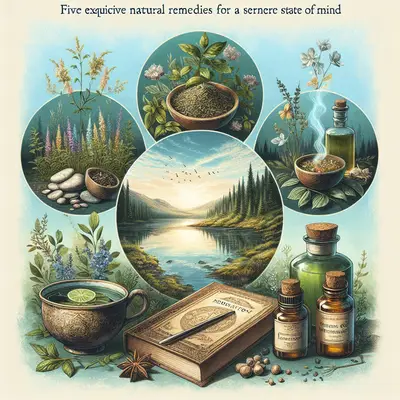
Pair this with one understated herbal element—such as a cup of organic chamomile, lemon balm, or passionflower tea. The aim is not sedation, but a subtle unwinding of muscle tension and cognitive overactivity. Resist the urge to multi-task: allow this to be a single-purpose experience. No emails, no rapid scrolling—just the quiet companionship of a calming infusion and the steadying company of your own thoughts as they slow and soften.
Over time, this consciously curated evening reduction becomes its own natural remedy: a predictable, sensory signature that tells your mind, “It is safe to let go now.”
Aromatic Architecture: Designing Your Personal Scent Sanctuary
Fragrance is often treated as an accessory. For mental wellness, it can become architecture.
Aromatherapy, when used with restraint and intention, can gently recalibrate the nervous system. Rather than diffusing any random oil blend, approach scent as you might a bespoke interior: layered, deliberate, and specific to purpose. For mental calm, research suggests that certain essential oils—particularly lavender, bergamot, and ylang-ylang—can support relaxation and reduce perceived stress.
Create a “scent map” through your day:
- A grounding scent at your desk: a single drop of vetiver or cedarwood on a tissue or ceramic stone, inhaled deeply before transitions or demanding tasks.
- A softening scent at home: a delicate blend of lavender and sweet orange diffused at low intensity in the early evening to signal off-duty hours.
- A sleep-forward scent for night: a small spritz of diluted Roman chamomile or lavender hydrosol on your pillow, allowing the fragrance to fade as you drift into sleep.
The key is minimalism. Over-scenting can be as intrusive as noise. By treating fragrance as a gentle structural element—rather than a constant stimulus—you create invisible “rooms” of mental association: focus, exhale, surrender. With repetition, your brain begins to recognize these olfactory cues, making emotional decompression quicker, smoother, and more reliable.
Mineral Equilibrium: The Understated Power of Magnesium and Ritual Hydration
Many refined wellness practices overlook the simplest of natural alignments: mineral balance and intentional hydration. When the body is quietly depleted, the mind is rarely at ease—no matter how many mindfulness techniques you layer on top.
Magnesium, in particular, plays a pivotal role in nervous system regulation, muscle relaxation, and sleep quality. Modern diets, stress, and certain medications can nudge magnesium levels lower, potentially contributing to restlessness, tension, and difficulty winding down. Under the guidance of a healthcare professional, gentle magnesium support—via diet (leafy greens, nuts, seeds, whole grains) or a well-formulated supplement—can be a discreet but powerful ally for mental calm.
Elevate this with ritualized hydration. Rather than mindlessly sipping water throughout the day, treat hydration as a composed act of self-regulation:
- Morning: a tall glass of filtered water with a pinch of mineral-rich salt or a trace-mineral solution to restore overnight losses.
- Afternoon: a calm, caffeine-free herbal infusion such as tulsi (holy basil) to support stress resilience without stimulation.
- Evening: a warm, magnesium-rich bath soak or foot soak with Epsom salts, allowing transdermal absorption while muscles and mind soften.
This is not about chasing trends, but about artfully supporting the body’s quiet chemistry so that the mind no longer has to fight against subtle, constant physiological strain.
The Refined Pause: Nature Micro-Immersions for the Urban Mind
Spending hours in untouched nature may be an occasional indulgence; integrating nature’s nervous-system effects into a busy, urban life can become a daily art. Research on “forest bathing” (shinrin-yoku) and green-space exposure shows consistent psychological benefits: reduced stress markers, improved mood, and a gentler mental tempo.
Instead of framing nature as a weekend-only luxury, adopt micro-immersions:
- A five-minute walk where you deliberately seek out and visually trace the lines of tree branches, leaves, and sky, allowing your gaze to soften and expand.
- A brief standing pause near a window to watch the movement of clouds, rain, or shifting light.
- A small, intentionally chosen plant on your desk that you observe closely—texture, color variations, new growth—whenever your mind feels clenched.
The sophistication lies in your attention, not the setting. Even in dense cities, there are pockets of green and sky. Aim for multiple short exposures—three to five minutes, several times a day—rather than waiting for the elusive “perfect” nature escape. Over time, this practice re-teaches your nervous system how to downshift quickly, turning ordinary urban moments into quiet, natural interventions.
The Inner Curator: Editing Mental Inputs with Surgical Precision
One of the most elegant natural remedies for mental wellness is not a herb, scent, or mineral—it is discernment. The mind is constantly metabolizing whatever it consumes: conversations, headlines, social feeds, ambient anxieties. If the intake is chaotic, no supplement can fully offset the noise.
Treat your attention as you would a private collection: meticulously curated, rarely overcrowded, and fiercely protected. Begin by identifying your most mentally vulnerable windows—often first thing in the morning and last thing at night. In those times, practice radical selectivity:
- No news or social feeds upon waking; instead, offer your mind something neutral or nourishing—a few pages of a grounding book, a brief journaling moment, or simply unhurried silence.
- No emotionally charged content in the final hour before sleep. If you wish to read, choose something calmly written, preferably physical pages to avoid blue-light stimulation.
- Daytime boundaries for digital intensity: designate specific windows for consuming the heaviest information, rather than allowing a constant drip of micro-stress throughout your day.
This is not about living uninformed, but about sequencing and containment. Natural calm is not built only on what you add, but on what you strategically decline. Over time, your mental landscape becomes less cluttered, more spacious, and far more capable of genuine, sustained composure.
Conclusion
A truly calm mind is not an accident; it is a crafted environment. When natural remedies are woven into your life with elegance and intention, they cease to be isolated “tips” and become a coherent philosophy of living: reduced evening noise, curated scent, mineral and hydration balance, nature micro-immersions, and fiercely edited mental inputs.
Together, these practices form a subtle, sophisticated framework—one that does not shout its presence, but is felt in the way you move through your day: unhurried, clear, and quietly radiant. In a culture that often glorifies exhaustion, choosing natural composure is more than wellness; it is a deeply personal luxury.
Sources
- National Center for Complementary and Integrative Health – Relaxation Techniques - Overview of evidence-based practices that support stress reduction and mental calm
- Cleveland Clinic – Magnesium: Benefits, Deficiency, and Sources - Explains magnesium’s role in muscle relaxation, nervous system function, and sleep
- Harvard T.H. Chan School of Public Health – Nature and Mental Health - Discusses the connection between exposure to green spaces and improved mental health outcomes
- Johns Hopkins Medicine – Aromatherapy: Do Essential Oils Really Work? - Reviews research and practical guidance on aromatherapy for stress and anxiety
- American Psychological Association – Digital Stress and Well-Being - Explores how constant digital input affects stress levels and mental wellness
Key Takeaway
The most important thing to remember from this article is that this information can change how you think about Natural Remedies.