Mental ease is not a single decision; it is an atmosphere you curate. In a world that applauds urgency, there is a quiet luxury in designing a personal ecosystem of calm—steeped in nature, infused with intention, and tailored to a discerning mind. Natural remedies, when chosen thoughtfully, become less about “fixing stress” and more about elevating the quality of your inner life.
Below, you’ll find five exclusive, nuanced insights that move beyond generic advice, offering a more cultivated approach to natural mental wellness.
1. The Art of Micro-Dosing Nature: Subtle Contact, Profound Effect
The nervous system responds exquisitely to small, consistent touches of nature. You don’t need a weekend retreat in the countryside; you need a sequence of refined micro-moments that quietly recalibrate your physiology throughout the day.
A two-minute gaze at a tree line, the texture of a wooden desk, a cluster of fresh herbs on your kitchen counter—these are not aesthetic afterthoughts, but biologically significant signals of safety and restoration. Research in environmental psychology shows that even brief exposure to natural scenes lowers stress markers and supports cognitive recovery. Think of this as micro-dosing nature: a deliberate scattering of organic cues in your home, workspace, and daily routine.
Curate a visual landscape: a single, carefully chosen plant by your reading chair; a stone or shell on your desk that your fingers can return to during demanding calls; a small bowl of fresh rosemary or thyme on the kitchen island, releasing fragrance as you pass. Over time, these gentle reminders of the natural world become touchpoints that your nervous system recognizes as invitations to soften.
2. Elevated Aromatics: Fragrance as a Signature Mood Architecture
Scent is one of the most direct ways to influence mood, yet it is rarely treated with the same intentionality as lighting or sound. A sophisticated mental wellness practice treats fragrance as architecture: invisible design that shapes inner experience.
Natural aromatics—essential oils, fresh botanicals, resins, and teas—can be used not as a blur of “relaxing smells,” but as a curated olfactory wardrobe. Lavender’s softness, bergamot’s clarity, chamomile’s reassurance, and sandalwood’s grounding each whisper something different to the nervous system.
You might establish a “pre-sleep scent code”: a precise blend of lavender, chamomile, and a drop of vetiver diffused only after sunset, signaling to your body that the day is winding down. For focus-heavy afternoons, a more luminous palette of rosemary, lemon, and peppermint can sharpen attention without the agitation of another coffee. Over weeks, these scents become associative anchors—your mind learns to pair particular fragrances with calm, clarity, or unwinding, making your rituals more potent and effortless.
3. Botanical Beverages as Evening Ceremony, Not Escape
The evening drink has traditionally been a transition ritual—from performance to privacy, from duty to decompression. For many, that role is still played by alcohol, despite its well-documented disruption of sleep architecture and mood stability. A more refined approach does not simply “remove the wine” but replaces it with a botanical ceremony equal in pleasure and more generous in outcome.
Herbal infusions can be composed with the complexity of a fine drink: layered flavors, beautiful glassware, and a defined ritual. A blend of lemon balm (for gentle anxiolytic support), passionflower (for a quieter mind), and rose petals (for soft floral complexity) becomes more than a “cup of tea”—it becomes a statement that your unwinding is intentional, not accidental.
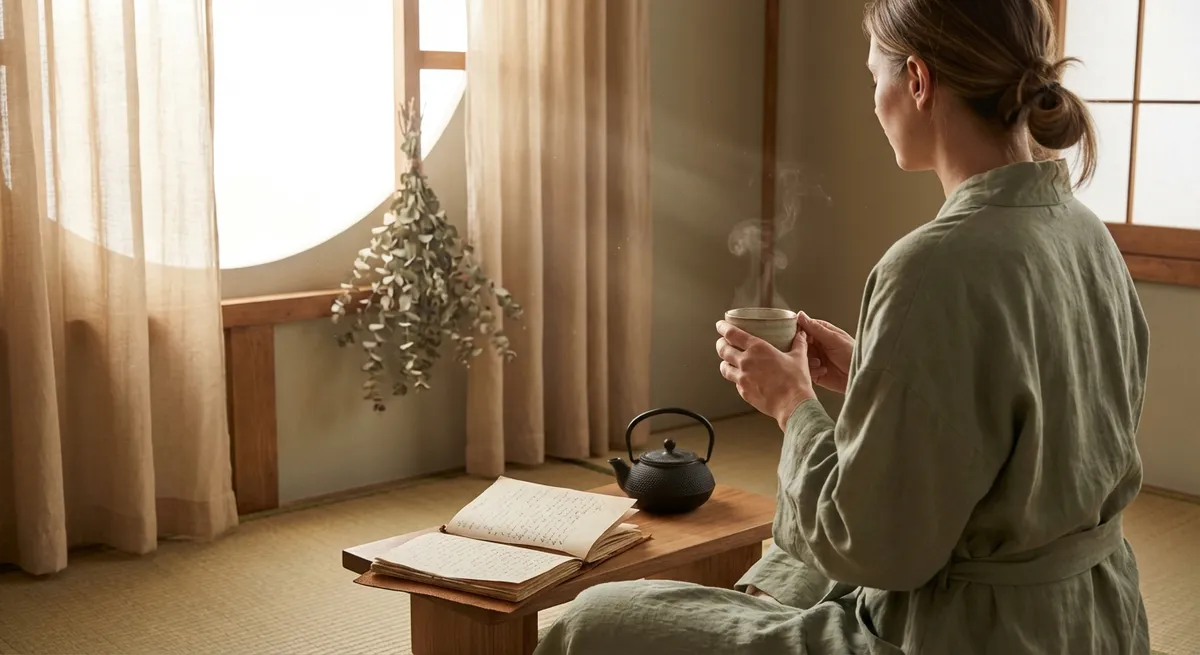
Present it in weighty glass or porcelain. Add a thin slice of fresh pear, a sprig of thyme, or a twist of orange peel. Sip it slowly in the same chair each evening, with screens set aside, allowing the body to associate this ritual with genuine descent into rest. Instead of numbing the day, you are elegantly completing it.
4. The Tactile Palette: Textures That Soothe the Thinking Mind
We often treat touch as purely functional, yet the skin is an enormous sensory organ that constantly informs the brain about safety, comfort, and threat. A refined mental wellness practice arranges textures as deliberately as one would arrange art.
Notice what your hands, feet, and face touch in your most mentally loaded hours: the chair beneath you, the keyboard under your fingers, the fabric at your wrists, the surface where your wrists rest. Are these textures harsh, slick, or cold—or quietly supportive?
Consider natural fibers with a gentle hand—washed linen, soft cotton, cashmere blends, or bamboo—for your loungewear and bedding. A small, smooth stone or piece of driftwood kept on your desk becomes a tactile focus point during moments of cognitive strain. A wool or cotton rug under your desk allows your feet to ground into something warm and anchored.
These details are not frivolous. Subtle, pleasant tactile input can reduce perceived stress and create a sense of containment, which is especially valuable for anxious, overactive minds. The more your environment feels physically kind, the less energy your brain spends on micro signals of discomfort.
5. Timing as a Natural Remedy: Honoring the Body’s Quiet Clockwork
Natural remedies are often judged solely by their ingredients, but timing is an equally powerful, and often overlooked, lever. The same herbal infusion, breath practice, or walk will feel surprisingly different depending on when you place it within your circadian rhythm.
Aligning your calming practices with your body’s natural fluctuations can greatly increase their impact. Mornings favor clarity-enhancing rituals: natural light within the first hour of waking, a brief walk outdoors, a brighter aromatic profile (citrus, mint, rosemary). These send a clear message of awakening and orientation to your internal clock.
Late afternoon, when many experience a cognitive and emotional dip, is ideal for transitional practices: a short stretch routine, a glass of mineral-rich herbal infusion (such as nettle or oatstraw), or five deliberate minutes by a window or balcony. Evening calls for more sedative, grounding supports: warm, dim lighting; quieter scent notes (lavender, cedarwood); reading on paper instead of blue-lit screens; and a consistent pre-sleep ritual that begins at the same time most nights.
This orchestration of “when,” not only “what,” transforms scattered wellness habits into a cohesive, body-respecting symphony. You are no longer fighting your biology—you are collaborating with it.
Conclusion
A composed mind is rarely the result of one dramatic intervention. It is the outcome of a beautifully designed ecosystem: gentle, natural inputs repeated with care and precision until they become part of your inner architecture.
By micro-dosing nature throughout your spaces, mastering fragrance as mood architecture, elevating evening botanicals into ceremony, refining the textures that touch your day, and honoring timing as a quiet but powerful remedy, you create a mental life that feels less like survival and more like curation.
Ultimately, the most luxurious form of wellness is not excess—it is discernment. Natural remedies, chosen and practiced with elegance, invite you into a life where calm is not a rare event, but a familiar residence.
Sources
- National Center for Complementary and Integrative Health – Relaxation Techniques - Overview of evidence-based relaxation practices and their effects on stress and mental health
- Harvard T.H. Chan School of Public Health – Nature and Health - Summarizes research on how exposure to natural environments influences mental well-being
- Mayo Clinic – Aromatherapy - Discusses uses, benefits, and precautions of essential oils for relaxation and mood
- National Institutes of Health – Herbal Medicine - Provides evidence-based information on herbs, safety, and their role in complementary health
- Sleep Foundation – How Alcohol Affects Sleep - Explains the relationship between alcohol, sleep quality, and next-day cognitive function
Key Takeaway
The most important thing to remember from this article is that this information can change how you think about Natural Remedies.