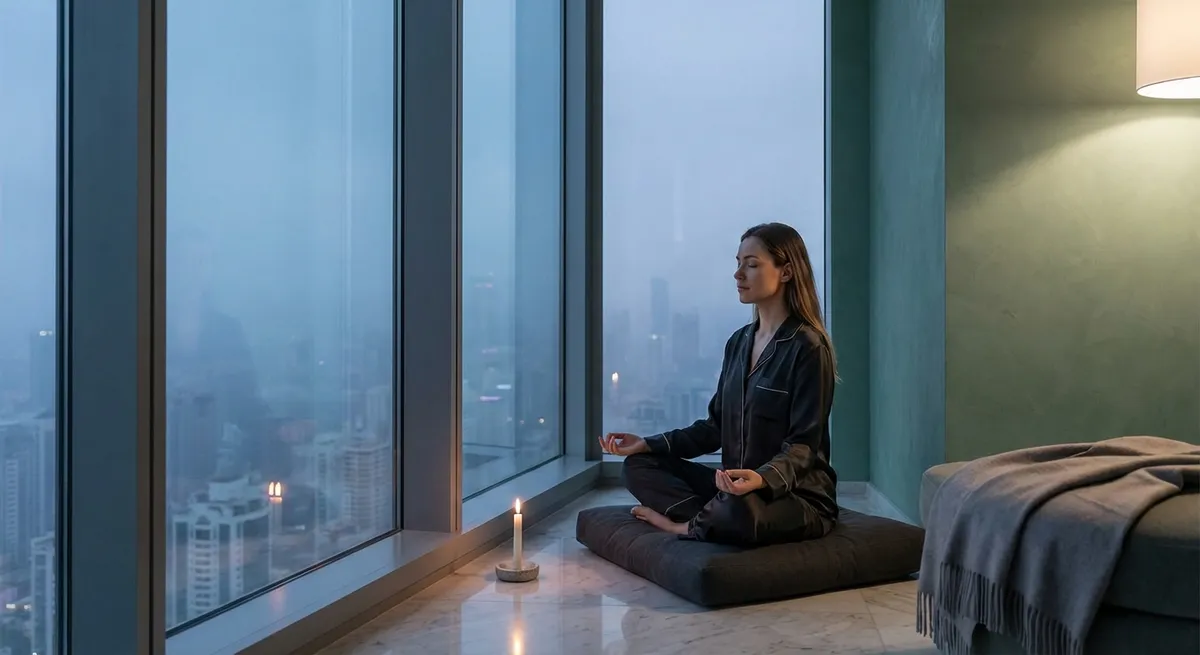
In a culture that applauds constant availability, meditation offers something quietly radical: the right to be mentally unavailable, if only for a few minutes each day. It is less a technique than a private ritual—an intimate appointment with your own mind that requires no performance, no audience, and no applause. For those who value refinement in all things, meditation can become a discreet yet powerful instrument of mental renewal, restoring not only calm but a sense of inner elegance. What follows are five exclusive, lesser-discussed insights—subtle calibrations for those who want their practice to feel less like a wellness chore and more like a cultivated art.
Meditation as Curated Mental Space, Not Just Quiet Time
Many approach meditation as an attempt to “empty the mind,” and then feel defeated when thoughts continue to arrive. A more discerning approach is to treat meditation as the curation of mental space, rather than the elimination of mental content. Just as a well-designed room does not remove every object but chooses each with intention, a refined meditation practice focuses on how attention is placed, not on erasing thought.
Instead of resisting mental noise, you begin to notice its texture: the pace of your inner dialogue, the emotional undertones, the habitual narratives that return. This observational stance transforms your practice from a battle with distraction into a subtle study of your own mental architecture. Over time, you develop an aesthetic sense about your inner life—recognizing which thoughts bring clarity and which only add clutter. The benefit is twofold: you gain serenity in the moment and a sharper curatorial instinct for what deserves your attention throughout the day. Meditation then becomes a daily edit of the mind, a quiet refinement of what you permit to shape your inner world.
Designing a Signature Meditation Ritual (Beyond Apps and Timers)
While digital tools can be helpful, a truly elevated experience often comes from creating a tangible, analog ritual around your practice. Consider crafting a personal “meditation signature”—a small sequence of sensory cues so consistent that your nervous system begins to associate them with ease and focus. This might include a particular chair, a specific shawl, a single piece of instrumental music you only use before sitting, or the subtle scent of a high-quality essential oil or candle reserved exclusively for this purpose.
The goal is not theatricality but reliability: a sensory shorthand that gently signals to your body, “Now we rest. Now we attend.” Over time, these cues can shorten the transition from agitation to stillness; your environment does some of the work for you. This is the quiet luxury of ritual—repetition that feels indulgent rather than obligatory. In a world of generic wellness trends, designing your own contemplative aesthetic ensures that meditation feels less like an item on a checklist and more like an intimate, bespoke appointment you would not dream of missing.
The Precision of Micro-Meditations: Intervals of Mental Recalibration
Lengthy sessions are not always the most refined approach. For those with full, demanding lives, micro-meditations—well-executed intervals of 30 seconds to 3 minutes—can provide surprisingly profound recalibration when designed thoughtfully. Rather than treating them as “mini” versions of long sessions, consider giving them a distinct character and purpose.
One approach is to pair micro-meditations with predictable daily thresholds: the moment your hand touches the door handle before a meeting, the instant you close your laptop at the end of the day, or the pause as your coffee is brewing. In those brief spaces, you might practice a simple, structured pattern: three extended exhales, a single question (“What is the most important quality I want to bring into the next hour?”), and a brief scan of the body to release unnecessary tension. These micro-intervals do not replace a more sustained practice, but they prevent stress from accumulating in fine layers. Over time, your day becomes punctuated with quiet recalibrations, each one preserving a little more mental clarity and emotional poise.
Cultivating Emotional Finesse Through Attentive Observation
Beyond calm, meditation can become a masterclass in emotional finesse. Rather than merely seeking relief from difficult feelings, a more sophisticated practice treats emotions as nuanced data, not as adversaries. When you sit, you begin to differentiate irritation from true anger, restlessness from genuine anxiety, and mild disappointment from deeper sorrow. This granularity is not semantic; it provides leverage.
Research in affect labeling and emotional regulation suggests that naming emotional states with precision can reduce their intensity and support better decision-making. During meditation, you can quietly apply this: noticing an emotion, giving it a clear, respectful label, and observing how it shifts without forcing it to change. The result is not emotional detachment but emotional literacy—you become less likely to be hijacked by vague unease and more capable of responding to your inner life with discernment. In this way, meditation refines not only your thoughts but your entire emotional palette, turning reactivity into responsiveness and intensity into informed intention.
Treating Attention as a Luxury Asset Worth Protecting
For a cultivated mind, attention is the ultimate scarce resource—arguably more precious than time. Every meditation is an act of reclaiming this asset from the constant demands of devices, notifications, and digital noise. Instead of viewing practice as a passive break, consider it active training in how you invest your attention throughout the day.
When you repeatedly bring your focus back to the breath, a mantra, or a point in the body, you are rehearsing the art of selective engagement. This skill translates directly into daily life: the ability to stay with one conversation, one task, one idea, without constantly splintering your focus. Emerging research connects regular meditation with improvements in sustained attention and cognitive control—benefits that subtly elevate how you work, relate, and create. In treating meditation as daily attention training, you redefine it as a form of cognitive craftsmanship, safeguarding your capacity to think deeply in a world that profits from your distraction.
Conclusion
Meditation need not be austere, performative, or simplistic. Approached with care, it can become a private, elegantly structured ritual that polishes your inner life with the same discernment you bring to your outer one. By curating mental space rather than chasing emptiness, designing a personal ritual, using micro-meditations with intent, refining emotional finesse, and treating attention as a luxury asset, you transform practice from a generic wellness habit into a bespoke instrument of mental renewal. The result is not just calm, but a quieter form of confidence: the steady knowledge that, no matter how the day unfolds, you can always return to a mind that feels curated, composed, and unmistakably your own.
Sources
- National Center for Complementary and Integrative Health – Meditation: In Depth - Overview of meditation types, evidence-based benefits, and safety considerations
- American Psychological Association – Mindfulness Meditation: A Research-Proven Way to Reduce Stress - Summarizes psychological research on attention, stress reduction, and emotional regulation
- Harvard Health Publishing – Mindfulness meditation may ease anxiety, mental stress - Discusses clinical findings on mindfulness and its impact on mood and stress
- NIH News in Health – The Power of Meditation - Explores how meditation affects the brain and body, with references to scientific studies
- Greater Good Science Center, UC Berkeley – How Mindfulness Improves Mental Health - Reviews research on mindfulness, emotional regulation, and cognitive benefits
Key Takeaway
The most important thing to remember from this article is that this information can change how you think about Meditation.