There is a particular kind of calm that feels almost textural—like silk on the skin or diffused afternoon light on a polished table. Natural remedies, when chosen with discernment and practiced with intention, can offer that same sophisticated quiet for the mind. This is not about piling on more wellness trends; it is about curating a small, exquisite set of practices that feel both effective and beautifully considered.
Below, you’ll find a refined exploration of natural mental wellness—anchored by five exclusive insights designed for those who prefer their rituals understated, intelligent, and quietly luxurious.
The Art of Subtle Support: Rethinking “Natural Remedies”
Natural remedies for mental wellness are often presented as quick fixes: a tea, a supplement, a five-minute meditation. In reality, their true power lies in subtler territory—in how they shape the nervous system over days, weeks, and seasons. Herbal allies such as chamomile, lavender, and lemon balm have been studied for their mild anxiolytic effects, but their greatest value may be in the rituals that accompany them: the temperature of the water, the slowness of preparation, the quiet moment during the first sip.
Refining your approach means treating each remedy as part of a larger architecture of calm, not as an isolated intervention. A magnesium-rich evening beverage, for instance, becomes more effective when paired with low, warm lighting and a strict boundary around late-night email. A walk in a nearby park turns from “exercise” into a nervous system reset when you consciously slow your pace and direct your gaze toward trees, sky, and horizon.
The elegant approach is not maximalist; it is precise. A curated handful of remedies, practiced consistently and with a sense of occasion, can be more transformative than an overcrowded supplement shelf.
Insight 1: Nervous System Layering — Designing Calm in Fine Gradients
Rather than asking, “What single remedy will calm me down?” consider how to layer subtle supports for your nervous system across the day. Think of it as building fine gradients of ease instead of relying on dramatic on/off switches.
Nervous system layering might look like this:
- A morning exposure to natural light (even 10–15 minutes by a window or outdoors) to help regulate circadian rhythm and stabilize mood.
- Midday aromatherapy with grounding essential oils such as cedarwood, bergamot, or vetiver, diffused softly at your desk—not overpowering, just a trace.
- A late-afternoon herbal infusion (lemon balm or tulsi/holy basil) that gently lowers the volume on accumulated stress rather than jolting you into sedation.
- An evening tactile ritual—dry brushing, a warm bath with magnesium salts, or a slow, intentional skincare routine—to signal the body that alertness can safely soften.
The sophistication lies in the sequencing. Each layer is unassuming on its own, but together they create an almost architectural sense of calm—a structure of predictability that your nervous system can learn to trust. Over time, you will likely find you need fewer dramatic interventions because your baseline is already more composed.
Insight 2: Botanical Precision — Choosing Herbs for Emotional Texture
Not all calming herbs feel the same; they each carry a distinct emotional “texture.” Approaching botanicals with this level of nuance allows you to create blends that suit both your physiology and your personality.
- For the overthinking, refined mind:
Lemon balm (Melissa officinalis) has been studied for its gentle anxiolytic and cognition-supporting properties. It calms without dulling, ideal for those who need mental clarity without emotional sharpness.
- For the emotionally taxed but still functional:
Passionflower (Passiflora incarnata) may ease restlessness and circular thoughts, making it appropriate for that particular brand of “tired but wired” often associated with demanding careers and high expectations.
- For the deeply exhausted nervous system:
Ashwagandha (Withania somnifera), an adaptogen, may support stress resilience and reduce perceived anxiety in some individuals. It suits those whose stress has tipped into depletion, rather than temporary agitation.
- For sensory-overload evenings:
Lavender (Lavandula angustifolia)—whether as tea, tincture, or essential oil—has evidence supporting its use for mild anxiety and insomnia. Its effect is more atmospheric: a soft exhale for the senses.
The refinement comes not from collecting every herb, but from knowing precisely why you reach for a particular plant. Track how you feel with each preparation—tea, tincture, capsule, or aromatic—and adjust your personal “library” accordingly. Treat your botanical cupboard the way you might treat a well-curated wine collection: selective, intentional, and deeply informed.
Insight 3: Sensory Editing — Curating Inputs as a Daily Remedy
Natural remedies are not only ingested; they are also curated in what you allow your senses to absorb. Your nervous system is constantly modulated by sound, light, scent, visual clutter, and even digital tone. Sensory editing is the practice of designing these inputs so they become remedies rather than irritants.
Simple but powerful sensory edits include:
- Sound: Replace constant background news or aggressive playlists with soundscapes designed for calm: gentle piano, rain, or low-volume ambient music. This is not about silence; it’s about intentional sonic texture.
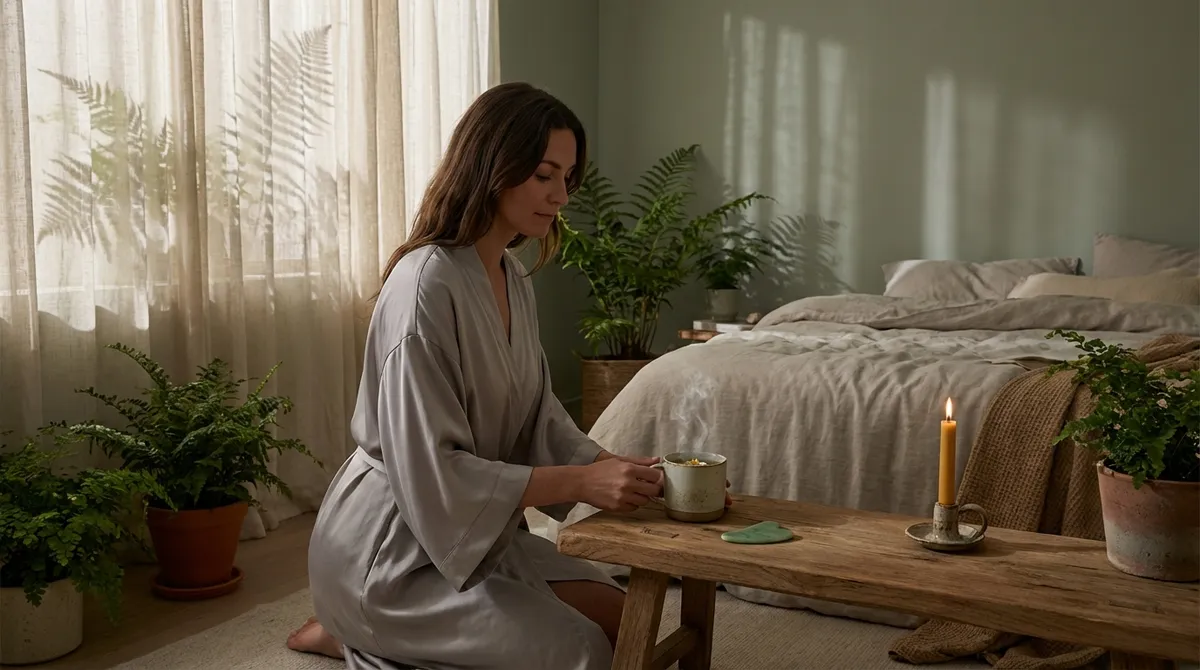
- Visual field: Clear one small zone in your home or office—a desk corner, a side table—and keep it visually minimal. One candle, one plant, one carefully chosen object. This becomes a visual “resting place” for your mind between tasks.
- Light: Prioritize warm, indirect lighting in the evening. Swap harsh overhead lights for lamps with soft bulbs; research on circadian health consistently points to evening light quality as a critical factor in sleep and mood regulation.
- Digital: Curate your feeds. Mute or unfollow accounts that spike anxiety or comparison, and intentionally follow those that offer calm imagery, gentle education, or quiet inspiration.
This approach transforms your environment into a living remedy—a steady stream of micro-corrections that gently bring your nervous system back toward balance, all without the drama of a “complete lifestyle overhaul.”
Insight 4: Micro-Transitions — The Invisible Moments That Regulate Mood
Most people focus on big wellness actions—an hour-long yoga class, a weekend retreat—while ignoring the small, invisible transitions that quietly fray the mind: the jump from one Zoom call to the next, the jolt from laptop to bed, the sudden switch from socializing to solitude.
Micro-transitions are 30–90 second rituals that “close” one moment and “open” the next. They function as natural remedies by preventing unprocessed stress from accumulating in the nervous system.
A refined micro-transition practice might include:
- Three-breath reset: After each meeting, stand up, lengthen your spine, and take three deliberate, slower-than-usual breaths while softening your jaw and shoulders.
- Threshold ritual: When you return home, pause at the door. Place your hand on the handle, intentionally release the mental content of your day, and step inside with one word in mind (e.g., “rest,” “ease,” or “soften”).
- Screen-to-sleep bridge: Instead of closing your laptop and going directly to bed, insert a 5–10 minute analog ritual: journaling, stretching, or brewing a light herbal tea. This signals your brain that it is safe to downshift.
Over time, these nearly invisible practices become powerful regulators, smoothing emotional volatility and reducing that subtle sense of being “dragged” through the day. They are natural remedies in the purest sense: no products required, only attention and design.
Insight 5: Quiet Data — Tracking Inner Calm with Discreet Precision
In a culture saturated with metrics, many people track steps, heart rate, and productivity—but rarely track the quality of their calm. For the discerning mind, a more elegant approach to self-knowledge is possible: “quiet data.”
Quiet data is subjective, gentle tracking that respects nuance. Instead of chasing perfect scores, you’re observing patterns in your mental landscape:
- Mood texture: Each evening, assign a single adjective to your day (e.g., “threadbare,” “buoyant,” “tender,” “agitated”). Over weeks, note which remedies or rituals preceded the more desirable adjectives.
- Sleep satisfaction, not just duration: Record how rested you feel on waking (0–5 scale), alongside what you did in the two hours before bed—specific teas, light levels, media use. Patterns often emerge quickly.
- Nervous system signals: Track subtle markers like jaw tension, breath depth, or impulsive scrolling. These are early indicators that your baseline calm is drifting.
You may optionally pair quiet data with gentle use of devices—smart rings or watches that track heart rate variability (HRV) or sleep stages—but maintain a premium mindset: technology is there to inform, not dictate. The true value lies in integrating observations with refined natural interventions, adjusting not in a frantic way, but with the same care you might devote to fine-tuning a favorite recipe or curating an art collection.
Conclusion
A calm mind, at its most elegant, is not an accident. It is the result of small, deliberate decisions: which herbs you invite into your cup, which sounds you allow into your space, which micro-transitions you honor between the chapters of your day.
Natural remedies become truly luxurious when they are treated not as last-minute fixes, but as cultivated companions—layered, precise, and attuned to the subtle textures of your inner life. By practicing nervous system layering, botanical precision, sensory editing, micro-transitions, and quiet data, you transform mental wellness from a reaction to stress into a refined daily art form.
Calm, in this sense, is not the absence of challenge. It is the presence of something more intentional, more curated, and quietly exquisite.
Sources
- [National Center for Complementary and Integrative Health (NCCIH) – Herbs at a Glance](https://www.nccih.nih.gov/health/herbsataglance) - Evidence-based overviews of popular herbs such as lavender, lemon balm, and passionflower, including safety and effectiveness.
- [Harvard Health Publishing – Blue light has a dark side](https://www.health.harvard.edu/staying-healthy/blue-light-has-a-dark-side) - Explains how light exposure, especially in the evening, affects circadian rhythm, sleep, and mood.
- [Cleveland Clinic – Ashwagandha: What You Need to Know](https://health.clevelandclinic.org/ashwagandha-benefits) - Reviews potential stress and anxiety benefits of ashwagandha and key considerations for safe use.
- [Mayo Clinic – Aromatherapy: Do essential oils really work?](https://www.mayoclinic.org/healthy-lifestyle/consumer-health/expert-answers/aromatherapy/faq-20058566) - Discusses the use of essential oils like lavender and bergamot for relaxation and anxiety relief.
- [American Psychological Association – Stress effects on the body](https://www.apa.org/topics/stress/body) - Outlines how chronic stress impacts physical and mental health, supporting the value of ongoing, layered regulation practices.
Key Takeaway
The most important thing to remember from this article is that this information can change how you think about Natural Remedies.