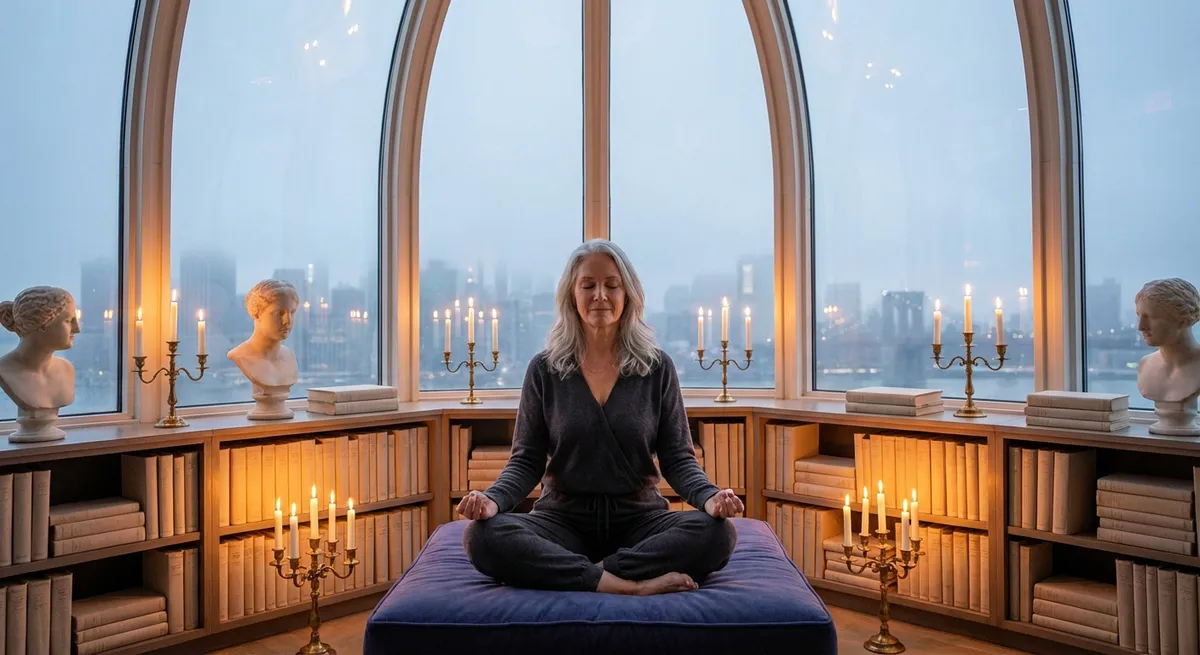
There is a quiet difference between merely closing your eyes and intentionally cultivating stillness. For a mind accustomed to performance, precision, and constant input, meditation is not a retreat from life but a refinement of how you meet it. In a culture that glorifies urgency, learning to inhabit your own inner quiet becomes a rare, almost luxurious discipline—one that pays dividends in clarity, emotional poise, and subtle self-respect.
This is meditation not as trend, but as a finely tuned mental craft. Below are five exclusive insights designed for those who want more than basic techniques—people who seek a cultivated, elegantly sustainable relationship with their own mind.
Meditation as Cognitive Curatorship, Not Escape
Meditation is often miscast as an escape from thought. In reality, it is a sophisticated form of mental curation. Your mind is constantly producing content: impressions, stories, judgments, worries. Most days, you are both author and audience, swept along by whatever appears on the inner screen.
Meditation refines this dynamic. By observing your thoughts with composure instead of urgency, you shift from being absorbed in every mental storyline to becoming a discerning curator: This stays, that can pass. You are not suppressing thought; you are adjusting your relationship to it. This curated stance is powerful for mental wellness because it reduces the “stickiness” of distressing thoughts. They still arrive, but they no longer dictate your identity or your next move.
Neuroscience suggests that regular meditation can reduce activity in the brain’s default mode network, the circuitry associated with self-referential chatter and rumination. For the discerning practitioner, this is not about erasing the self but about quieting the compulsive commentary around it. Over time, meditation reveals that clarity is less about having the right answers and more about not being overwhelmed by the noise.
The Precision of Attention: Moving from Diffuse to Deliberate Awareness
Most modern minds live in what could be called “diffuse attention”: half in the room, half in email, half in imagined futures. Meditation trains a different quality—deliberate, high-resolution attention that can rest on a single point or softly expand to include an entire moment.
When you sit to meditate, you are not merely focusing; you are refining the texture of attention. You learn to notice the subtle moment when your awareness is hijacked by a stray thought and gently escort it back. This micro-movement—catching, returning, re-settling—is the core athleticism of meditation.
For mental wellness, this matters more than it may appear. Deliberate attention allows you to step out of cognitive overdrive. It empowers you to meet discomfort without immediately trying to fix or flee from it. As attention becomes more precise, anxiety can be felt as sensation rather than identity, and sadness can be noticed as weather rather than fate. This is the quiet sophistication of the practice: your inner life becomes less chaotic not because circumstances improve, but because your attention ceases to be indiscriminately available to every mental storm.
Designing a Meditative Environment with Intentional Elegance
The mind takes cues from its surroundings. A carefully designed meditation environment can serve as a subtle but potent ally in deepening your practice. This is not about ornate altars or elaborate aesthetics; it is about intentional simplicity that tells your nervous system: this space is for grounding.
Consider the tactile experience first. A supportive cushion or chair that allows your spine to feel both dignified and at ease becomes the foundation of your ritual. The quality of your textiles, the softness of the light, the temperature of the air—all of these send micro-signals of safety and permission to unwind. Where possible, reserve this spot only for your practice; consistency imbues the space with a quiet familiarity that accelerates your ability to settle.
You might incorporate one understated sensory anchor: a single candle, a discreet essential oil, or a small object that holds personal significance. The aim is not to clutter the moment with stimuli but to create a gentle bridge between outer refinement and inner stillness. Over time, simply entering this environment and assuming your chosen posture can cue a shift into a calmer, more receptive mental state. The elegance is in restraint: nothing is superfluous, everything is intentional.
Emotional Literacy Through Stillness: Reading Subtle Inner Signals
If meditation were only about relaxation, it would be a pleasant but limited tool. Its deeper gift is emotional literacy—a capacity to read your inner signals before they escalate into crises. In a still moment, what often surfaces first is not enlightenment but backlog: unprocessed tension, quiet disappointments, faint traces of resentment, and unshed grief.
Rather than treating these as intrusions on your meditation, consider them data. You are learning the language of your own nervous system. A tightness in the chest that arrives every time you think of a particular project may indicate boundary issues. A recurring sense of heaviness in the evening sit might point to overextension or misalignment with your daily commitments.
In this way, meditation becomes a private debrief with your own psyche. You move from “I feel off” to “I notice a subtle dread in my stomach every Sunday night,” and from there to more precise, compassionate action. This level of detail is stabilizing for mental wellness: ambiguity amplifies anxiety; clarity, even when uncomfortable, tends to soothe. With practice, meditation transforms emotional overwhelm into finely grained, actionable insight.
Time-Rich, Not Time-Poor: Reframing the Length of Your Practice
A common barrier for high-functioning, time-pressed individuals is the assumption that meditation requires long, uninterrupted sessions to be meaningful. The more refined approach is to treat meditation as a way of relating to time itself, rather than another demand on it.
Even three to seven minutes, practiced with full sincerity and consistency, can be profound—especially when integrated into existing transitions in your day. A short sit before opening your laptop can reset your baseline. A brief practice after a demanding conversation can prevent emotional residue from carrying into the rest of your evening. In these small but intentional windows, you are training your mind to recognize that stillness is not a luxury item belonging only to weekends or retreats; it is a skill available in the interstices of ordinary life.
For mental wellness, this reframing is liberating. You shift from “I don’t have time to meditate” to “I can convert pockets of time into moments of restoration.” Over weeks and months, these seemingly modest intervals compound. The nervous system remembers repeated experiences of safety and quiet. The result is not dramatic transformation overnight but a gradual recalibration: your default state becomes less reactive, more composed, and quietly confident in its own capacity to self-regulate.
Conclusion
Meditation, at its most refined, is not a performance of calm but a disciplined intimacy with your own mind. It teaches you to curate rather than obey your thoughts, to wield attention as a precision instrument, to inhabit spaces and moments with intentional elegance, to read your emotional landscape with nuance, and to relate to time in a way that supports rather than depletes you.
For those seeking mental wellness at a higher resolution, meditation offers an understated yet powerful promise: you do not need a different life to feel different—you need a different way of inhabiting the one you have. Stillness, practiced as a skill, becomes your quiet, portable form of luxury.
Sources
- National Center for Complementary and Integrative Health – Meditation: In Depth - Overview of research, benefits, and types of meditation
- Harvard Medical School – Mindfulness Meditation May Ease Anxiety, Mental Stress - Summary of clinical findings on stress, anxiety, and mindfulness
- American Psychological Association – Mindfulness Meditation: A Research-Proven Way to Reduce Stress - Evidence-based insights on psychological effects of meditation
- Mayo Clinic – Meditation: A Simple, Fast Way to Reduce Stress - Practical guidance and health-related impacts of regular practice
- NIH News in Health – Clearing the Mind: Meditation for Mental Well-Being - Accessible summary of how meditation supports mental well-being
Key Takeaway
The most important thing to remember from this article is that this information can change how you think about Meditation.