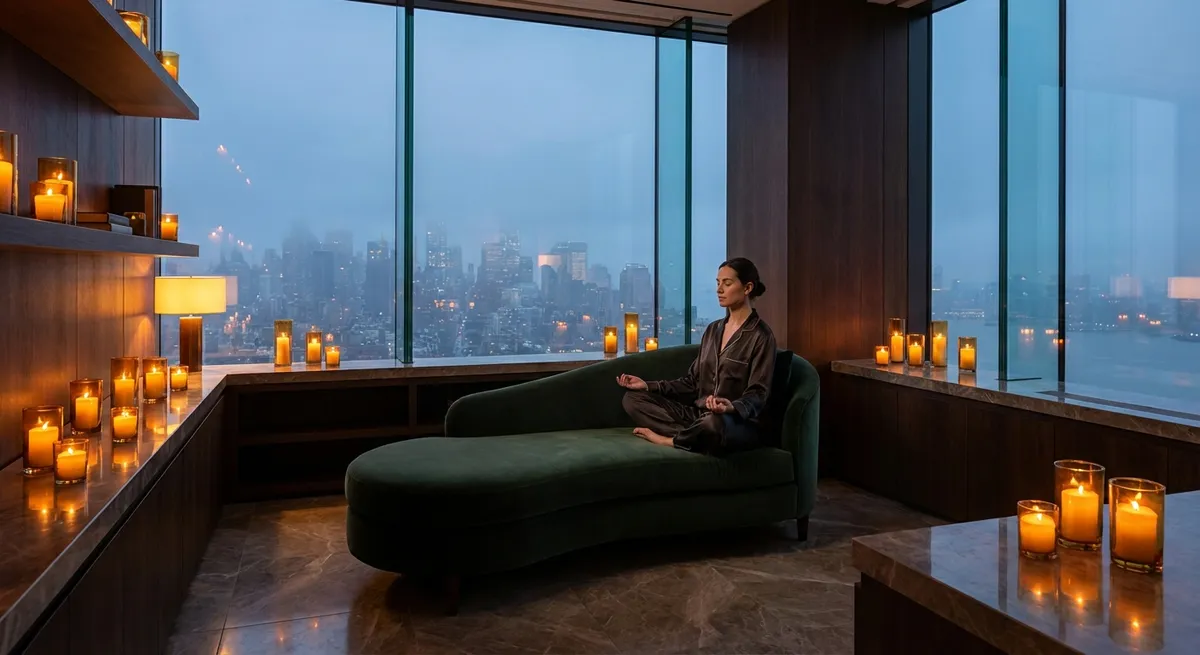
In a culture that celebrates urgency, deliberate stillness has become a quiet luxury. Meditation is no longer confined to retreat centers and monastic halls; it has entered boardrooms, private studios, and polished city apartments as an essential component of refined self-care. Yet beyond the clichés of incense and crossed legs lies a more nuanced truth: when practiced with intention and discernment, meditation can become a finely tuned instrument for mental elegance, emotional clarity, and a more curated inner life.
This is not about escaping reality, but about inhabiting it with greater precision and poise. Below are five exclusive, often overlooked insights into meditation that speak directly to those seeking not just calm, but a more sophisticated relationship with their own mind.
Meditation as Cognitive Curation, Not Passive Relaxation
Meditation is frequently marketed as a soft-focus antidote to stress, but its deeper value is far more precise: it is a disciplined act of cognitive curation.
Rather than attempting to “empty the mind,” high-quality practice refines how you relate to thought itself. You begin to discern which mental patterns deserve your attention and which are mere background noise. Over time, the mind shifts from being a crowded marketplace of competing narratives into something more akin to a gallery—spacious, intentional, and selectively illuminated.
For those with demanding lives, this shift is profound. You are no longer at the mercy of every mental impulse; you develop a curator’s eye for what aligns with your priorities, values, and long-term well-being. Research in contemplative neuroscience has shown that meditation can modify activity and connectivity in brain regions associated with attention, emotional regulation, and self-referential thinking, suggesting that this “inner curation” has a tangible neural counterpart.
The refined approach is not to use meditation merely as recovery, but as ongoing mental design: a quiet, daily edit that makes your inner world more coherent, deliberate, and elegantly arranged.
The Ritual of Transition: Elevating the “In-Between” Moments
One understated but powerful way to integrate meditation into a sophisticated lifestyle is to treat it as a ritual of transition rather than an isolated wellness task.
Instead of cordoning off 20 minutes and hoping the rest of the day behaves, consider anchoring short, intentional practices at key thresholds: before your first glance at email, between intense meetings, at the quiet moment after returning home, or just before evening winding down. These transitions are where mental residue accumulates—unfinished conversations, subtle irritations, micro-anxieties.
A two- to five-minute meditation at these junctures acts as a mental palate cleanser. You clear the remnants of the previous context before stepping into the next, much like changing the lighting and music between courses in a carefully curated dinner. The goal is not duration, but quality of attention: a deliberate pause, a refined resetting of your internal state.
Over weeks, these micro-rituals change how your day feels. Life becomes less like an uninterrupted blur and more like a sequence of composed scenes with defined openings and closings. This rhythmic approach to practice often proves more sustainable—and more elegant—than grand gestures of sporadic, lengthy sessions that never become a true habit.
Precision over Performance: The Quiet Art of Subtle Adjustments
Many people approach meditation as something to “achieve”: perfect stillness, a blank mind, a transcendental experience. This performance mindset quickly corrodes the practice. A more sophisticated approach values precision over performance.
Rather than measuring success by how calm you felt, consider these finer questions:
- How quickly did you notice the mind had wandered?
- How gently did you guide your attention back—without criticism?
- How aware were you of the texture of your breath, your posture, the emotional tone of the moment?
- Did you observe your reactions to discomfort—physical or emotional—without immediately editing them out?
These subtle adjustments are the premium details that distinguish casual practice from truly refined meditation. They cultivate metacognition—the ability to notice your own thinking—as an elegant, everyday skill. Over time, this spills into your life beyond the cushion: in conversations, negotiations, and decision-making, you become more attuned to the first flicker of reactivity, the earliest signs of fatigue, or the quiet intuition that a situation requires a different approach.
The real sophistication of meditation lies here, in the micro-calibrations: tiny, consistent refinements that grant you a finer control of your inner experience without forcing it.
Emotional Tonality: Learning the “Color” of Your Inner Climate
A rarely discussed benefit of mature meditation practice is the development of emotional tonality—the ability to sense not just what you are feeling, but the subtle “color” and layering of those feelings.
Instead of blunt labels like “stressed” or “tired,” a more attuned inner vocabulary emerges: a quiet undercurrent of apprehension beneath apparent confidence, a hint of sadness under irritation, a texture of restless anticipation beneath productivity. Meditation trains you to notice these emotional gradients with a kind of respectful curiosity, rather than rushing to suppress, justify, or intellectualize them.
This is particularly valuable for individuals whose external lives require poise and composure. Rather than armoring yourself against feeling, you become better resourced in how you feel. Emotions stop being threats to your stability and become refined data points—signals to adjust your boundaries, your pace, or your environment.
Research on mindfulness-based interventions shows consistent reductions in symptoms of anxiety and depression, but beyond symptom reduction, there is a qualitative shift: the mind grows more literate in its own emotional language. It is this emotional literacy, cultivated in silence, that allows you to remain both deeply human and quietly steady in demanding environments.
Designing an Environment that Whispers “Calm,” Not Shouts It
Sophisticated meditation is not only about what happens in your mind—it is also shaped by the design of the space in which you practice.
Rather than leaning on conspicuous spiritual décor, consider creating a meditation environment that is understated, sensory-aware, and aligned with your personal aesthetic. Think in terms of elements:
- Light: Soft, indirect lighting, whether natural or warm artificial, supports a sense of ease without inducing drowsiness. Dawn or dusk light often pairs naturally with contemplative practice.
- Sound: A considered soundscape—whether curated silence, subtle white noise, or gentle ambient sound—prevents your attention from being repeatedly hijacked without feeling overly staged.
- Texture: The feel of a well-chosen cushion, a light throw, or a supportive chair that allows effortless, dignified posture quietly signals to your nervous system that this is a place of care.
- Scent (optional): If used, it should be minimal and intentional. Even a single, clean note—like high-quality lavender or sandalwood—can become a subtle cue to your brain that it is time to settle.
The goal is not to create a stage set, but an environment in which meditation feels inevitable—where every detail gently leans you toward quiet. This is environmental design as nervous-system hospitality: the space itself participates in your practice.
When your surroundings are curated with this level of care, meditation stops feeling like an interruption to your day and instead becomes an integrated, elevated part of your living experience.
Conclusion
Meditation, approached with refinement, becomes more than a tool for stress relief. It evolves into a discreet form of inner craftsmanship—an ongoing curation of thought, emotion, environment, and attention.
By treating practice as cognitive curation, anchoring it in transitional rituals, valuing precision over performance, deepening emotional tonality, and designing a space that gently invites stillness, you move beyond basic wellness into something more considered: a dignified, quietly luxurious relationship with your own mind.
In a world that constantly demands your attention, choosing to sit in deliberate stillness is not a retreat from life; it is an elevated way of inhabiting it.
Sources
- National Center for Complementary and Integrative Health – Meditation: In Depth - Overview of meditation types, evidence, and potential health benefits from a U.S. government health agency
- Harvard Medical School – Mindfulness Meditation May Ease Anxiety, Mental Stress - Summarizes research on how mindfulness meditation affects stress, anxiety, and mental health
- American Psychological Association – Mindfulness Meditation: A Research-Proven Way to Reduce Stress - Details psychological mechanisms and evidence behind mindfulness-based practices
- National Institute of Mental Health – Caring for Your Mental Health - Broad guidance on mental wellness, including relaxation and contemplative practices
- Mayo Clinic – Meditation: A Simple, Fast Way to Reduce Stress - Clinical perspective on how meditation supports stress reduction and overall well-being
Key Takeaway
The most important thing to remember from this article is that this information can change how you think about Meditation.