In a world calibrated for urgency, true mental ease has become a rare luxury. Yet calm is not an accident; it is an atmosphere we can cultivate with intention, discernment, and a touch of natural refinement. Rather than chasing quick fixes, a more elevated approach to mental wellness invites us to curate subtle, nature-based rituals that feel as considered as a well-designed interior or a tailored wardrobe. This is the quiet territory where natural remedies and mental clarity meet—less about trends, more about timeless craftsmanship of the mind.
Below, you’ll find a set of refined practices and five exclusive insights designed for those who approach their inner life with the same care they devote to every other detail of a well-edited existence.
The Philosophy of Refined Natural Calm
Natural remedies for mental wellness are often misunderstood as rustic or simplistic. In reality, the most effective ones are deeply sophisticated: they draw on evidence-informed botanicals, sensory design, and nuanced habit architecture. The goal is not to “escape” daily life, but to conduct it with more grace and composure.
A premium approach to natural calm does not mean endlessly adding products; it means curating a minimal, high-quality set of tools that integrate seamlessly into your day. Think of them as invisible supports—subtle, elegant, and aligned with your aesthetic and values. Lavender might drift through your evening routine as a faint, almost imperceptible note, while daylight and breathwork become the unspoken framework of your mornings. Over time, these micro-remedies evolve into a quiet signature of how you live.
The Sensorial Sanctuary: Designing a Calm-Forward Environment
Our surroundings either agitate or soften the nervous system. A refined mental wellness routine begins by treating your environment as a therapeutic instrument rather than a backdrop.
Consider fragrance: a single, well-chosen essential oil can become a cue for your brain to shift into a different mode. Lavender, bergamot, and chamomile have all been studied for their potential calming effects, particularly via inhalation. Diffusing them in low, intermittent bursts is more sophisticated than saturating a room—subtlety is part of the luxury. Texture matters as well: opt for natural fibers and clean lines that do not visually “shout.” Light is another quiet remedy; morning exposure to natural light synchronizes circadian rhythms, stabilizing mood and sleep, while warmer, dimmer tones in the evening gently signal the brain to unwind.
When your space is curated as a sensorial sanctuary—scents restrained, surfaces uncluttered, sounds softened—every moment spent in it becomes a low-friction invitation to calm rather than a constant demand on your attention.
Botanical Composure: Elevated Use of Herbal Support
Herbal remedies are often approached either casually or not at all. A more refined path treats botanicals with respect—thoughtfully selected, correctly dosed, and integrated with professional guidance when needed.
Certain herbs have garnered scientific interest for their influence on mood and stress. Chamomile has been studied for its potential to ease generalized anxiety; lemon balm is associated with gentle relaxation and improved sleep quality; ashwagandha is frequently examined for stress and cortisol modulation; passionflower and valerian are often explored for sleep and restlessness. The elevated approach is not to take everything, but to create a small, intentional repertoire that matches your specific nervous system profile and lifestyle.
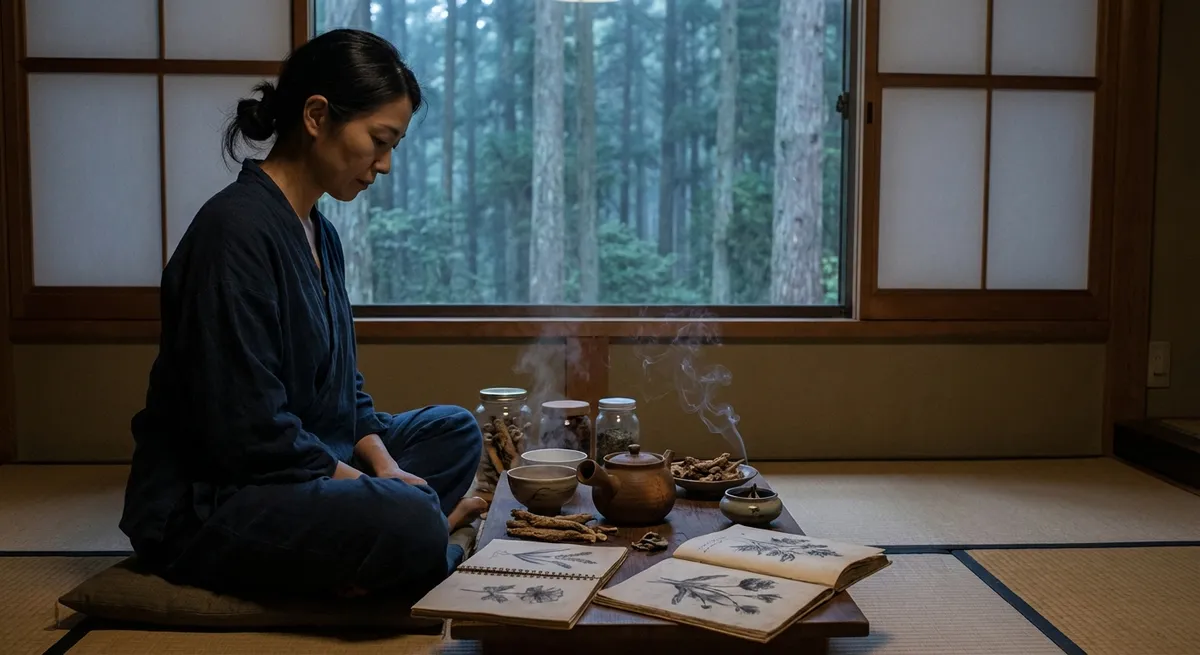
Choice and ritual elevate herbal support from a supplement to an experience. Brewing loose-leaf chamomile in a ceramic vessel you love, or adding a precisely measured herbal tincture to evening water, transforms ingestion into ceremony. This mindful framing enhances the psychological benefits while keeping you anchored in the present moment. Quality is non-negotiable: look for standardized extracts, third-party testing, and transparent sourcing—details that align with a premium standard of self-care.
Nervous System Literacy: Understanding Your Personal Calm Threshold
One of the most elegant mental wellness skills is knowing your nervous system as intimately as you know your schedule. Nervous system literacy means recognizing your personal signals of overload and knowing which natural remedy, in which form, works best for you at different points in the day.
Some individuals respond beautifully to gentle stimulants like matcha—a slower, smoother caffeine experience paired with L-theanine, known for its calming properties—while others find even low caffeine incompatible with steady calm. Some thrive with cold water exposure as a short, invigorating reset; others require warmth and softness to move out of stress and into safety. This is less about universal “hacks” and more about refined self-knowledge.
A practical, elevated practice: keep a discreet “calm log” for two weeks. Note what you consumed (caffeine, herbal tea, sugar), environmental factors (light, noise), and internal states (tension, clarity, irritability). Over time, patterns emerge revealing your personal calm threshold—where you are at your most composed, focused, and emotionally available. Natural remedies then become not random experiments, but precisely placed instruments in a personalized score.
The Art of Micro-Rituals: Calm Woven into Ordinary Moments
Grand routines are often unsustainable. Micro-rituals—brief, highly intentional practices—can be effortlessly integrated into an already full life, making mental wellness feel like a natural extension of your day rather than another task.
Consider breathwork as a discreet micro-ritual. The 4-6 pattern—inhale gently through the nose for four counts, exhale slowly for six—has a subtle elongation of the exhale that signals safety to the nervous system. Two minutes between meetings, in a car, or while waiting for the kettle to boil becomes a mini-reset. Pair it with a sensory element: a favorite ceramic cup in your hands, the weight of a cashmere throw, or the sound of a softly curated playlist. This pairing helps anchor the practice in memory and pleasure.
When repeated consistently, these tiny rituals accumulate into something architecturally significant. You are effectively lacing calm into the seams of your day—no drama, no declarations, just an understated choreography of grounded moments.
Five Exclusive Insights for the Discerning Mind
For those who approach mental wellness with discernment and an eye for refined detail, the following insights can shift your relationship with natural remedies from casual use to cultivated practice:
- Calm is often a subtraction, not an addition.
Many nervous systems are over-stimulated, not under-supported. Removing one stimulant—an afternoon coffee, late-night screen glow, or clutter in your bedroom—can often have more impact than a new product. Sometimes the most sophisticated remedy is what you no longer tolerate in your environment.
- Ritual amplifies remedy.
The same chamomile tea taken absent-mindedly at your desk versus sipped slowly, at a consistent time, in a dedicated chair has a different psychological weight. How you take a remedy can be as influential as what you take. Intention, pace, and setting transform simple ingredients into meaningful medicine for the mind.
- Your calm has a signature—learn its texture.
For some, calm feels soft and spacious; for others, it is clear, focused, and quietly energized. When you can describe the specific “texture” of your best mental state, you can choose natural remedies that move you toward that exact quality (for example, L-theanine and green tea for clear composure; magnesium and lavender for soft restfulness).
- Timing is an overlooked luxury.
The same intervention at different times of day can have radically different effects. Morning exposure to natural light stabilizes your entire circadian architecture, while evening light can undo your body’s preparation for sleep. Likewise, adaptogens or mild stimulants are best in the first half of the day; more sedative botanicals reserved for evening. Calm, delivered at the right moment, feels effortless rather than forced.
- Elegance lies in consistency, not intensity.
A single dramatic “reset weekend” cannot compete with a daily 10-minute walk outside, regular herbal infusions, or a committed bedtime ritual. The most elevated wellness practices look deceptively modest from the outside—what makes them luxurious is their reliability. Over months, this quiet consistency rewires your baseline toward steadier mood and more resilient calm.
Conclusion
Natural remedies for mental wellness are not about withdrawing from a sophisticated life—they are about refining it. By aligning your environment, botanicals, micro-rituals, and self-knowledge, you create a subtle but powerful framework that supports a composed, present, and discerning mind. Calm becomes less of a destination and more of a signature: woven into how you drink tea, how you enter a room, how you end your day.
In this cultivated approach, your mind is not something to be “fixed,” but something to be thoughtfully tended—every breath, scent, and small ritual part of an ongoing, quiet conversation with your own well-being.
Sources
- National Center for Complementary and Integrative Health (NCCIH) – Relaxation Techniques - Overview of evidence-based relaxation practices, including breathing exercises and their effects on stress.
- NCCIH – Chamomile: In Depth - Details on chamomile’s potential role in anxiety and sleep, safety considerations, and research findings.
- NCCIH – Ashwagandha: In Depth - Evidence summary on ashwagandha’s impact on stress, anxiety, and overall well-being.
- Harvard T.H. Chan School of Public Health – Blue Light and Sleep - Explanation of light exposure, circadian rhythms, and its implication for evening calm and sleep quality.
- National Institutes of Health – L-theanine and Caffeine - Research examining how L-theanine and caffeine together influence attention, mood, and cognition, relevant to “calm focus” states.
Key Takeaway
The most important thing to remember from this article is that this information can change how you think about Natural Remedies.