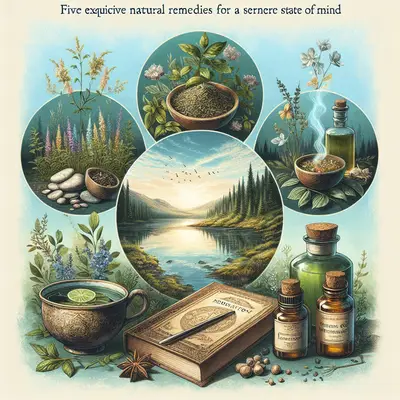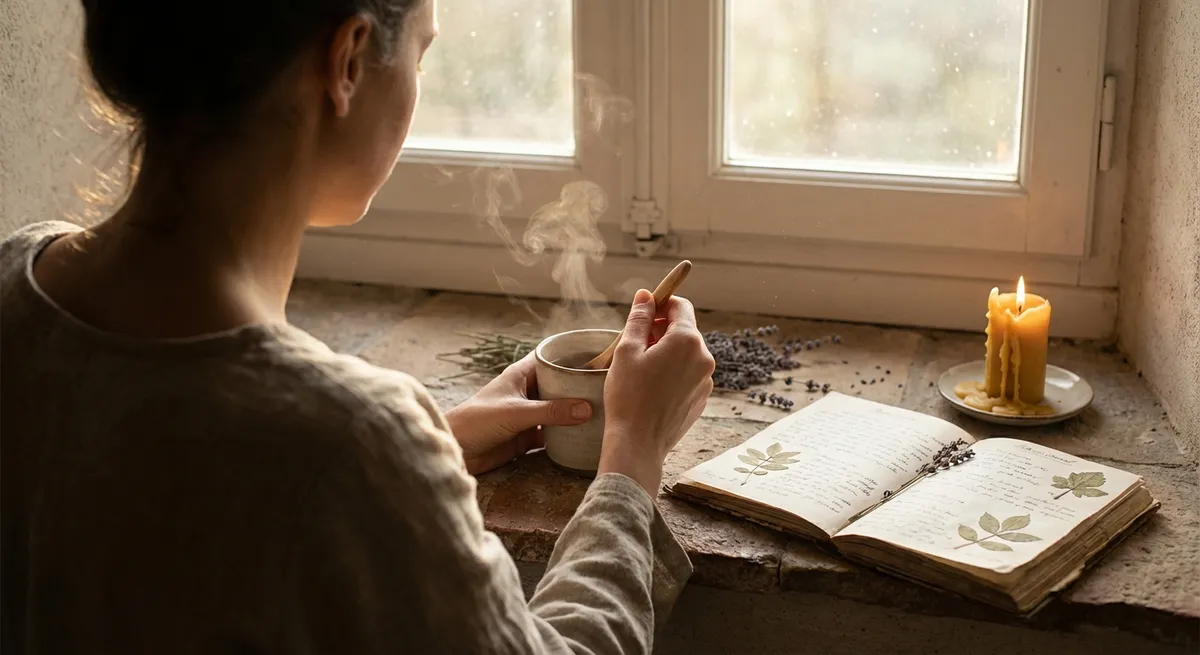
The most discerning forms of mental wellness are rarely loud. They live in the details—the temperature of your tea, the weight of a linen throw, the cadence of your breath between emails. Natural remedies, when approached with intention, can become far more than “alternatives” to conventional care; they can be exquisitely tailored instruments for cultivating a composed, resilient nervous system. This is not about chasing perfection or productivity. It is about curating a life that feels quietly inhabitable from the inside out.
Below are five exclusive, research-informed insights—less about trends, more about precision. Each one is designed for those who expect their wellness rituals to be as considered as their wardrobe, their home, and their time.
The Nervous System as an Ecosystem, Not a Switch
Modern culture often treats stress as something to “turn off” at the end of the day, as though the nervous system were a simple on/off mechanism. In reality, it is closer to a living ecosystem—sensitive, adaptive, and responsive to countless micro-signals.
Your autonomic nervous system, particularly the balance between the sympathetic (fight-or-flight) and parasympathetic (rest-and-digest) branches, is constantly sampling your environment: light, sound, physical sensation, even your posture and facial expression. Natural remedies are most effective when they are curated as an ecosystem of subtle, reinforcing cues rather than isolated interventions.
Consider refining your environment as if you are designing a high-end sensory experience for a guest—except the guest is your nervous system:
- Light as a remedy: Warm, low lighting in the evening supports melatonin production and cues the body toward calm. Dimmable lamps, candlelight, and screen filters are not decor choices; they are pharmacology by design.
- Temperature as a signal: A slightly cooler bedroom, paired with a weighted blanket or breathable natural fibers, can nudge your body toward deeper sleep cycles, which in turn stabilize mood and cognitive clarity.
- Sound as a nervous system setting: Gentle, consistent soundscapes (like soft instrumental music, pink noise, or curated nature sounds) can reduce the cognitive load of unpredictable background noise and subtly guide the body toward relaxation.
The insight here: treat “calm” not as a task, but as an environment you design with deliberation. Each natural remedy—tea, aromatherapy, breath, movement—works more powerfully when the ecosystem around it is aligned.
Botanical Companions: Pairing Herbs With Specific Emotional States
Many people reach for “relaxing herbs” as a category, but a more refined approach treats botanicals like a wardrobe: specific pieces for specific moods, seasons, and psychological climates. While herbal remedies should always be discussed with a healthcare professional—especially if you take medications—understanding their personality can transform your practice from generic to bespoke.
A few nuanced pairings:
- For the wired perfectionist:
Ashwagandha (Withania somnifera), an adaptogen, has been studied for its ability to reduce perceived stress and support healthy cortisol levels. It tends to suit those whose stress feels like constant internal acceleration—ambitious, driven, but depleted. It pairs elegantly with an evening ritual: warm herbal milk, soft light, and a hard boundary around screens.
- For the emotionally sensitive, easily overwhelmed:
Lemon balm (Melissa officinalis) and chamomile (Matricaria chamomilla) are gentle nervines that can ease tension and mild anxiety. These herbs suit those who feel everything deeply and benefit from softening the edges of overstimulation. They are particularly lovely as a late-afternoon infusion when the day’s noise has accumulated.
- For mental fog and low emotional tone:
Rhodiola rosea has been researched for stress-related fatigue and may support cognitive function and mood in some individuals. This is a daytime herb for those who feel drained rather than agitated—especially under chronic stress or demanding schedules.
- For sleep with emotional residue:
Lavender (Lavandula angustifolia), whether in tea or aromatherapy, has been associated with improved sleep quality and reduced anxiety symptoms in some studies. It pairs beautifully with pre-sleep journaling that gently “deposits” worries from mind to page.
The insight here: choose botanicals as you would a fragrance—deliberately, situationally, and with respect for how they harmonize with your emotional landscape, not just your symptoms.
The Micro-Ritual: Elegant Intervals of Restoration
Many people conceive of self-care as an event: a retreat, a weekend away, a full evening bath ritual. While these can be exquisite, mental resilience is more often built in ten-second increments than in two-hour ceremonies.
A micro-ritual is a short, repeatable pattern—30 seconds to three minutes—that gently recalibrates your nervous system without asking you to “step out of your life.” When thoughtfully designed, these become the invisible architecture of your day.
Consider layering a few refined micro-rituals:
- The threshold pause: Each time you cross a physical threshold (entering your home, logging into your computer, stepping into a meeting), add one measured breath: four counts in, six to eight out. This creates a quiet seam between roles—partner, colleague, parent, leader—so your nervous system is not dragged frantically from one state to another.
- The tactile reset: Keep one beautifully crafted object on your desk—a polished stone, ceramic cup, linen handkerchief. When your mind feels scattered, spend 15 seconds tracing its texture, noticing temperature and weight. This tactile anchor recruits your senses back into the present and signals “safe enough” to your nervous system.
- The sensory cue for closure: End your workday with a consistent sensory marker: a specific herbal tea, a particular playlist, or a few drops of essential oil on your wrists. Over time, your body begins to treat this cue as a neural “closing ceremony,” enabling you to let the day end more completely.
The insight here: micro-rituals are how you weave natural remedies into the fabric of your hours, transforming stress management from a rescue mission into a refined, ongoing choreography.
Breath as a Precision Tool: Matching Patterns to States
“Just breathe” is well-intentioned but imprecise advice. Different breathing patterns have distinct effects on the nervous system; using them with discernment is one of the most elegant natural tools available, requiring no equipment and leaving no trace but composure.
Three nuanced patterns to integrate:
- For acute agitation or anxiety spikes:
Prioritize a longer exhale. A simple pattern is inhaling for four counts, exhaling for six to eight. Extending the exhale stimulates the parasympathetic nervous system, reducing physiological arousal. Use this before a high-stakes conversation, during conflict, or when your heart is racing without clear cause.
- For sluggish mornings or mental fog:
Try a gentle balanced breath, such as in for four, out for four, for one to three minutes. This can feel like polishing the lens of the mind—the breath acts as a metronome, cueing alert yet steady focus rather than jittery stimulation.
- For deep unwinding before sleep:
Consider a 4–7–8 pattern (inhale for four, hold for seven, exhale for eight) practiced for a few cycles. Some people find this creates a distinctly “descending” sensation in the body, like a slow elevator toward rest. Combine with dim lighting and a no-screen rule for at least 20–30 minutes before bed for maximal effect.
The insight here: treat breath not as a vague notion of calm, but as a precise, adaptable instrument—different tempos for different internal climates, chosen with the discernment of a conductor tuning an orchestra.
Curating Inputs: Emotional Minimalism as a Natural Remedy
We often focus on what we add to our routines—herbs, supplements, practices—while neglecting the powerful mental effect of what we remove. For a cultivated nervous system, emotional minimalism can be one of the most potent “natural remedies” available.
This does not mean isolation or naivety. It means deliberate curation of what your mind is asked to hold:
- Information diet: Limit news consumption to specific, brief windows from reputable sources, rather than a constant background drip of crisis. This protects against chronic, low-grade activation of the stress response.
- Digital boundaries with aesthetic intention: Remove the most agitating apps from your home screen. Replace them with access to music, reading, or meditation tools. Your phone becomes less of a stress portal and more of an instrument you have consciously tuned.
- Social refinement: Subtly realign social time toward those who leave your nervous system quieter, not noisier. Notice who you feel “settled” around an hour after parting. That sensation is data—a living measure of how your nervous system responds to that relationship.
- Visual simplicity: A carefully edited environment (fewer, more intentional objects in your visual field) reduces cognitive load. The eye rests, the mind follows. This is not about perfection; it’s about lowering the “background noise” your brain must constantly filter.
The insight here: natural remedies are not only plants, practices, and products—they are also omissions, the quiet luxury of not subjecting your nervous system to friction it was never meant to endure daily.
Conclusion
Refined mental wellness is not an aesthetic; it is a series of precise choices repeated over time. A cup of thoughtfully selected tea, the way light falls across your evening, the micro-second you take to lengthen an exhale before you answer a message—these details accumulate into something substantial: a nervous system that recognizes your life as, on the whole, inhabitable.
Natural remedies, approached with sophistication, are less about escape and more about alignment. You are not trying to become someone else; you are creating the conditions under which your best, most quietly capable self can emerge without strain. In the end, true luxury may simply be this: a mind that does not feel like a battlefield, but a well-kept, living space you are glad to return to—every single day.
Sources
- [National Center for Complementary and Integrative Health (NCCIH): Stress](https://www.nccih.nih.gov/health/stress) - Overview of stress, its impact on health, and evidence-based complementary approaches
- [NCCIH: Herbs at a Glance – Ashwagandha](https://www.nccih.nih.gov/health/ashwagandha) - Evidence summary, safety considerations, and research on ashwagandha as an adaptogen
- [NCCIH: Lavender](https://www.nccih.nih.gov/health/lavender) - Discussion of lavender’s uses, including for anxiety and sleep, with research references
- [Harvard Medical School: Relaxation techniques – Breath focus](https://www.health.harvard.edu/mind-and-mood/relaxation-techniques-breath-focus) - Explanation of how specific breathing patterns influence the stress response
- [American Psychological Association: Stress effects on the body](https://www.apa.org/topics/stress/body) - Detailed review of how chronic stress affects different systems, including the nervous system
Key Takeaway
The most important thing to remember from this article is that this information can change how you think about Natural Remedies.