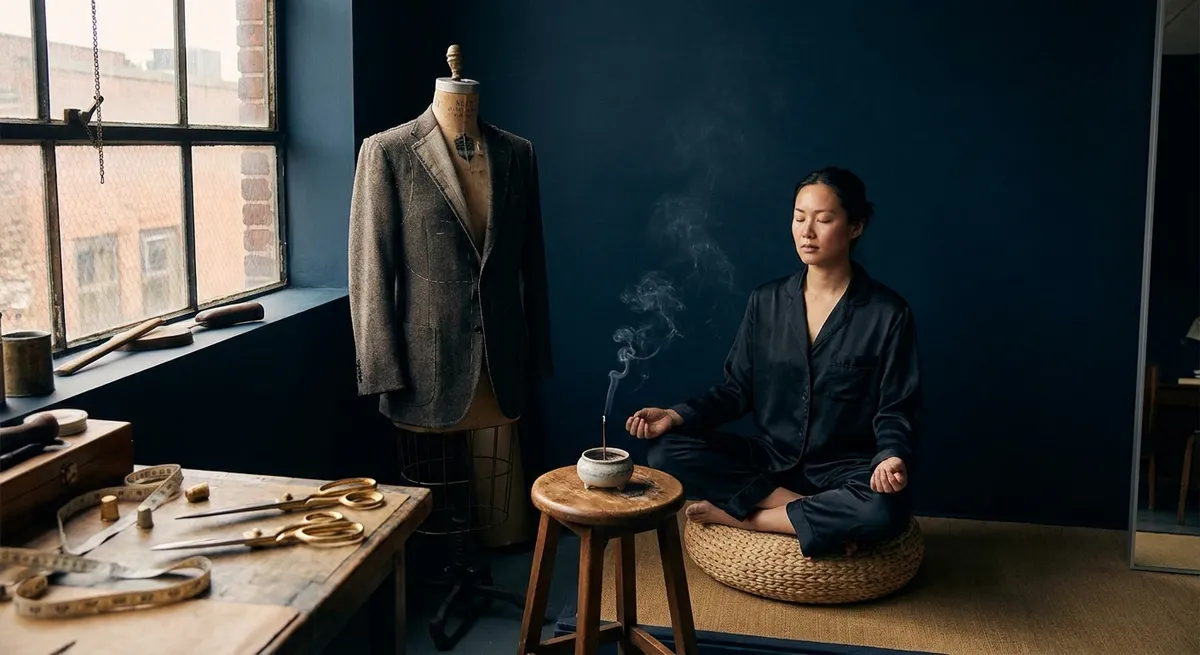
For the discerning mind, meditation is no longer a vague wellness trend; it is a cultivated discipline, tailored with the same care one might bring to commissioning a bespoke suit or curating a private art collection. When approached with intention and refinement, meditation becomes less about escape and more about precise alignment—an elegant recalibration of attention, energy, and inner narrative. This is not minimalism for its own sake; it is mindful editing of one’s inner life.
Below are five exclusive, nuanced insights for elevating meditation from a generic practice into a highly personalized, impeccably crafted ritual for mental clarity and composure.
1. The Signature Environment: Designing a Space That Trains the Mind
Meditation begins before you close your eyes. The environment you create is not mere décor; it is a subtle training device for your nervous system. A thoughtfully composed space cues the brain to associate certain sensory inputs—light, scent, texture—with the onset of stillness.
Instead of a generic “meditation corner,” consider a signature environment that mirrors your aesthetic and psychological needs. Perhaps this means low, indirect lighting that mimics dusk, a single tactile object (like a hand-polished stone or a linen-bound journal), and a restrained fragrance such as sandalwood, vetiver, or neroli. These consistent sensory anchors become a shorthand to the mind: “We are entering the quiet.”
Neuroscience supports this: repeated pairing of certain cues with relaxation gradually conditions the brain to respond faster with each session. Over time, your space itself becomes a silent co-teacher, reducing the effort needed to transition from stimulation to stillness. The refinement lies not in excess, but in discernment—each object, texture, and sound must justify its place.
2. Precision Attention: Treating Focus Like a Fine Instrument
Meditation is often described casually as “just focusing on the breath,” but for a sophisticated practice, attention deserves far more nuance. Consider your attention as a precision instrument—capable of wide-angle awareness and microscopic focus, subtle shifts and deliberate holds.
Begin by observing how your attention behaves as you sit: Does it dart, cling, or drift? Rather than fighting these tendencies, catalog them. This meta-awareness—awareness of how you pay attention—is itself a high-level meditative skill. It allows you to customize your practice: brief, sharply focused intervals if your mind is restless; softer, more spacious attention if you are mentally fatigued.
You might experiment with “attention intervals,” gently directing focus to the breath for three to five inhalations, then widening your awareness to include ambient sound, body sensations, and emotional tone. This interplay between narrow and expansive focus trains cognitive flexibility—the mental equivalent of moving effortlessly between fine print and panoramic view. In daily life, this translates into sharper decision-making and less susceptibility to distraction.
3. Emotional Etiquette: A Refined Approach to Inner Turbulence
For those accustomed to high standards, emotional volatility can feel inelegant—something to be suppressed or quickly corrected. Meditation invites a more sophisticated protocol: emotional etiquette rather than emotional avoidance.
Instead of rushing to “calm down” during practice, cultivate the stance of a discreet host. When an emotion appears—irritation, anxiety, envy—you acknowledge it with understated courtesy: “Ah, you’re here.” No dramatizing, no denial. You might silently note, “tension in the chest,” “quickening breath,” or “tight jaw,” focusing on the physical correlates of the feeling rather than the story behind it.
This nuanced separation of sensation from narrative is powerful. It gives you the ability to experience emotion without being commandeered by it. Over time, you refine an inner grace under pressure: even intense emotions can arrive and depart without shaking your core equilibrium. This is not detachment but poised intimacy with your own interior world—a level of emotional literacy that becomes invaluable in complex relationships and high-stakes decisions.
4. Temporal Luxury: Reframing Time as an Ally, Not an Obstacle
A frequent barrier to meditation is the sense that “there isn’t enough time.” For a premium meditation practice, time is not an enemy to squeeze but a medium to sculpt. The key shift is to treat meditation not as a withdrawal from productivity, but as the invisible infrastructure that makes your most important work and relationships possible.
Instead of fixating on duration, consider the texture of your time. A meticulously executed 9-minute session—phone silenced, boundaries honored, posture aligned, breath observed with integrity—can be more transformative than a distracted half-hour. You are not just sitting; you are investing in the clarity that will shape the quality of the next several hours.
Experiment with placing meditation in the most strategically influential moments of your day: immediately after waking, before your first digital interaction; as a recalibration between demanding meetings; or as a transition ritual into evening, signaling to your system that the pace is shifting. Over time, meditation stops feeling like a block of time carved out of life and becomes the invisible thread that refines the entire day’s cadence.
5. Discreet Integration: Silent Practices for Public Spaces
For those with demanding schedules and public-facing roles, meditation must often be discreet—woven into the fabric of life without fanfare. The most elegant practices are frequently invisible.
In a crowded lobby, you might practice “micro-anchoring”: lightly resting your attention on the sensation of your feet in your shoes or the weight of your hands, without changing your posture or expression. During a tense conversation, you might subtly extend the exhale by a fraction, engaging the parasympathetic nervous system without drawing any attention.
On commutes, instead of reflexively reaching for a screen, you can simply notice the pattern of passing light and shadow, or the subtle movement of your ribcage as you breathe. These understated gestures reorient your nervous system toward steadiness in real time. The result is not visible ritual, but an understated composure that others can sense without quite naming it—a quiet authority that originates from within.
Conclusion
Meditation, at its most refined, is not a strict doctrine or a lifestyle accessory; it is a tailored discipline, designed in dialogue with your temperament, values, and daily realities. By curating your environment, elevating the quality of your attention, cultivating emotional etiquette, reframing your relationship with time, and practicing discreet integration, you transform meditation from a generic wellness habit into a bespoke inner art.
In this form, stillness is not passive. It is an active, deliberate craft—a premium investment in the clarity, grace, and subtle power with which you meet your life.
Sources
- National Center for Complementary and Integrative Health – Meditation: What You Need To Know - Overview of meditation types, potential benefits, and scientific evidence
- Harvard Health Publishing – Mindfulness meditation may ease anxiety, mental stress - Discusses research on how meditation affects stress and anxiety
- American Psychological Association – Mindfulness Meditation: A Research-Proven Way to Reduce Stress - Summarizes psychological findings on attention, emotional regulation, and mindfulness
- Mayo Clinic – Meditation: A Simple, Fast Way to Reduce Stress - Explains practical approaches and health benefits of regular meditation
- NIH – Meditation and the Brain (Journal of Neuroscience Research via PubMed) - Reviews neurobiological effects of meditation on brain structure and function
Key Takeaway
The most important thing to remember from this article is that this information can change how you think about Meditation.