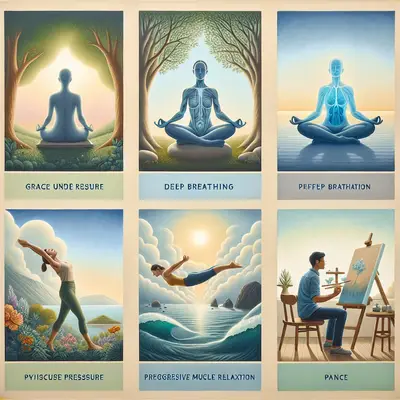
In an age where exhaustion is worn as a quiet badge of honor, genuine restoration has become a rare and exquisite luxury. Stress relief is no longer about merely “getting through” the day; it is about designing a life where your nervous system is treated with the same care you might reserve for a prized possession. When approached with intention and discernment, calm becomes less a fleeting state and more a cultivated environment—one you can return to, at will.
Below, you’ll find five exclusive, subtly powerful insights into stress relief, crafted for those who prefer depth over trends and refinement over quick fixes.
Stress as Sensory Overload: Editing Your Inputs Like a Connoisseur
Most discussions about stress begin with time management or mindset shifts; fewer acknowledge that your nervous system is constantly “reading” your environment. In essence, stress is often an issue of sensory curation. The barrage of notifications, harsh lighting, synthetic scents, and visual clutter places your body on quiet high alert, even when you feel you’re simply “at home.”
Begin by approaching your surroundings like a curator. Notice all the small, relentless demands on your senses: the brightness of your screens after dusk, the background noise of television or radio, the constant movement on your desktop, the scent of cleaning products or perfume. Subtle adjustments—warmer, lower lighting in the evening, fewer open browser tabs, a single ambient soundtrack instead of overlapping audio—can lower physiological arousal without any conscious “relaxation effort.”
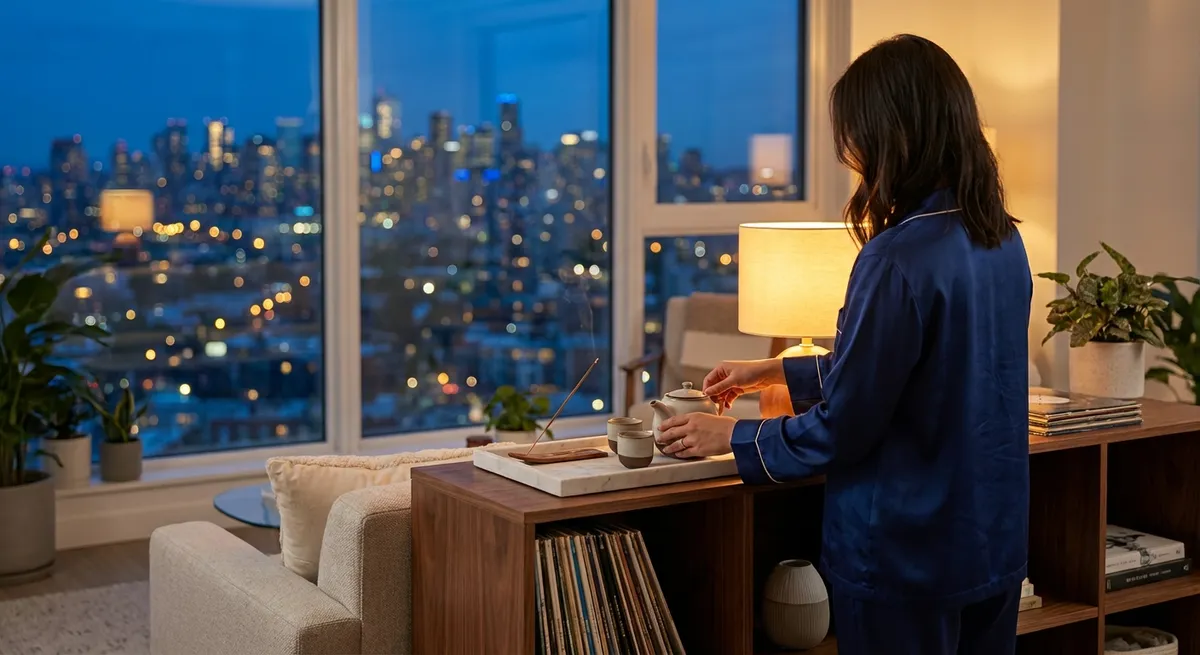
In practice, this might mean designating one room or even one corner as your sensory sanctuary: soft, indirect light, a restrained color palette, one or two intentional scents (such as lavender, bergamot, or sandalwood), and visual simplicity. Over time, your brain learns to associate this curated environment with safety and recovery, reducing stress responses more efficiently than sheer willpower ever could.
The Nervous System as an Instrument: Precision Breathing Over Generic Calm
Breathwork is often touted as a universal remedy, but discerning stress relief requires precision, not platitudes. The autonomic nervous system—your body’s stress and relaxation command center—responds differently to distinct breathing patterns. Instead of “just take deep breaths,” think of your breath as a finely tuned instrument, adjusted according to the situation.
When you feel acute anxiety or agitation, emphasize the exhale. Techniques like extended exhalation (for example, inhale for four counts, exhale for six to eight) stimulate the parasympathetic nervous system, the branch responsible for rest and recovery. This longer out-breath gently signals safety to the body, lowering heart rate and quieting internal alarm bells.
For fatigue-based stress—those days when you feel depleted rather than wired—very slow, expansive breaths with brief pauses at the top can help restore a steadier sense of energy without over-stimulating you. The key is nuance: you’re not forcing calm; you’re conversing with your physiology. By introducing regular, deliberate breathing “interludes” of two to five minutes throughout your day—between meetings, before bed, after a difficult conversation—you treat your nervous system with the same respect you might give a fine mechanical watch: frequent, attentive calibration rather than occasional, drastic intervention.
Micro-Restorations: Elevating Short Pauses into High-Impact Rituals
Most people wait for a weekend, a retreat, or a holiday to feel truly restored, yet our brains and bodies function best with frequent micro-recoveries woven into ordinary days. These micro-restorations are not idle scrolling or distracted snacking; they are deliberately small but high-quality interventions designed to reset stress before it compounds.
Consider adopting a portfolio of two- to five-minute rituals that feel disproportionately luxurious compared to their length. This might include stepping outside to feel real daylight and air on your skin, savoring a single cup of tea without multitasking, or performing a brief, intentional stretching sequence that focuses on the jaw, neck, and shoulders—areas where long-term stress quietly settles.
The refinement lies in how you frame these moments. Instead of seeing them as “breaks you stole” from productivity, treat them as essential maintenance built into your day—non-negotiable, like brushing your teeth. Over time, these micro-restorations reduce the baseline level of stress your body carries, making you more resilient when genuine challenges arise. You’re not waiting to escape your life to find relief; you are stitching moments of restoration into its very fabric.
Cognitive Decluttering: Reducing Mental Load with Graceful Systems
Much of modern stress is not about one major crisis but a thousand small, spinning plates. This “cognitive load”—things you must remember, track, decide, or anticipate—erodes your sense of calm even when you’re physically still. A premium approach to stress relief includes the art of cognitive decluttering: building elegant systems so your mind is not your only storage space.
Start by externalizing anything that repeatedly occupies mental space: recurring tasks, important dates, health appointments, financial reminders, even small preferences. Use a minimal, visually clean system—a single app, a refined notebook, or a physical calendar—that you trust completely. The goal is not hyper-productivity; it’s peace of mind through reliable, graceful structure.
You might create “decision-light” routines for high-stress segments of your day: a predefined morning sequence, a standard evening wind-down template, or a simple weekly review ritual where you calmly look at the week ahead. When fewer trivial decisions compete for your attention, your mind is freer to respond thoughtfully to genuine stressors instead of reacting from exhaustion. The effect is subtle yet profound: mental spaciousness that feels far more luxurious than any impulsive escape.
Emotional Refinement: Upgrading From Suppression to Elegant Processing
Sophisticated stress relief goes beyond spa days and supplements; it includes how you relate to your own emotions. Many high-functioning individuals manage stress by suppressing or intellectualizing their feelings, only to find the body expressing what the mind avoids—through tension, insomnia, irritability, or burnout.
Emotional refinement does not mean indulging in every impulse; it means learning to process your internal world with precision and dignity. This can be as simple as building a discreet, five-minute daily “emotional check-in”: naming what you feel (“strained,” “disappointed,” “overstimulated”), locating it in the body, and allowing a few slow breaths while acknowledging, “This is here, and that is allowed.” Research suggests that labeling emotions, a process called affect labeling, can actually reduce the intensity of the stress response.
For more persistent stress, consider a private reflective practice such as journaling with constraints—writing just one page a night, or responding to a single, recurring question like, “What quietly weighed on me today, and what supported me?” If appropriate, integrating occasional sessions with a therapist or coach can further refine this process. Instead of viewing emotional work as a sign of fragility, treat it as a form of inner craftsmanship: the ongoing art of keeping your inner landscape clear, honest, and navigable.
Conclusion
True stress relief is less about escaping your life and more about elevating how you inhabit it. By curating your sensory world, engaging your breath with precision, weaving in micro-restorations, decluttering your mental load, and refining how you relate to emotion, you create a lifestyle where calm is not an accident but an intentional design choice.
For a discerning mind, stress relief is not a single technique; it is a collection of subtle, well-chosen practices that, together, transform the texture of your days—from hurried endurance to composed, deliberate living.
Sources
- [National Center for Complementary and Integrative Health – Relaxation Techniques](https://www.nccih.nih.gov/health/relaxation-techniques-what-you-need-to-know) – Overview of evidence-based relaxation practices and their effects on stress and health.
- [Harvard Health Publishing – Breathing for Calm](https://www.health.harvard.edu/mind-and-mood/relaxation-techniques-breath-control-helps-quell-errant-stress-response) – Explains how specific breathing patterns influence the stress response and the autonomic nervous system.
- [American Psychological Association – Stress Effects on the Body](https://www.apa.org/topics/stress/body) – Detailed look at how chronic stress affects different bodily systems and why management is critical.
- [UCLA Mindful Awareness Research Center](https://www.uclahealth.org/programs/marc/mindfulness) – Resources and research on mindfulness practices, emotional awareness, and their impact on stress.
- [Mayo Clinic – Stress Management](https://www.mayoclinic.org/healthy-lifestyle/stress-management/in-depth/stress-relief/art-20044476) – Practical, research-informed strategies for managing stress in daily life.
Key Takeaway
The most important thing to remember from this article is that this information can change how you think about Stress Relief.