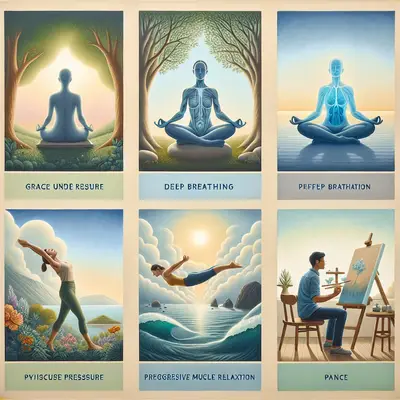
Stress, for many of us, no longer appears as dramatic upheaval but as a subtle, constant hum—emails at midnight, micro-demands, ambient tension that never fully recedes. In such a world, genuine calm becomes a luxury item, something curated rather than stumbled upon. This article explores stress relief not as a rescue operation, but as an elegant daily practice—quietly powerful, intentionally designed, and worthy of the most discerning inner life.
Stress as a Design Problem, Not a Willpower Problem
Most advice on stress suggests we simply “try harder” to relax—breathe more deeply, think more positively, force ourselves to unplug. Yet stress is far less about personal weakness and far more about environmental architecture. The refined approach is to treat stress as a design challenge: How do you construct a life that makes calm the default, not the exception?
Instead of asking, “How can I stay calm in chaos?” begin by asking, “How can I reduce the number of chaotic inputs my nervous system must process?” This might mean adjusting light and sound in your workspace, refining how and when you receive notifications, or restructuring your day so cognitively demanding tasks aren’t repeatedly interrupted. The premium mind does not attempt to out-muscle stress—it engineers conditions that make ease more probable than strain.
This is not escapism; it is strategy. Research shows that chronic exposure to stressors—however small—accumulates and can influence everything from sleep quality to cardiovascular health. By treating your attention as a limited, exquisite resource, you move from reactive coping to intentional curation. Your environment becomes an ally instead of an unexamined source of friction.
Insight 1: The “Prelude Window” – Refining the First 30 Minutes After Waking
The first 30 minutes after waking function like wet plaster for the mind: impressions made in that window tend to set the tone for the day. Most people surrender this delicate interval to the harsh glow of screens, notifications, and news cycles—an unfiltered flood of other people’s priorities.
A more elevated approach is to design a “Prelude Window”—a protected period where your nervous system is greeted with softness, clarity, and intentionality. This does not require a long, elaborate routine; it requires precision.
You might begin with low, indirect light instead of overhead glare, a glass of water before caffeine, and three to five unhurried breaths taken at the window or on the balcony. Instead of reaching for your phone, reach for a brief, tactile ritual: a few pages of a thoughtfully chosen book, a handwritten line in a journal, or a moment spent applying a favorite oil or cream with deliberate slowness. These micro-gestures signal to your body, “We are not in crisis. We can proceed with grace.”
Studies suggest that early-morning stress exposure can color mood and cognitive performance for hours afterward. By refining this Prelude Window, you are not indulging in luxury—you are quietly calibrating your physiology for steadiness, reducing the likelihood that the day’s inevitable stressors will tip you into reactivity.
Insight 2: Micro-Recovery Over Heroic Breaks
Many people wait for large pockets of time to “finally decompress”—the weekend, the vacation, the hypothetical future when things slow down. Yet nervous systems respond far more powerfully to regular micro-recovery than to rare, dramatic escapes.
Micro-recovery are those artfully placed pauses that last 30 seconds to three minutes: a single measured breath before you respond to a challenging message, a short stretch every hour that unhooks your shoulders from your ears, a quiet gaze out of a window to soften visual overload. It is not the length of the pause that matters, but its consistency and quality.
In high-performance fields—from athletics to aviation—structured recovery is non-negotiable because fatigue subtly degrades judgment long before it is consciously noticed. The same principle holds for stress: when you deny yourself recovery, you eventually lose access to your most nuanced, elegant thinking. A two-minute pause may not sound like much, but repeated throughout the day, it becomes a hidden network of nervous-system recalibrations.
You might anchor micro-recovery to specific triggers: every time you close a laptop, finish a call, or stand up from a chair, you add a brief, intentional reset. Over time, this transforms your day from one long, undifferentiated strain into a series of composed, breathable segments.
Insight 3: The Art of Gentle Boundaries – Saying “Not Now” Instead of “Never”
Boundary-setting is often discussed in stark terms—“say no,” “cut people out,” “protect your energy at all costs.” While boundaries are essential, such extreme framing can feel brittle and socially unsophisticated, especially for those with complex professional and personal roles.
A more refined form of boundary is temporal rather than absolute: replacing “no” with “not now,” or “not like this.” Instead of agreeing to every request immediately—or rejecting it outright—you adjust the timing and conditions under which saying yes is sustainable.
For example:
- “I’d like to give this the attention it deserves. Could we revisit it on Thursday when I’m not between calls?”
- “I can’t join the entire event, but I can be there for the first hour.”
- “I’m fully committed this week. If it’s still relevant next week, I’ll have more bandwidth.”
This approach preserves relationships while defending your nervous system. Cortisol and other stress hormones rise not only in response to sheer volume of tasks, but also to perceived lack of control and unclear expectations. Gentle, precise boundaries restore a sense of agency. You remain generous—but not at the expense of your mental equilibrium.
Over time, those around you begin to recognize that your “yes” is discerning, not automatic, and therefore more trustworthy. Calm, in this sense, becomes part of your personal brand.
Insight 4: Sensory Editing as a Form of Stress Hygiene
We often think of stress as cognitive—worries, thoughts, deadlines—yet the nervous system is also constantly reading the sensory world: light, sound, temperature, texture, scent. When these channels are cluttered or harsh, they act as a steady drip of agitation.
Sensory editing is the practice of curating what your senses encounter throughout the day. It might look like dimming overhead lights and favoring warm, indirect lamps during evening hours; investing in a single high-quality, breathable fabric for clothing you wear on stressful days; or using soundscapes—soft instrumental music, nature sounds—to veil jarring environmental noise.
Research suggests that exposure to natural elements, even simulated ones (like nature sounds or images), can reduce physiological markers of stress. Similarly, high noise levels and harsh lighting can elevate stress and impair concentration. By editing your sensory landscape—even modestly—you reduce background strain on your nervous system and reclaim bandwidth for more meaningful work and interactions.
The goal is not to turn life into a spa. It is to remove unnecessary sensory friction so that the inevitable stressors you do encounter are met by a system that is not already overstimulated.
Insight 5: Emotional Refinement – Upgrading Your Inner Vocabulary
Stress is amplified when our inner language is blunt, imprecise, or catastrophizing. Many people describe every unpleasant sensation as “anxiety” or “stress,” which flattens nuance and makes it more difficult to respond skillfully. An elevated approach to mental wellness involves refining your emotional vocabulary—the way a sommelier refines their palate.
Instead of, “I’m so stressed,” you might learn to distinguish:
- “I feel mentally overloaded” (cognitive fatigue)
- “My chest feels tight and restless” (physiological arousal)
- “I feel under-appreciated” (relational tension)
- “I’m worried about a specific outcome” (anticipatory anxiety)
- “I feel trapped by my schedule” (perceived lack of autonomy)
Psychological research suggests that “emotional granularity”—the ability to label feelings with precision—is associated with greater emotional regulation and resilience. When you can name your experience accurately, your response can be equally precise. Overloaded? You may need prioritization. Restless? You may need movement or breathwork. Under-appreciated? You may need a conversation, not a meditation app.
This is not about over-analyzing your feelings. It is about cultivating an interior lexicon that respects the subtleties of your experience. The more refined your language, the less likely you are to be swept away by undefined discomfort.
Conclusion
Sustainable stress relief is less about dramatic interventions and more about consistently elegant decisions—the way you greet your morning, the micro-pauses you allow, the boundaries you gently but firmly shape, the sensory world you curate, and the language you choose for your inner life.
In a culture that glorifies urgency, choosing composure is quietly radical. You are not simply “managing stress”; you are composing a different kind of day—one in which your nervous system is treated as something rare and worth protecting. Over time, this is how calm stops being an occasional escape and becomes your signature way of moving through the world.
Sources
- American Psychological Association – Stress Effects on the Body - Overview of how chronic stress impacts multiple physiological systems.
- Mayo Clinic – Chronic Stress: What It Does to Your Health - Explains the long-term health consequences of unmanaged stress.
- Harvard Health Publishing – Understanding the Stress Response - Detailed description of the biology of the stress response and its regulation.
- National Institutes of Health – Nature and Mental Health - Research review on how nature exposure and sensory environments influence stress and well-being.
- Greater Good Science Center, UC Berkeley – Emotional Granularity - Discussion of emotional granularity and its role in emotional regulation and resilience.
Key Takeaway
The most important thing to remember from this article is that this information can change how you think about Stress Relief.