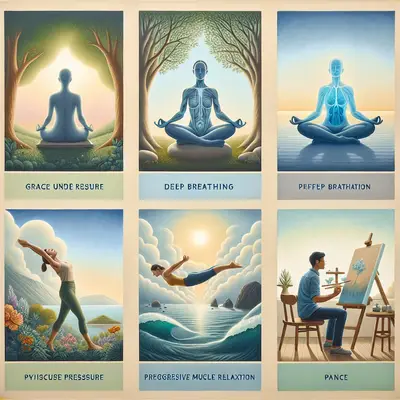
Stress has become the ambient noise of modern life—constant, subtle, and strangely permissible. For a discerning mind, this is no longer acceptable background. Stress relief, at its most refined, is not a frantic escape but an intentional pause: a composed interval where you step out of urgency and into authorship. This is not about doing more to feel less; it is about doing less, with exquisite precision, to feel differently.
Below are five exclusive, nuanced insights designed for those who treat their mental state with the same discernment they bring to every other area of life.
The Luxury of Unclaimed Minutes
Stress thrives in cluttered time—calendars with no air, mornings that begin in reaction, evenings that evaporate in blue light. True relief begins with something deceptively simple and deeply radical: unclaimed minutes.
Unclaimed minutes are small, intentional pockets of time that belong to nothing and no one—not work, not obligations, not even “self-improvement.” They are preserved specifically for psychological exhalation. Research on “micro-breaks” shows that even brief, mindful pauses can reduce fatigue and improve mood and performance, especially when they involve detaching from task demands rather than scrolling or multitasking. The refinement lies in how you curate them: a three-minute ritual of doing absolutely nothing before opening your inbox; a five-minute balcony pause between meetings; a silent transition before entering your home in the evening. No apps, no tracking, no agenda. The mind begins to trust that relief is not a rare event but a scheduled certainty, woven into the architecture of your day.
Unclaimed minutes become an invisible boundary: a quiet refusal to allow stress to claim every available corner of your time. Over days and weeks, these intervals accumulate, not as wasted minutes, but as a subtle portfolio of mental liquidity—emotional cash-flow you can draw on when demands intensify.
Nervous System Etiquette: A Refined Code of Inner Conduct
There is a kind of etiquette we reserve for beautiful spaces and important rooms: lower voices, slower movements, attentive presence. Extending this same courtesy to your nervous system is an advanced, often overlooked form of stress relief.
Nervous system etiquette is a personal code of conduct that governs how you move, speak, and respond when you feel under pressure. Rather than asking, “How do I stop feeling stressed?” you begin asking, “How do I behave toward myself when I am stressed?” This reframe is subtle but powerful. Research on self-compassion and emotional regulation shows that a kinder, more measured internal response reduces physiological stress responses and improves resilience.
Envision a few non-negotiable rules: not raising your voice while your heart is racing; never making big decisions when your breath is shallow; pausing to straighten your posture before responding to a difficult message; lowering your shoulders before entering a tense conversation. These are micro-gestures of inner civility. Over time, this etiquette becomes instinctive. You stop amplifying your stress with harsh self-talk and dysregulated reactions, and instead become a calm custodian of your own internal environment.
Curating Sensory Quiet: Editing Your Inputs with Precision
Stress is not only about what we do; it is about what we continually absorb. Notifications, harsh lighting, synthetic scents, visual clutter, and constant audio all create a subtle sensory tax. You may be “resting,” but your nervous system is still absorbing noise.
The refined alternative is sensory curation: deliberately editing your environment so it signals safety, not vigilance. Studies on sensory overload and environmental psychology suggest that factors like lighting, noise, and visual density significantly influence stress levels, cognitive load, and even heart rate. Instead of a drastic overhaul, consider small, intentional adjustments: a single warm lamp instead of overhead glare; one designated notification window per hour instead of constant pings; a clear surface where your eyes can rest; a single, grounding scent that you associate only with unwinding.
You might create a “sensory sanctuary corner”—not necessarily an entire room, but a chair, a windowsill, or a small table curated with care: soft texture, one object of meaning, warm light, no screens. The message to your nervous system is consistent: “Here, we are not under threat. Here, we exhale.” Over time, this physical cue becomes a conditioned response—your body begins relaxing the moment you enter that space.
The Art of Controlled Completion: Finishing Small to Calm Big
One of the most corrosive sources of stress is cognitive clutter: unfinished tasks, unanswered messages, unresolved plans endlessly circling in the mind. The brain treats these incomplete loops as active, even when you’re attempting to rest. This is where controlled completion becomes an elegant strategy.
Controlled completion is the intentional choice to close a small number of loops with precision, rather than attempting to conquer everything at once. Psychological research on the “Zeigarnik effect” suggests that incomplete tasks occupy mental bandwidth, while resolution—even on a modest scale—reduces mental tension. Rather than a chaotic evening of fragmented multitasking, you might choose three discreet completions: responding to one important email with care, laying out tomorrow’s clothes, clearing one small surface.
The elegance lies not in the number of tasks completed but in the quality of closure. You finish them fully, without rushing, then consciously acknowledge, “This is complete.” That acknowledgment is not trivial; it is a deliberate signal to your mind that something has moved from open to closed. Over time, this practice builds a sense of quiet control—stress diminishes not because life is easier, but because your relationship with unfinished business is more deliberate, less chaotic.
The Evening Descent: Designing a Gentle Landing for the Mind
Most people treat bedtime as an off-switch: screen, scroll, stop. The nervous system, however, prefers a descent—a gradual, predictable lowering of intensity. When you design this descent with intention, evening becomes less of an afterthought and more of a daily, restorative ceremony.
From a physiological perspective, your circadian rhythm, melatonin production, and stress hormones respond to light, activity, and stimulation. Excess light and cognitive engagement close to bedtime disrupt this natural unwinding, contributing to poor sleep quality and elevated stress. A sophisticated alternative is to create an “evening descent curve”: a 60–90 minute window in which stimulation is intentionally reduced.
Instead of a complex routine, think of three progressive shifts: visual (dimmer, warmer light; fewer screens), cognitive (lighter input—no heavy decisions, no intense debates; perhaps a physical book or gentle music), and physical (slower movements, gentler tasks, deliberate breathing). You might pair this with a small, consistent ritual—herbal tea in a specific cup, a brief journal reflection, or a simple stretching sequence. The key is repetition. The body begins to recognize the pattern and anticipates rest. Over time, this descent becomes a signature of your day: a quiet, luxurious landing rather than a crash.
Conclusion
Stress relief, at its most refined, is not a collection of hacks but a cultivated way of inhabiting your life. It lives in unclaimed minutes that protect your time, in etiquette that dignifies your nervous system, in sensory spaces edited with precision, in small completions that calm mental noise, and in evenings that allow the mind to descend rather than collapse.
You do not have to wait for a spa, a retreat, or a perfect weekend. You can start with one small interval today—one composed intermission in the middle of your existing life—and let that be the moment your inner world remembers what it feels like to be quietly, confidently at ease.
Sources
- [American Psychological Association – Stress in America](https://www.apa.org/news/press/releases/stress) – Overview of how chronic stress affects mental and physical health, with survey data and expert commentary
- [NIH: National Center for Complementary and Integrative Health – Relaxation Techniques](https://www.nccih.nih.gov/health/relaxation-techniques-what-you-need-to-know) – Evidence-based discussion of relaxation practices and their impact on stress and the nervous system
- [Harvard Health Publishing – Understanding the Stress Response](https://www.health.harvard.edu/staying-healthy/understanding-the-stress-response) – Detailed explanation of physiological stress mechanisms and why regulation strategies matter
- [Cleveland Clinic – Microbreaks at Work](https://health.clevelandclinic.org/take-microbreaks-at-work) – Explores how brief breaks during the day influence mood, performance, and fatigue
- [National Sleep Foundation – How Stress Affects Sleep](https://www.thensf.org/how-stress-affects-sleep/) – Describes the relationship between stress, sleep quality, and evening routines, with practical guidance
Key Takeaway
The most important thing to remember from this article is that this information can change how you think about Stress Relief.