Stress relief, at its highest expression, is not a scramble for emergency fixes—it is a cultivated aesthetic of living. For the discerning mind, calm is less a mood and more a deliberate architecture: how you design your time, your environment, and even your internal dialogue. This is not about escape; it is about refinement—of habits, of attention, of what you allow to touch your nervous system.
Below are five exclusive, quietly powerful insights for those who treat mental wellness as both an art and a discipline.
1. Treat Your Nervous System Like a Curated Gallery, Not a Storage Unit
Most people expose their minds to stimuli as though the nervous system were an infinite storage facility: relentless news feeds, constant notifications, endless commentary. A refined approach treats attention as a carefully curated gallery—only select pieces deserve to be on display.
Begin by auditing “micro-stressors” that seem trivial individually but corrosive in aggregate: habitual doom-scrolling, low-level background noise, unchecked group chats, or even the clutter of unused apps. Each of these is a subtle tax on the nervous system. Research on attentional overload suggests that chronic multi-tasking and digital fragmentation heighten perceived stress and reduce cognitive control.
Create a daily “sensory shortlist”—three things you allow in by intention (e.g., one trusted news outlet once a day, one meaningful conversation, and one deliberately chosen piece of music). This is not about deprivation; it is about discernment. The more selective you are with your inputs, the more spacious and composed your internal landscape becomes.
2. Use Temporal Design: Elegant Boundaries for When You Absorb Stress
Stress is not only about what you encounter, but when. High performers often attempt to be universally available—emotionally, digitally, and intellectually. This flattens the day into one indiscriminate blur of obligation. Temporal design is the art of placing refined boundaries around when you allow certain forms of stress to access you.
Consider allocating “stress windows”: brief, clearly defined periods when you are willing to engage with demanding tasks, challenging emails, or emotionally charged conversations. Outside those windows, protect the integrity of your nervous system as you would a valuable investment. Cognitive research shows that predictable routines and structured time segments reduce anxiety by giving the brain a sense of control and anticipation.
You might, for instance, review difficult correspondence only between 10–11 a.m. and 3–4 p.m., never at night and never within the first hour after waking. This prevents stress from infiltrating the psychologically sensitive edges of the day. Over time, your mind begins to trust that there is a sophisticated order to your responsibilities, and it no longer needs to remain perpetually braced.
3. Upgrade “Self-Care” into Ritual Precision
The phrase “self-care” is often reduced to scented candles and occasional spa days. For a more elevated practice, think in terms of ritual precision: deliberately structured, repeatable actions that signal safety and order to your nervous system.
This is less about indulgence and more about reliability. A precisely designed wind-down ritual, repeated at approximately the same time daily, trains the brain to associate specific cues with the onset of restoration. Sleep studies consistently show that predictable pre-sleep routines improve sleep quality and overall stress resilience.
An elegant ritual might include: dimming lights at a set hour, preparing a warm caffeine-free beverage in a specific ceramic cup you only use at night, spending exactly ten minutes in gentle stretching, then reading a tactile book (not a screen) in a single designated chair. The refinement lies in the constancy and intentionality—this is not improvisation; it’s choreography. Over time, these details become a quiet language your body understands: we are safe; we are done for today.
4. Quiet Luxuries: Micro-Interventions That Signal “You Are Not in Crisis”
The nervous system is exquisitely responsive to subtle sensory signals. When you are under stress, the body often behaves as though you are in an ongoing emergency—even if the stressor is a spreadsheet, not a threat. One elegant antidote is the concept of quiet luxuries: small, cultivated experiences that unmistakably contradict the narrative of crisis.
This might be the feel of a weighty glass in your hand instead of a disposable cup, the soundscape of a carefully chosen instrumental playlist during challenging work, or the deliberate use of a favorite pen for planning your day. Seemingly minor, these details send a consistent message: we have time to choose; we are not in immediate danger.
Physiologically, such cues can downshift the stress response by gently activating the parasympathetic (rest-and-digest) system. When your body senses that you are attending to texture, temperature, sound, and aesthetic coherence, it infers that the environment is stable enough for nuance. These micro-interventions do not remove external pressures; they transform the internal interpretation from emergency to manageable challenge.
5. Refined Resilience: Practice Elegant Micro-Recoveries, Not Grand Escapes
Many people live in a cycle of overextension followed by dramatic attempts to “reset”: intense vacations, weekend collapses, or extreme detoxes. Refined resilience favors micro-recoveries—brief, structured resets layered seamlessly into the day. They are so slight they rarely appear on a calendar, yet they materially alter your stress load.
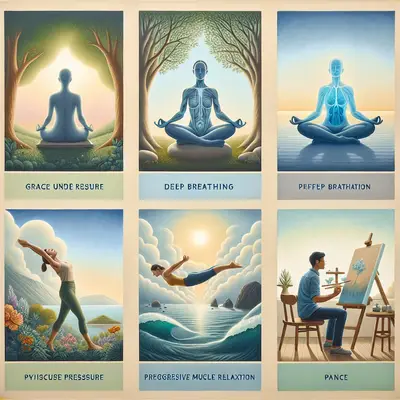
Emerging research on stress and recovery suggests that even a few minutes of intentional disengagement—such as controlled breathing, stepping outside for natural light, or brief movement—can reduce physiological markers of stress and improve cognitive performance. The key is frequency and intentionality, not duration.
Design three or four micro-recoveries into your day as non-negotiable appointments with yourself. For example: two minutes of slow, extended exhale breathing between meetings; a five-minute outdoor walk after lunch with your phone on airplane mode; a three-minute posture reset and shoulder release before you open a demanding document. Over time, your identity shifts from someone who simply “copes with stress” to someone who composes the nervous system with quiet mastery.
Conclusion
Stress relief at a sophisticated level is not loud, dramatic, or performative. It is the subtle discipline of what you allow into your mind, when you allow it, and how you signal to your body that it is permitted to stand down. By curating your stimuli, designing your time, elevating your rituals, investing in quiet luxuries, and committing to elegant micro-recoveries, you move from survival to stewardship of your inner life.
Calm, in this sense, is not the absence of responsibility or ambition. It is the decision that your nervous system will be treated as something rare and valuable—worthy of intention, of beauty, and of thoughtful protection.
Sources
- [American Psychological Association – Stress: The Different Kinds of Stress](https://www.apa.org/topics/stress) – Overview of stress types, impacts, and coping strategies
- [National Institutes of Health – Chronic Stress Puts Your Health at Risk](https://newsinhealth.nih.gov/2014/10/stress) – Explains how ongoing stress affects the body and why managing it matters
- [Harvard Health Publishing – Relaxation Techniques: Breath Control Helps Quell Errant Stress Response](https://www.health.harvard.edu/mind-and-mood/relaxation-techniques-breath-control-helps-quell-errant-stress-response) – Details the role of controlled breathing in managing the stress response
- [Mayo Clinic – Stress Management](https://www.mayoclinic.org/healthy-lifestyle/stress-management/basics/stress-basics/hlv-20049495) – Practical guidance on understanding stress and evidence-based strategies for relief
- [Cleveland Clinic – Why Routines Are Good for Your Health](https://health.clevelandclinic.org/benefits-of-a-daily-routine) – Discusses how predictable routines support mental health and reduce stress
Key Takeaway
The most important thing to remember from this article is that this information can change how you think about Stress Relief.