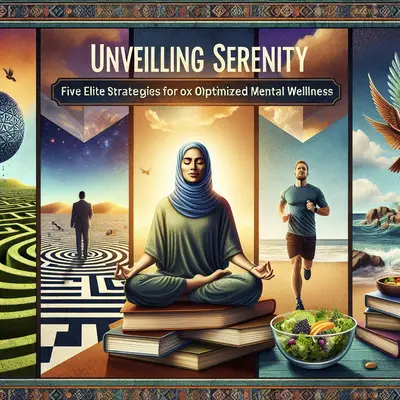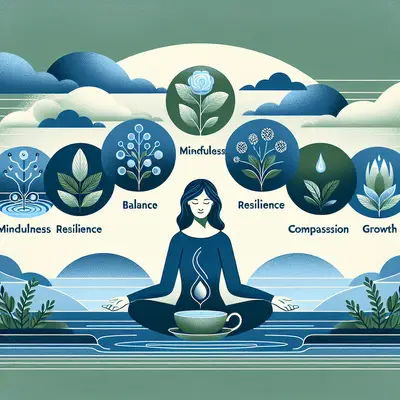
Mental wellness, at its most refined, is less about chasing constant happiness and more about curating an inner climate where clarity, steadiness, and subtle joy can thrive. It is an art form: attentive rather than frantic, discerning rather than indulgent. For the discerning mind, true calm is not an escape from complexity but a graceful way of meeting it. What follows is an exploration of mental wellness as a quietly luxurious practice—anchored in five exclusive, often overlooked insights that invite you to elevate not just how you feel, but how you live.
Mental Wellness as Inner Architecture, Not Emergency Repair
Most people approach mental wellness as a crisis response—something to reach for only when stress becomes unbearable. A more cultivated approach treats mental wellness as architecture rather than repair: you are designing the emotional “layout” of your days with conscious intention.
This begins with acknowledging that your inner state is constantly shaped by hidden structures—routines, micro-choices, environment, and even the cadence of your day. Instead of asking, “How do I fix this stress?” ask, “What in my life is quietly manufacturing this stress?” This shift is profoundly empowering. It moves you from the role of firefighter to architect.
Consider how you begin your mornings. Do you wake directly into notifications, or into a few minutes of unclaimed silence? What is the emotional “texture” of your workspace—cluttered or thoughtfully arranged? How often do you give yourself transitional moments between tasks, rather than moving at a frantic, uninterrupted pace? Mental wellness becomes a series of elegant, deliberate design choices: a glass of water before coffee, one quiet breath before speaking in a heated conversation, a softly lit corner that signals your nervous system it is time to unwind.
In this view, therapy, meditation, or supplements are no longer the only protagonists; they become honored guests within a much broader, well-curated ecosystem. You are not merely coping; you are composing.
Exclusive Insight 1: The Luxury of Mental Margin
In a world obsessed with optimization, mental margin—space between you and your next obligation—is the new quiet luxury. It is not simply “free time”; it is protected cognitive spaciousness that prevents your mind from becoming chronically overstimulated.
Your nervous system is not designed for uninterrupted input. The brain filters and integrates information best when it has intervals of apparent “idleness.” These blank spaces are where emotional processing, creative problem-solving, and subtle self-awareness happen. Without margin, even pleasant activities can become draining, because your capacity to receive them with presence has been eroded.
Building mental margin is a deliberate, almost artisanal practice. You might end each work block with two minutes of stillness before opening a new browser tab. You may walk without headphones once a day, letting the mind decompress rather than layering more stimulation on top. You might refuse the instinct to fill every pause with scrolling, conversation, or tasks—even when they are enjoyable.
For a cultivated mind, margin is not laziness; it is refinement. It communicates to your psyche: “We are not in perpetual emergency.” Over time, this quiet signal recalibrates your default state from vigilance to grounded attentiveness.
Exclusive Insight 2: Emotional Vocabulary as a Tool of Inner Precision
Mental wellness is often framed as a set of practices, but it is equally a language. The sophistication of your emotional vocabulary directly impacts your capacity to regulate your inner world. Naming what you feel with nuance reduces the mind’s confusion and the body’s reactivity.
Most of us overuse blunt labels—“stressed,” “fine,” “tired”—for states that are, in truth, quite distinct. There is a world of difference between feeling hurried, pressured, overwhelmed, anticipatory, or emotionally saturated. The nervous system responds differently to each, and so should your care.
By cultivating a more precise lexicon—“I feel mentally overfull,” “I feel quietly resentful,” “I feel under-stimulated but over-scheduled”—you access more tailored responses. Overfull might ask for subtraction; under-stimulated but busy might call for a more meaningful challenge, rather than more rest. Subtle emotions like wistfulness, disillusionment, or subdued contentment carry unique information about the alignment (or misalignment) between your life and your deeper values.
Practically, you might adopt a small, private ritual: once or twice a day, pause and answer, “What is the most accurate, specific description of my emotional state right now?” This level of inner precision is an elegant form of self-respect. It treats your inner life not as a blur to be endured but as a finely textured landscape to be understood.
Exclusive Insight 3: Nervous System Literacy as Modern Etiquette with Yourself
Mental wellness is not purely psychological; it is intimately physiological. Nervous system literacy—the ability to recognize and respond to your body’s states—is a contemporary form of inner etiquette, a way of treating yourself with exquisite courtesy.
Your body cycles through modes of activation (alertness, focus, stress) and restoration (calm, social connection, deep rest). When activation becomes chronic and unbroken, it reshapes not just your mood but your perception: neutral emails feel hostile, small delays feel catastrophic, silent moments feel intolerable.
Instead of judging these reactions, a literate approach asks, “What is my nervous system trying to do right now?” Is your heart rate slightly elevated, breath confined to the upper chest, shoulders subtly contracted? This suggests hyperarousal. Are you numb, detached, scrolling mindlessly, struggling to care? This suggests a more shut-down state.
Each state responds to different interventions. For activation, grounding practices—slowing your exhale, feeling your feet, visually softening your gaze—bring the system down gently. For collapse, gentle stimulation—a brief walk, sunlight, a phone call with someone calming—can be more regulating than forced stillness.
Over time, this literacy refines your daily choices. You learn when a high-intensity workout will support you and when it will tip you into agitation; when solitude will be nourishing and when it will drift into isolation. The result is not perfection, but a consistently more respectful relationship with your own biology.
Exclusive Insight 4: Curated Input as a Form of Mental Hygiene
Mental wellness is deeply influenced by what you allow to enter your mind—visually, aurally, socially, and digitally. Curated input is a subtle but powerful practice: treating what you consume as carefully as what you apply to your skin or serve at your table.
This does not mean airtight avoidance of difficult realities. Rather, it means acknowledging that indiscriminate exposure—endless breaking news, aggressive commentary, performance-driven social feeds—can keep your nervous system in a low-grade fight-or-flight state.
An elevated approach asks: What is the emotional “aftertaste” of the content and conversations I consume? Do they leave me more grounded, informed, and capable—or more scattered, envious, or helpless?
You might institute refined, almost ceremonial boundaries: news at specific times only, never as your first or last input of the day; social media windows, instead of constant micro-sampling; a rotation of “nutritive content” (lectures, thoughtful essays, art, nature, long-form storytelling) that expands rather than erodes your inner stability.
Just as you might invest in high-quality ingredients for your body, you curate high-integrity information and inspiration for your mind. Over time, your baseline mental climate shifts from reactive consumption to discerning, self-honoring selection.
Exclusive Insight 5: Choosing Depth Over Novelty as an Antidote to Subtle Anxiety
Much modern anxiety is not loud panic but a quiet, humming agitation—a sense of inner restlessness, as though you are perpetually behind on something you cannot name. One of its most overlooked drivers is compulsive novelty: a constant search for the next stimulation, the next idea, the next micro-distraction.
The cultivated alternative is depth. Depth means allowing yourself to stay with one experience, one book, one conversation, one practice, long enough to pass through the initial boredom and into richness. Where novelty scatters attention, depth concentrates it—and that concentrated attention is inherently calming.
In practical terms, this might look like choosing to reread a meaningful book instead of opening five new articles you will never finish. It might mean committing to a single contemplative practice—journaling, breathwork, a specific meditation style—for a season, instead of rotating through endless techniques. It might involve nurturing a long-term, in-person friendship that evolves over time, rather than chasing constant new social micro-connections.
Depth is antidotal to the sense that life is slipping past as a blur of fragments. It reminds your nervous system that not everything of value is urgent—and that sustained engagement is, in itself, a form of inner stability.
Conclusion
Mental wellness, when approached with discernment, becomes less a reaction to distress and more a daily art of self-stewardship. You are not merely managing symptoms; you are shaping an internal culture—one that honors mental margin, emotional precision, nervous system literacy, curated input, and a deliberate preference for depth over novelty.
This is not about constructing a perfectly serene life; complexity will always remain. It is about meeting that complexity with increasing elegance: a quieter reactivity, a sharper self-understanding, and a more generous margin for being human. Over time, these refined practices do something quietly revolutionary—they allow your mind not only to cope, but to dwell in a state of composed readiness, capable of both deep rest and meaningful engagement.
Mental wellness, in this light, is not a luxury reserved for rare retreats or special occasions. It is a sophisticated, ongoing conversation between you and your own mind—one that you have the privilege, and the power, to continually refine.
Sources
- National Institute of Mental Health – Caring for Your Mental Health - Overview of foundational mental health practices and evidence-based guidance
- Harvard Health Publishing – Understanding the Stress Response - Explains how the nervous system reacts to stress and why regulation practices matter
- Yale Center for Emotional Intelligence - Research and resources on emotional literacy, labeling emotions, and psychological well-being
- American Psychological Association – Building Your Resilience - Evidence-based strategies for cultivating adaptive mental habits and inner resources
- University of California, Berkeley – Greater Good Science Center - Research-backed articles on mindfulness, emotional regulation, and mental wellness practices
Key Takeaway
The most important thing to remember from this article is that this information can change how you think about Mental Wellness.