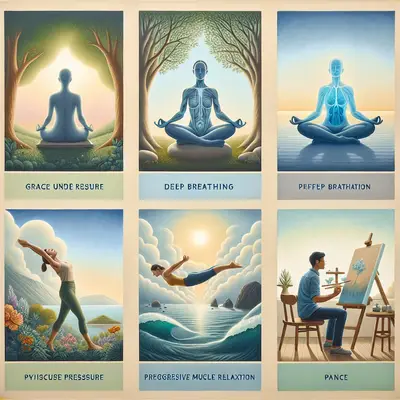
Stress relief, when approached with intention, becomes less about emergency repair and more about a cultivated way of living. Instead of chasing “quick fixes,” a refined approach to calm is quiet, deliberate, and deeply personal. It is not about escaping pressure, but about meeting it with a well‑trained nervous system and a composed inner stance.
What follows is an elevated perspective on stress relief—five exclusive insights that favor nuance over noise, and subtlety over spectacle.
Stress Relief as Nervous System Stewardship
Most discussions of stress focus on the mind—thoughts, beliefs, mindset. Yet the more sophisticated starting point is the nervous system itself. Chronic stress is, at its core, a repeated activation of the body’s threat response. The work, then, is not to “think differently” first, but to help the nervous system feel safer more often.
This is where small, precise interventions become powerful. Practices like lengthening the exhale, gentle humming, or placing a warm hand over the sternum are not “soft” alternatives; they are direct ways of signaling to the vagus nerve that the body is safe enough to downshift. Over time, these signals become familiar, and the stress response softens more quickly.
Rather than reserving calm for a 20‑minute routine, think in terms of micro-adjustments: the deliberate pause before opening an intense email, a slower sip of tea between meetings, a single grounding breath before entering a room that usually raises your heart rate. When repeated, these quiet gestures amount to nervous system stewardship—a curated environment inside your own body.
The goal is not to eliminate stress but to expand your capacity to hold it without fraying. That is the true luxury: a physiology trained not to overreact.
The Elegance of Boundaries that No One Sees
Boundary-setting is often portrayed as dramatic, confrontational, or public. In reality, the most effective boundaries for stress relief are often invisible. They are structural: how you design your day, what you permit into your attention, and which demands are quietly declined before they ever reach your calendar.
An elegant boundary is subtle but firm. It might look like:
- Consciously protecting the first 30 minutes of your day from all screens, messages, and requests.
- Declaring one evening per week as “non-negotiable restoration”—no social plans, no work, simply time to decompress.
- Having a personal rule that you do not respond to non-urgent messages after a certain hour, without announcing it to anyone.
These boundaries relieve stress not just by reducing input, but by returning a sense of authorship over your own time. When your schedule reflects your values—rather than only other people’s urgency—your nervous system receives an ongoing message: “I am not perpetually at the mercy of demand.”
It is also worth noting that the most refined boundaries are often preventive, not reactive. Instead of learning to say no loudly, design your life so that fewer unaligned requests arrive in the first place. This might mean tightening who has direct access to you, automating certain decisions, or simplifying commitments. Invisible boundaries, precisely placed, can quietly transform the texture of your days.
Curating Sensory Inputs as Mental Hygiene
Stress is not only psychological; it is sensory. Noise, clutter, harsh lighting, persistent notifications, and constant scrolling combine to keep the nervous system slightly agitated, even when nothing “dramatic” is happening. A sophisticated stress-relief strategy treats sensory input as something to curate, not just tolerate.
Begin by observing which environments subtly elevate your heart rate or make your shoulders tighten. Is it the relentless flicker of screens? The background chaos of certain spaces? The constant ping of notification sounds? The aim isn’t to live in silence, but to take ownership of what you allow into your senses.
You might dim harsh overhead lighting and use warmer lamps in the evening, lower notification volumes or disable non-essential alerts entirely, and keep one physical space—perhaps your bedroom or a reading corner—visually calm and intentionally uncluttered. Even modest changes in auditory and visual load can meaningfully quiet the nervous system.
Think of this as mental hygiene on par with brushing your teeth: a daily practice of reducing unnecessary sensory friction. When your environment is less demanding, your mind doesn’t have to work as hard to maintain composure, freeing up your limited cognitive and emotional resources for what truly matters.
The Discipline of Resting Before You Are Exhausted
Many people view rest as a reward for depletion—a break taken only when one is already exhausted or burned out. A more elevated approach treats rest as a strategic discipline: you rest not because you are collapsing, but to ensure you never need to. This reframe is subtle yet profound for stress relief.
The nervous system is highly responsive to patterns. If rest only comes after crisis, your body learns that it must amplify distress to be heard. Over time, this can create a cycle in which stress must become extreme before relief is permitted. To interrupt this, begin inserting small, deliberate rest intervals before you feel desperate for them.
This can be as simple as:
- A five-minute walk outside between cognitively demanding tasks.
- A midday ritual of lying down, closing your eyes, and allowing the jaw, tongue, and hands to soften completely.
- A brief “transition window” when you arrive home—no tasks, just decompression.
When rest is normalized and predictable, the body no longer has to shout. Stress signals become less dramatic because the system trusts that relief is already embedded in the day. This is a quieter, more dignified relationship with your own limits: you honor them in advance rather than apologizing to them after the fact.
Inner Dialogue as a High-End Stress Technology
Of all the tools available for stress relief, inner dialogue is among the most underrated—and one of the most accessible. The way you speak to yourself under pressure is not just motivational fluff; it is a direct modulator of your stress response. The nervous system is listening to your internal tone.
An unrefined inner dialogue tends to be sharp, urgent, and critical: “You’re already behind.” “You can’t mess this up.” “Everyone is expecting more.” Even if these thoughts feel familiar, they are physiologically expensive. They intensify threat perception and keep the body in a state of readiness long after the situation requires it.
By contrast, a cultivated inner voice is both precise and kind. It does not deny reality; it narrates it with steadiness: “This is a demanding moment, and I can move through it one step at a time.” “My best is dynamic—it changes with circumstances, and that is acceptable.” “This is challenging, not catastrophic.”
One practical refinement is to develop a concise, grounded phrase you return to when stress spikes—something that feels mature rather than saccharine. Repeating it is not about “positive thinking”; it is about offering your body a clear signal of containment and safety. Over time, this calibrated self-talk becomes a form of internal leadership.
In high-pressure situations, you may not always control external events—but you can control the language that shapes your experience of them. Treat your inner dialogue as a bespoke, high-end instrument for navigating stress: carefully tuned, rarely reckless, consistently stabilizing.
Conclusion
True stress relief is less about escaping life and more about inhabiting it with greater poise. When you steward your nervous system, refine your boundaries, curate your sensory world, honor rest before collapse, and elevate your inner dialogue, you are no longer at the mercy of every demand. You are, instead, living by design.
This is the quiet sophistication of cultivated calm: not a life without pressure, but a life in which your physiology, environment, and inner voice are aligned in support of your well-being. Stress will still arrive, as it always does—but your response will be less frantic, more deliberate, and unmistakably your own.
Sources
- National Institute of Mental Health – 5 Things You Should Know About Stress – Overview of how stress affects the body and mind, and evidence-based coping strategies.
- Harvard Health Publishing – Understanding the Stress Response – Detailed explanation of the physiology of stress and the role of the nervous system.
- Cleveland Clinic – Vagus Nerve: What It Is, Function, and Disorders – Insight into how the vagus nerve influences relaxation and stress regulation.
- American Psychological Association – Stress in America – Research-based perspective on stress, its impacts, and psychological coping mechanisms.
- Centers for Disease Control and Prevention – Coping with Stress – Practical, health-focused guidance on managing stress in daily life.
Key Takeaway
The most important thing to remember from this article is that this information can change how you think about Stress Relief.