Stress, for the discerning mind, is less a storm to be outrun and more a climate to be elegantly managed. In a world that prizes velocity and volume, genuine composure has become a quiet form of luxury—a standard you set for yourself, not a performance for others. This isn’t about “hacks” or quick fixes; it’s about building a refined, resilient inner environment where your nervous system is consistently treated with the same consideration you reserve for your most valued possessions.
What follows is a collection of five exclusive, high-level insights—subtle yet powerful refinements to how you relate to stress. They are crafted for those who appreciate nuance, precision, and the art of living well.
Stress Relief as Nervous System Curation, Not Crisis Management
Many approaches to stress relief revolve around emergency interventions: what to do when everything feels like too much. A more elevated approach treats the nervous system as something to be curated, not merely rescued—a living ecosystem you’re tending all day, not a problem you fix at night.
This perspective starts with recognizing that your nervous system is exquisitely responsive to micro-signals: light, sound, posture, temperature, even the cadence of your breathing. Each of these can either nudge your body toward sympathetic activation (fight, flight, urgent productivity) or parasympathetic restoration (safety, clarity, effortless focus). Rather than waiting for a breaking point, you begin asking, repeatedly, “What does my nervous system need to feel elegantly supported right now?”
In practice, this might look like deliberately softening your gaze away from screens several times each hour, standing in natural light for two quiet minutes between calls, or switching from caffeinated drinks after midday to naturally calming herbal infusions. These shifts are subtle, but when repeated, they create a refreshed baseline: your default state becomes calmer, so individual stressors have far less leverage.
Over time, you’re no longer “recovering from stress” so much as actively designing a gentler physiological environment—an ongoing act of nervous system curation that makes your day feel more like a well-composed score than a series of alarms.
Precision Recovery: Matching Your Stress to the Right Rest
Not all rest is created equal, and sophisticated stress relief requires a more diagnostic eye. Instead of vaguely “needing a break,” you begin to distinguish what kind of depletion you’re experiencing—and choose the right form of restoration in response.
Mental fatigue, for instance, often responds best to sensory simplification: dimmer light, lower sound, one simple visual focus. Emotional overload, by contrast, tends to crave safe expression—writing, talking, gentle movement that lets feelings be metabolized rather than stored. Social exhaustion may need solitude and non-demanding activities, while physical tension asks for stretching, warmth, and deliberate breath.
Develop a small, personal taxonomy of your own fatigue states: wired-but-tired, quietly numb, overstimulated, mentally foggy, emotionally flooded. For each state, identify one or two precise recovery practices that consistently help. This might include a specific breathing pattern before bed, a short walk without audio, or a “no-input” zone in your day: no news, no messages, no conversations—just stillness and unstructured thought.
The refinement lies in not treating all stress the same. When your recovery matches your particular flavor of exhaustion, relief stops feeling accidental and starts feeling trustworthy, repeatable, and elegantly intentional.
Designing a Personal Sensory Signature for Calm
If luxury brands craft signature scents and soundscapes to shape experience, you can apply the same strategy to your own stress relief. A personal “sensory signature” is a deliberate combination of repeated cues—scent, sound, texture, light—that your nervous system comes to associate with safety and decompression.
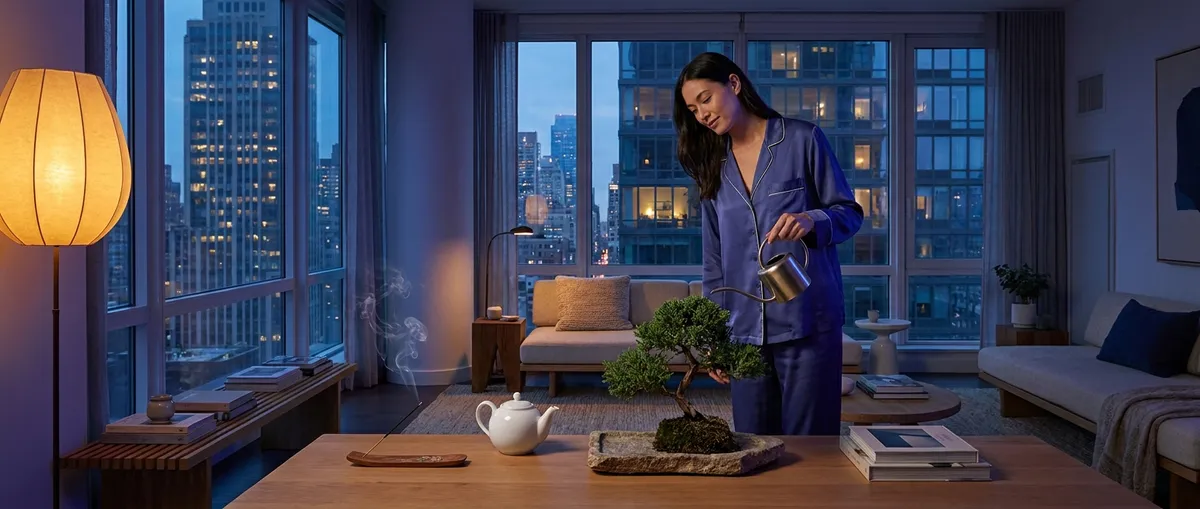
You might choose a specific essential oil blend reserved exclusively for evening decompression, a particular playlist or sound texture (soft piano, distant rain, low-frequency hum), and a tactile element—a particular throw, robe, or chair—that becomes your physical anchor for calm. The key is consistency: these elements appear together at roughly the same time of day, in the same sequence, with the same intention.
Over weeks, your brain begins to recognize this arrangement as a reliable prelude to rest. The ritual becomes Pavlovian in the most elegant way; you step into your chosen space, encounter your chosen sensory elements, and your system begins to downshift before you consciously “try” to relax.
This is stress relief not as a reaction, but as a crafted experience—a personal lounge for your nervous system, designed with the same attention you might devote to a favorite room, garment, or piece of music.
The Discreet Power of Boundaries as Nervous System Architecture
For many high-functioning individuals, stress is not caused by a single dramatic event, but by the cumulative erosion of boundaries—tiny compromises made in the name of being reliable, available, and “on.” Sophisticated stress relief recognizes boundaries not as blunt refusals, but as architectural lines that preserve clarity, dignity, and health.
Begin by identifying your “non-negotiable reserves”: the minimum amount of sleep, solitude, unstructured time, and movement you require to remain both kind and effective. Then, protect these reserves with the same seriousness you grant external commitments. This may mean defining certain hours as sacredly off-grid, establishing a firm cut-off time for digital communication, or creating short “white space” blocks between demanding obligations to let your nervous system reset.
The elegance lies in how you communicate these boundaries: calm, precise, and without defensiveness. “I’m fully booked this week, but I can give this my full attention next Tuesday” preserves your integrity without aggression. “I don’t check messages after 8 p.m.; if it’s urgent, call” quietly rewrites expectations. Over time, these boundaries become invisible architecture—supportive structures that hold your inner world in place, so stress cannot continually seep in unchecked.
In this way, boundaries become less about denying others and more about honoring your nervous system as a finely tuned instrument, not an endlessly available resource.
Elevating Micro-Moments: The 30-Second Practice of Elegant Pause
Stress compounds when life is lived in a single, continuous line. Sophisticated calm, by contrast, is often built from tiny, deliberate breaks in that line—brief, artful pauses in which you step out of reaction and back into authorship.
An “elegant pause” is a 30–60 second interruption that you insert at key thresholds: before you open your email in the morning, after a demanding meeting, as you move from work into evening, or just before you respond to a triggering message. In that pause, you do three things: you exhale slowly, you unclench one part of your body (jaw, shoulders, hands), and you ask one quiet question, such as, “What would a calmer version of me choose next?”
The power of this practice lies in its brevity and discretion. It requires no special equipment, no announcement, and no visible ritual. Yet neurologically, it gives your prefrontal cortex—the seat of judgment and perspective—a moment to re-engage, reducing the likelihood of stress-fueled reactivity.
Scattered throughout the day, these elegant pauses become a kind of invisible punctuation in your life’s narrative. Your day no longer feels like an uninterrupted sprint, but like a composed paragraph: complete, considered, and coherent. Stress still appears, but you are no longer swept along by its momentum; you repeatedly reclaim the rhythm.
Conclusion
Refined stress relief is not about withdrawing from a demanding world; it’s about participating in it with greater authorship, composure, and discernment. When you treat your nervous system as something to be curated, when you pair the right recovery with the right kind of fatigue, when you craft a personal sensory signature for calm and protect your reserves with invisible architecture, stress ceases to be the defining force of your inner life.
Instead, it becomes one texture among many—present, but no longer in command. Through small, subtle, and exquisitely intentional practices, your everyday experience begins to feel less like surviving and more like living artfully, on your own terms.
Sources
- National Institute of Mental Health – 5 Things You Should Know About Stress - Overview of how stress affects the brain and body, plus evidence-based approaches to management
- American Psychological Association – Stress Effects on the Body - Detailed explanation of the physiological impact of chronic stress and why regulation practices matter
- Harvard Health Publishing – Understanding the Stress Response - Clear summary of the sympathetic/parasympathetic systems and how lifestyle influences them
- Cleveland Clinic – Relaxation Techniques for Health - Practical overview of validated relaxation methods including breathing and sensory-based approaches
- Mayo Clinic – Setting Boundaries: Build Healthy Relationships and Reduce Stress - Discussion of boundaries as a core skill for sustainable stress reduction
Key Takeaway
The most important thing to remember from this article is that this information can change how you think about Stress Relief.