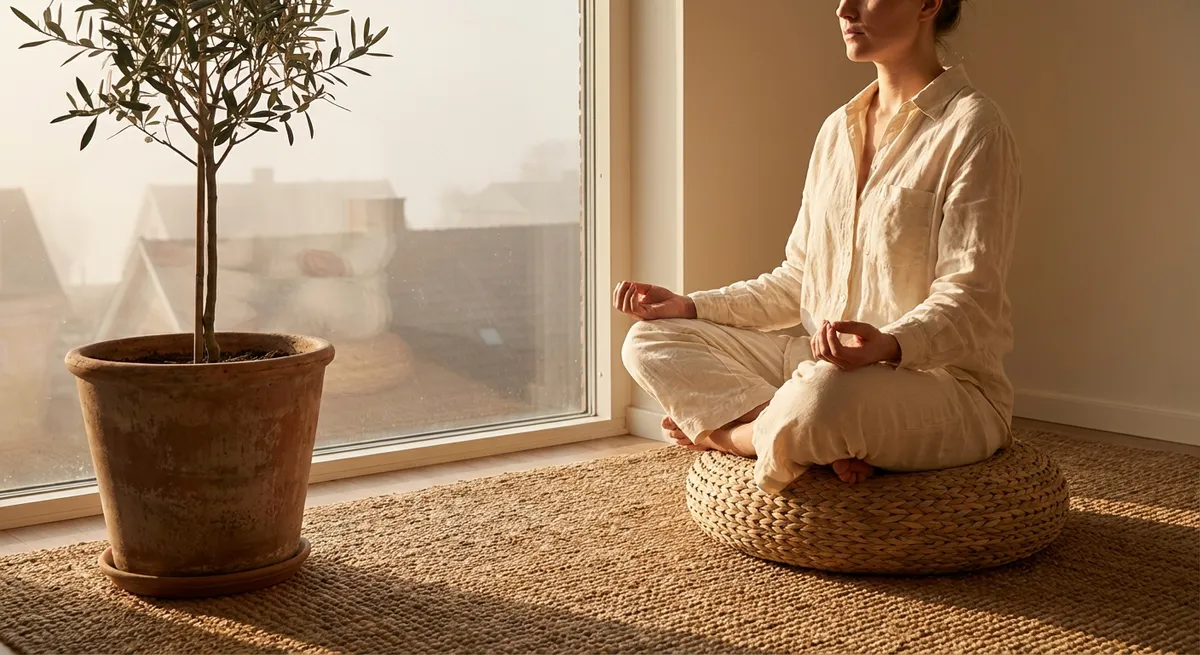
The most exquisite transformations are rarely dramatic; they are incremental, almost imperceptible—like the way light shifts across a room throughout the day. Meditation, when approached as a deliberate ritual rather than a task, belongs in this realm of quiet refinement. It is not merely a tool for “stress management,” but an elegant recalibration of how we inhabit our own mind. For those who seek a life of discernment and intentionality, meditation becomes less about escape and more about exquisite presence—where each breath, each pause, is curated with care.
Below are five exclusive, under-discussed insights for the mentally discerning: practices that move beyond generic instructions and into the realm of subtle, elevated mental craftsmanship.
Insight 1: Transition Meditation — The Art of Crossing Thresholds
Most people meditate as an isolated event—a morning session, an evening wind-down. A more refined approach treats meditation as a deliberate bridge between distinct chapters of the day. This is transition meditation: brief, intentional pauses whenever you cross a psychological threshold.
Consider the quiet moment before opening your laptop, stepping into a meeting, or returning home after an intense day. Instead of sliding unconsciously from one mode to another, you create a luminous in-between:
- Sit or stand comfortably for 2–3 minutes.
- Acknowledge the “chapter” you are closing: the previous task, conversation, or environment.
- Name the state you wish to enter: clarity, precision, receptivity, or warmth.
- Breathe in with the phrase, “Arriving.”
- Breathe out with the phrase, “Releasing.”
This micro-meditation is not about duration but about intention. Over time, these threshold rituals prevent emotional carryover—frustration from work does not bleed into dinner; mental clutter does not pollute your sleep. Your day becomes a series of artfully framed scenes instead of a blur of unedited footage.
Insight 2: Curated Sensory Minimalism — Designing a Meditative Environment
Meditation is often described as an internal practice, but the external environment is either a quiet ally or a constant saboteur. A sophisticated meditation ritual begins with curated sensory minimalism: crafting a space that does not shout, but gently invites the nervous system to soften.
Rather than chasing trendy aesthetics, think in terms of sensory load:
- Visual field: Choose a single, calm focal point—a candle flame, a single stem in a narrow vase, a piece of art with soft, uninterrupted lines. The eye’s rest becomes the mind’s invitation.
- Soundscape: Opt for deliberate quiet or a consistent, low-level sound—soft white noise, distant rain, or a gentle fan. Avoid erratic playlists or music with lyrics, which tug the mind outward.
- Tactile refinement: A dedicated meditation shawl, a specific textured cushion, or a particular fabric beneath your hands creates a “somatic cue.” Over time, the body begins to recognize: when I feel this, I settle.
- Scent as a subtle signal: A single, consistent scent—perhaps neroli, sandalwood, or a light frankincense—used only for meditation, can gradually become an anchor for calm. The key is restraint: one note, not a chorus.
This is not about perfection or luxury for its own sake; it is about repetition and association. The more consistent your sensory environment, the faster your nervous system learns to exhale the moment you enter it.
Insight 3: Precision Attention — Meditating on Nuance, Not Just Breath
Standard instructions ask you to “focus on the breath.” Helpful, yes, but a discerning mind often hungers for more precision. Precision attention transforms meditation from a vague practice into a refined mental skill.
Instead of vaguely “watching your breathing,” experiment with granular detail:
- Notice the micro-pauses between the in-breath and out-breath.
- Track the exact point in your body where the breath feels most vivid: nostrils, throat, chest, or lower belly.
- Observe the texture of the breath: Is it cool on the inhale, warm on the exhale? Does it feel expansive, or slightly constricted?
- Detect emotional tone: How does your breath behave when a thought about work appears versus a thought about someone you love?
This level of nuance accomplishes two things. First, it gives the analytical mind something refined and intricate to engage with, satisfying its need for detail without feeding rumination. Second, it trains an exquisite kind of self-knowledge: you become literate in your own inner micro-signals, often noticing shifts in mood or stress before they fully crystallize.
Over time, this precision attention extends beyond formal practice. In conversation, in negotiation, in creative work, you become more attuned to the subtle shifts—your own and others’—that most people miss.
Insight 4: Cognitive Hygiene — Using Meditation to Clear Mental Residue
We are meticulous about washing our hands, our faces, our clothes—yet we rarely consider the hygiene of thought. The mind, especially a high-functioning one, collects residue: unprocessed conversations, half-finished decisions, lingering micro-irritations. Meditation can serve as daily cognitive hygiene, a refined way of “rinsing” the mental field.
This is not about suppressing thoughts but about giving them an elegant container:
Set a specific purpose before you begin:
“For the next ten minutes, I am simply allowing today’s mental residue to surface and dissolve.”
Welcome, don’t resist:
As thoughts emerge—emails left unanswered, an offhand remark from a colleague, an unfinished idea—treat them as guests arriving at a quiet salon. You acknowledge them, but you don’t follow them to the door.
Name and release:
- “Planning.” - “Regret.” - “Anticipation.” - “Self-critique.”
Each label is like a soft cloth wiping a window: you see clearly, but you do not cling.
Close with a deliberate boundary:
End with three slower breaths, paired with the gentle internal phrase: “This is enough for now.”
Practiced regularly, this form of meditation reduces cognitive clutter. Decisions become cleaner, sleep deepens, and your thinking acquires a kind of understated clarity—the polished surface that comes only from consistent, quiet maintenance.
Insight 5: Temporal Refinement — Meditating with Your Future and Past Selves
Most meditation traditions emphasize presence, and rightly so. Yet a refined practice can embrace a sophisticated relationship with time—not as rumination, but as conscious alignment with your past and future selves.
This practice has three movements:
Honoring the past self:
In the first few minutes, acknowledge the version of you who made it to this point today—the one who navigated difficult calls, made thoughtful choices, or simply persisted. Rather than replaying regrets, you offer recognition: “Thank you for bringing us here.” This quiet gratitude interrupts chronic self-critique and builds an internal culture of respect.
Attuning to the present self:
For the central portion of the meditation, rest in classic awareness of breath, body, or sound. Let this be the anchor point: the place where neither the past nor the future are in charge.
Consulting the future self:
In the final minutes, gently evoke a version of you six months or one year from now—steadier, clearer, perhaps more rested. Without forcing imagery, pose a silent question: “What would you have me prioritize today?” Then listen, not for dramatic answers, but for subtle impressions: a sense to simplify, to rest, to address one conversation, to say no gracefully.
This temporal refinement is not fantasy; it is structured reflection held within meditative stillness. Over time, it helps your daily decisions feel less reactive and more aligned with the person you are consciously becoming.
Conclusion
Meditation, in its most refined form, is less a technique and more a signature—an elegant way of relating to your own interior world. Through threshold rituals, curated sensory minimalism, precision attention, cognitive hygiene, and a sophisticated relationship with time, it evolves from a wellness checkbox into a daily art form.
You are not merely “reducing stress.” You are cultivating a mind that moves through the day with deliberation, subtlety, and quiet authority. In a culture of constant noise and acceleration, this is not indulgence; it is a rare and necessary luxury—one you craft from the inside out, breath by breath.
Sources
- National Institutes of Health – Meditation: In Depth – Overview of meditation types, benefits, and research-backed effects on stress and mental health.
- Harvard Health Publishing – Mindfulness meditation may ease anxiety, mental stress – Summarizes clinical findings on how meditation influences stress and emotional well-being.
- Mayo Clinic – Mindfulness exercises – Practical explanation of mindfulness-based practices and their mental health implications.
- American Psychological Association – Mindfulness meditation: A research-proven way to reduce stress – Reviews psychological research on meditation’s effects on attention, emotion regulation, and cognitive functioning.
- Stanford Medicine – The science of mindfulness – Discusses ongoing research into the neurological and physiological impact of meditation practices.
Key Takeaway
The most important thing to remember from this article is that this information can change how you think about Meditation.