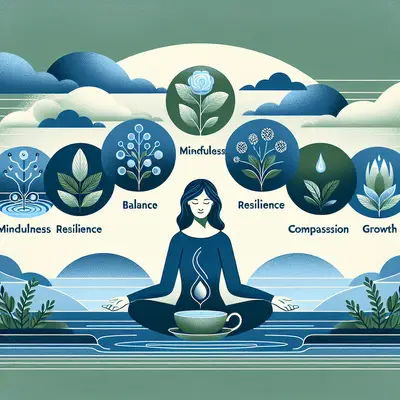
Mental wellness is no longer a luxury; it is the quiet infrastructure beneath everything that matters. Careers, relationships, creativity, even physical health are subtly governed by the way the mind is tended—or neglected—each day. At Calm Mind Remedies, we view mental wellness not as crisis management, but as a refined, ongoing practice: something curated, like a wardrobe or a home, with deliberate attention to detail.
This article offers a cultivated lens on mental wellness, highlighting five exclusive insights for those who value discernment, nuance, and lasting inner composure over quick fixes and wellness fads.
Mental Wellness as an Atmosphere, Not a To‑Do Item
For many, mental wellness is treated as a task: meditate for ten minutes, drink water, log off the phone. While helpful, this checklist mentality can unintentionally turn self-care into another source of pressure. A more elevated approach is to think of mental wellness as an atmosphere you live within, rather than a project you complete.
An “atmospheric” mindset asks: What is the overall climate of my days? Is it frantic, cluttered, over-lit with notifications and obligations? Or is it spacious enough for my nervous system to recalibrate regularly? This shift reorients your attention from isolated activities to the subtle continuity of your environment—lighting, sound, pace, and the emotional quality of your interactions.
Creating a supportive mental atmosphere might involve small but cumulative refinements: softer lighting in the evening, a gentle transition between work and home, a boundary around when conversations about logistics or stress can happen. Instead of trying to squeeze calm into a hectic life, you gradually let calm become the backdrop against which your life unfolds. Over time, the mind learns to expect steadiness, rather than treating it as an occasional treat.
The Luxury of Selective Attention
In a world of constant information, selective attention has become a form of modern luxury. Your attention is the most valuable currency you own, yet it is too often spent impulsively: on endless feeds, low-value arguments, and noise masquerading as urgency. A cultivated mind treats attention as a scarce and precious resource.
Selective attention does not require withdrawing from the world; it requires curating it. This means deciding, with clarity, what truly deserves your cognitive space. Which voices are allowed in? Which platforms enhance your thinking, and which degrade it? Which conversations leave you more composed, and which consistently erode your poise?
By filtering inputs with intention, you protect mental bandwidth for what matters most: depth over distraction, signal over noise. Emerging research on digital well-being suggests that even modest reductions in screen time and notification exposure are associated with lower stress and improved mood, in part because the brain is no longer constantly tasked with switching contexts. This is mental minimalism in its most refined form—quietly subtracting what is corrosive so that what is meaningful can fully register.
Rest as an Intelligently Designed Practice
Rest, for many high-functioning individuals, arrives only in two forms: collapse or vacation. Neither is sufficient for genuine mental wellness. A more sophisticated approach is to treat rest as something intelligently designed, not passively awaited—an art form rather than an afterthought.
High-quality rest is not simply the absence of work; it is the presence of experiences that actively restore the nervous system. This might include slow, unstructured time without screens, gentle movement, or sensory experiences that feel grounding and pleasurable without overstimulation—such as silence, nature, or tactile rituals like bathing or stretching.
Modern neuroscience underscores that the brain’s default mode network—a set of regions active during rest—plays a crucial role in emotional processing, memory consolidation, and creativity. When we deny ourselves genuine rest, we amputate the mind’s ability to integrate our experiences. Viewing rest as a designed practice means scheduling it with the same seriousness as meetings, protecting it from encroachment, and choosing forms of leisure that genuinely replenish, rather than merely distract.
Emotional Sophistication: Beyond Positivity and Productivity
The wellness world often reduces emotional health to two simplistic goals: “be positive” and “be productive.” A more refined vision of mental wellness is emotionally sophisticated rather than emotionally sanitized. It allows for the full range of human feeling without equating discomfort with failure.
Emotional sophistication begins with recognizing that so-called “negative” emotions—sadness, frustration, envy, anxiety—carry information. They are early signals of misalignment, unmet needs, or values being compromised. Rather than being suppressed or rushed away, they can be observed with curiosity. What is this feeling pointing to? What boundary, need, or truth does it illuminate?
Psychological research supports the value of emotional granularity—the ability to articulate specific feelings rather than collapsing them into “stressed” or “upset.” People with higher emotional granularity tend to cope more effectively, experience less emotional volatility, and demonstrate better overall mental health. Cultivating this nuance is a quiet act of self-respect: you become fluent in your internal world, rather than frightened by it or reduced to clichés like “I’m fine” when you are, in fact, many things at once.
Rituals of Inner Discernment: Curating Your Inner Narrative
One of the most powerful, and often overlooked, dimensions of mental wellness is narrative: the ongoing story you tell yourself about who you are, what your life means, and what is possible for you. This narrative is rarely neutral; it is shaped by upbringing, culture, past relationships, and unexamined assumptions. Left uncurated, it can be quietly corrosive, even when life appears successful on the surface.
Rituals of inner discernment are practices that invite you to periodically review, refine, and upgrade this internal story. This could take the form of reflective writing, structured conversations with a trusted professional, or contemplative time dedicated specifically to questioning old beliefs that no longer fit. The tone here is not self-critique, but elegant editing: what parts of my narrative are accurate and supportive, and what parts are inherited, outdated, or unnecessarily harsh?
Cognitive and behavioral therapies are built on this very premise—that by identifying and gently restructuring distorted thinking patterns, we can reduce anxiety and depression and enhance overall well-being. Bringing a premium sensibility to this process means you are not just trying to “fix” yourself, but to live in greater alignment with a narrative that is both honest and dignifying. You become the curator of your own meaning, rather than a passive recipient of inherited scripts.
Conclusion
A cultivated approach to mental wellness does not depend on dramatic lifestyle overhauls or extravagant retreats. It is built instead from a series of subtly elevated choices: treating wellness as an atmosphere, defending the luxury of selective attention, designing rest with intelligence, practicing emotional sophistication, and curating an inner narrative with discernment.
These are not quick tricks; they are ongoing refinements. But over time, they create something rare: a mind that feels less like a battlefield and more like a well-designed interior—spacious, coherent, and quietly resilient in the midst of a demanding world.
Sources
- National Institute of Mental Health – Caring for Your Mental Health - Overview of core practices and evidence-based approaches to maintaining mental wellness
- Harvard Medical School – Sleep and Mental Health - Explores the connection between quality rest, brain function, and emotional regulation
- American Psychological Association – The Power of Rest - Discusses how rest and downtime support cognitive performance and psychological well-being
- Yale Center for Emotional Intelligence – Emotional Intelligence Research - Summarizes findings on emotional awareness, granularity, and their impact on mental health
- Mayo Clinic – Cognitive Behavioral Therapy - Describes how examining and restructuring thought patterns can improve mood and reduce distress
Key Takeaway
The most important thing to remember from this article is that this information can change how you think about Mental Wellness.