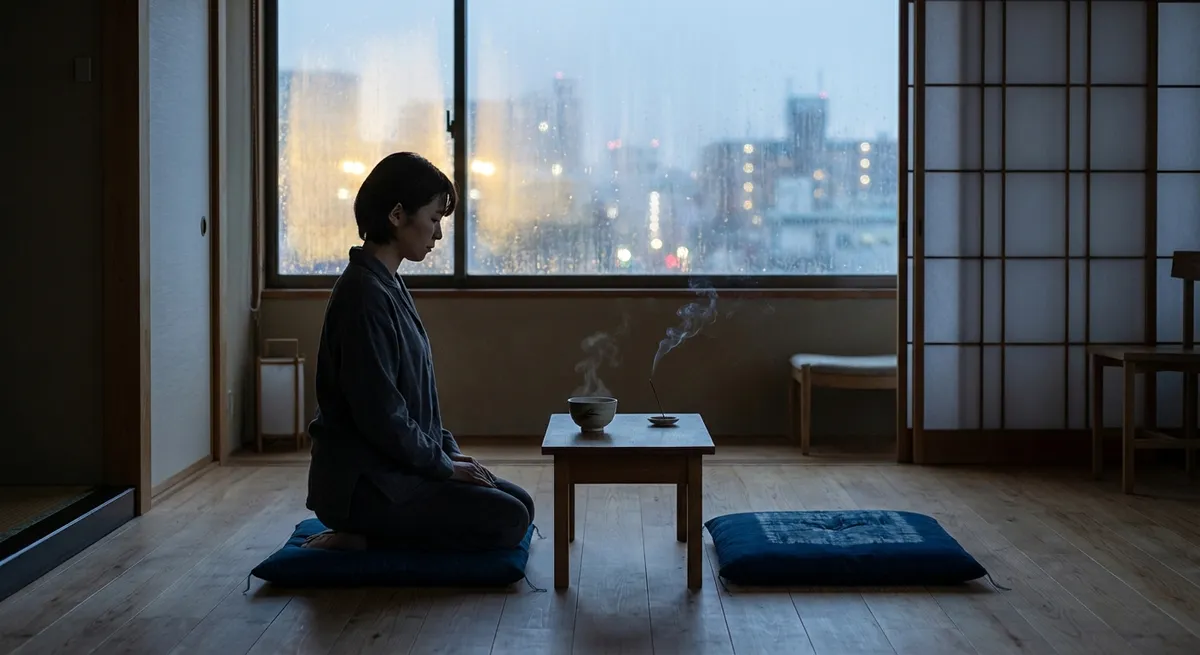
Mental clarity, in an over-signaled world, has become a rarefied luxury. Meditation, when approached not as an app-driven obligation but as a deliberately crafted ceremony, offers something more than stress relief: it offers a way of inhabiting one’s life with poise. This is not about perfection or spiritual performance. It is about cultivating an interior atmosphere in which your thoughts, choices, and relationships are guided by discernment rather than noise.
Below are five exclusive, quietly powerful insights for those who regard mental wellness as an art to be practiced, not a problem to be fixed.
Meditation as an Act of Curating Your Attention
Think of your attention as the most exquisite resource you possess. Every scroll, notification, and reflexive reaction is a “micro-spend” of that resource. Meditation is the practice of curating where and how that attention is placed.
Instead of forcing the mind to be blank, refined meditation begins with the question: What is truly worthy of my sustained attention? By intentionally resting attention on the breath, a mantra, or subtle bodily sensations, you begin to notice the difference between what is urgent and what is important, what is loud and what is meaningful.
Over time, this intentional curation spills into everyday choices. You may find yourself less available to drama, less captivated by digital chaos, and more anchored in conversations, work, and solitary moments. The mind stops behaving like an open browser with too many tabs and becomes more like a well-arranged gallery: fewer pieces, each deliberately chosen.
This act of curation is not about withdrawal from life, but about presence with life. You are not escaping reality; you are refining how you meet it.
Designing a Meditation Ambience That Trains the Mind
Sophisticated meditation is not only about what happens in your head; it is also shaped by what surrounds you. The environment you create becomes part of the training—your senses are the gateway.
Rather than chasing perfection, think in terms of elegant sufficiency: one comfortable chair, one quietly significant object, one soft, consistent source of light. When your practice space is intentional, your mind learns that crossing that threshold signals a different mode of being—like stepping into a private study, however small.
Subtle sensory details matter. The same ceramic cup for your pre-meditation tea, the same light blanket, a single, uncluttered surface. Gentle, low-volume sound—if any—is selected, not random. Over time, these details become somatic cues, telling your nervous system: here, we slow down.
Interestingly, research on habit formation shows that stable environmental cues support consistency. In other words, you are not relying on willpower alone; you are letting the room itself participate in your wellness practice. The ambience is not decoration—it is part of the method.
Emotional Refinement: Letting Feelings Complete Their Full Arc
One of the most overlooked gifts of meditation is emotional refinement: learning to allow a feeling to complete its trajectory without being suppressed or indulged. For a discerning mind, this is the difference between being subtly ruled by mood and being informed—but not dominated—by it.
During meditation, emotions often surface with surprising clarity. The sophisticated approach is neither to dramatize them nor to shut them down. Instead, notice the physical signatures: tightness in the chest, warmth in the face, restlessness in the legs. Observe how they rise, peak, and eventually soften, like a wave meeting the shore.
This practice trains the nervous system to recognize that intensity is not permanence. Over time, you begin to trust that you can experience strong emotion without having to immediately react, explain, or fix it. That trust is a form of emotional elegance.
Outside the cushion, this translates into a composed response in difficult conversations, a more measured relationship with disappointment, and a less frantic relationship with joy. You become less concerned with appearing “unbothered” and more committed to being internally steady.
Temporal Luxury: Reclaiming Small, Precise Moments of Pause
In a culture obsessed with optimizing every minute, meditation can feel like another item on an already ornate schedule. But there is a more refined way to approach time: treat meditation as temporal luxury—small, precise moments that punctuate your day rather than long, infrequent escapes.
Three minutes of full attention between meetings. A quiet, eyes-open breath ritual before starting the car. Two minutes of intentional breathing before you open your inbox. These are not inferior to a 45-minute sit; they are differently powerful.
The nervous system responds remarkably well to brief, repeated reminders of safety and presence. Studies on mindfulness and micro-practices show real shifts in stress markers even with short, consistent interventions. Think of these mini-meditations as the mental equivalent of sipping high-quality water throughout the day, rather than waiting until you are parched.
This approach respects reality: you may not always have long stretches of time. But you can insist on well-protected fragments—moments that are yours alone, in which you step outside the momentum of the day and re-claim authorship of how you will move through what comes next.
Quiet Integration: Allowing Meditation to Subtly Rewrite Daily Life
The most exquisite effects of meditation are rarely dramatic. They arrive as quiet upgrades to how you inhabit the ordinary: the way you listen, the way you pause before replying, the way you notice beauty in an otherwise unremarkable day.
Instead of asking, Was this meditation “good”?, a more refined question is: How has my daily life begun to shift? Perhaps you catch yourself being slightly more patient in a difficult interaction, or you sense tension earlier and soften your breath before it crescendos. Perhaps you realize you are less enchanted by mental catastrophizing and more inclined to check actual facts.
This integration is where meditation ceases to be a separate activity and becomes part of your cognitive style. Your inner commentary grows less abrasive, more nuanced. Your ambitions become more aligned rather than frantic. You may even find that your decision-making sharpens, not because you have fewer challenges, but because you can see them without the distortion of panic or self-sabotage.
Such changes rarely announce themselves. They accumulate. In a year, you may look back and realize that the person you are now responds to life with a different caliber of presence and restraint. That is the quiet, enduring return on your investment in stillness.
Conclusion
Meditation, approached as a daily ceremony rather than a self-improvement chore, refines not only how you feel but how you perceive, choose, and relate. By curating your attention, designing an intentional ambience, allowing emotions to complete their natural arc, reclaiming small luxuries of time, and noticing how practice quietly integrates into daily life, you elevate meditation from routine to craft.
In an era where mental space is constantly negotiated, the true mark of luxury is an interior life that cannot be easily disturbed. Meditation is not about escaping complexity; it is about meeting it with a mind that has been carefully, consistently cultivated.
Sources
- National Institutes of Health – Meditation: In Depth - Overview of meditation practices, potential benefits, and current research evidence
- Harvard Health Publishing – Mindfulness meditation may ease anxiety, mental stress - Summarizes research on how meditation impacts stress and anxiety
- American Psychological Association – Mindfulness meditation: A research-proven way to reduce stress - Explores psychological mechanisms and mental health implications of meditation
- Mayo Clinic – Meditation: A simple, fast way to reduce stress - Practical overview of meditation techniques and their health-related benefits
- Cleveland Clinic – Mindfulness: What It Is, Benefits & How To Practice - Provides clinical context on mindfulness, micro-practices, and their impact on daily stress
Key Takeaway
The most important thing to remember from this article is that this information can change how you think about Meditation.