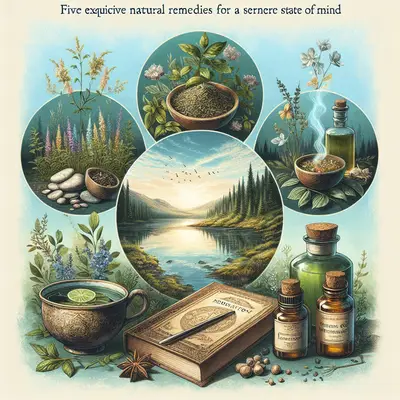
There is a quiet luxury in tending to the nervous system with intention. Not the loud promise of quick fixes, but a cultivated, almost private relationship with calm. In a world of constant alerts and ambient pressure, natural remedies become less about trend and more about discernment—choosing what truly steadies the mind, clarifies thought, and restores a sense of elegant control.
This is an exploration of refined, evidence-informed practices: subtle, sensorial, and deeply personal. Within it are five exclusive insights tailored for those who do not simply want to “manage stress,” but to curate a more composed inner climate.
The Nervous System as a Landscape, Not a Problem
Before considering any remedy, it helps to reframe the nervous system—not as something to be “fixed,” but as a landscape to be understood and gently influenced.
The autonomic nervous system, which regulates our stress (sympathetic) and rest (parasympathetic) responses, is exquisitely responsive to texture, temperature, scent, rhythm, and light. Natural remedies work best when viewed as subtle levers on this landscape rather than isolated hacks. A cup of tea is not merely an infusion of plant compounds; it is warmth in the hands, a pause in the day, a ritual that signals safety to the body. A magnesium-rich meal is not only biochemistry; it is the slow, grounding act of nourishment. When you think in terms of “landscape,” you naturally combine remedies—light, breath, botanicals, sound, and touch—into a coherent daily environment that repeatedly cues calm.
Exclusive Insight #1: Calm is cumulative, not episodic. The most effective natural remedies are not dramatic interventions but small, layered influences repeated so consistently that your baseline state shifts toward steadiness.
Botanicals as Subtle Allies, Not Silver Bullets
Herbal remedies for mental clarity and calm have entered the mainstream, but refinement lies in how they are used: modest doses, thoughtful timing, and respect for interactions.
Gentle adaptogens—such as ashwagandha and holy basil—appear to support stress resilience by modulating the stress response over time rather than sedating it. Calming nervines like chamomile, lemon balm, and lavender offer more immediate softening of tension and low-level anxiety for many people. Green tea, with its combination of caffeine and the amino acid L-theanine, is a quiet study in balance: alert yet unhurried, focused yet not strained. The sophistication comes in personalization: a small cup of green tea earlier in the day for focused clarity; a warm lemon balm or chamomile infusion in the evening for soft landing. Always consider your own physiology, medications, and sensitivities, and consult a clinician when in doubt.
Exclusive Insight #2: The most elegant herbal strategy is “micro, not mega.” Underwhelming doses taken consistently, in harmony with your daily rhythm, often produce a more stable mental ease than aggressive, sporadic use.
Mineral Calm: The Understated Power of Magnesium
Magnesium is often called the “relaxation mineral” for good reason—it participates in hundreds of biochemical reactions, many of them central to nerve function and muscle relaxation. Modern diets, high in refined foods and low in greens and seeds, frequently fall short of optimal intake, which can manifest as restlessness, poor sleep quality, and a sense of internal “buzz.”
A refined approach does not rush to supplements alone. It begins on the plate: leafy greens, pumpkin seeds, almonds, cashews, black beans, and dark chocolate form a quiet magnesium-rich repertoire. For some, a low-dose supplement or magnesium glycinate in the evening can be supportive, especially for sleep and muscle tension, but needs to be tailored with professional guidance. Topical magnesium—such as magnesium bath salts—adds a sensorial layer: warm water, softened muscles, a signal to the nervous system that the day is winding down.
Exclusive Insight #3: Magnesium is less about sedation and more about “removing friction.” When the body’s baseline tension decreases, mental calm often appears naturally—without feeling dulled or numbed.
Sensory Architecture: Designing a Calming Atmosphere with Precision
Natural remedies are not limited to what you ingest. Your environment—scent, light, sound, and texture—acts as a continuous, gentle therapy for the mind.
Subtle aromatherapy with high-quality essential oils—such as lavender, bergamot, or frankincense—can reduce perceived stress for many people when used sparingly and intentionally. Soft, indirect lighting in the evening tells the brain that the day is closing, supporting melatonin production and sleep readiness. Gentle soundscapes—low-volume classical, ambient, or nature recordings—can entrain the nervous system to a slower tempo. Even textiles matter: a heavier blanket or a soft throw can provide a faint sense of containment and safety, similar to the soothing effect of weighted blankets for some individuals. The aim is not to create an aesthetic showroom, but a personal sanctuary where every sensory element is curated to whisper, not shout, “you are safe here.”
Exclusive Insight #4: Your environment is your most constant remedy. Adjusting light, scent, and sound can be as physiologically impactful as a cup of calming tea—especially when practiced daily at the same times.
Breath and Rhythm: The Most Portable Natural Remedy
Among all natural interventions for the mind, breath practices may be the most refined: invisible, portable, and immediately accessible—even in the most demanding professional settings.
Slow, controlled breathing—often around 4–6 breaths per minute—has been shown to increase parasympathetic (rest-and-digest) activity and balance heart rate variability, a marker of the body’s stress resilience. A particularly elegant pattern is the so-called “physiological sigh”: two small inhales through the nose followed by a long, unforced exhale through the mouth. Repeating this several times can quickly reduce acute stress for many people. Another approach, such as extending the exhalation (e.g., inhaling for 4 counts, exhaling for 6–8 counts), can gently downshift an overactive mind without inducing drowsiness.
Exclusive Insight #5: The most sophisticated use of breath is anticipatory, not reactive. Using slow, structured breathing before key moments—meetings, difficult conversations, evening transitions—pre-conditions the nervous system to meet intensity with composure, not reactivity.
Weaving Remedies into a Quietly Luxurious Daily Ritual
True refinement in mental wellness is less about collecting techniques and more about orchestration. Instead of treating each remedy as a separate practice, they can be woven into deliberate, signature rituals that bracket your day.
A morning might begin with natural light at the window, a brief breathing sequence, and a small cup of green tea for poised alertness. Midday tension could be met with a short walk, slow nasal breathing, and a magnesium-conscious meal. Evenings might feature dimmed lights, a warm herbal infusion, a calming scent in the room, and a few minutes of reflective writing—all modest, all repeatable. Over time, these rituals become associated with safety and ease; the body begins to exhale on cue.
The result is not a life free of pressure, but a life in which pressure no longer dictates your internal climate. Natural remedies, thoughtfully chosen and elegantly layered, become the architecture of a calmer, more discerning mind.
Conclusion
The pursuit of calm need not be theatrical. It can be almost secret: a carefully chosen botanical, a slow exhale before a demanding call, magnesium quietly integrated into dinner, light softened at precisely the right hour. When approached with discernment, natural remedies are not escapism, but refinement—a way of inhabiting your days with greater composure, clarity, and quiet authority.
Mental wellness, at its most elevated, is not about withdrawal from a complex world. It is about developing the internal conditions to meet that world with steadiness—one carefully crafted remedy, and one graceful ritual, at a time.
Sources
- National Center for Complementary and Integrative Health – Herbs at a Glance – Overview of commonly used herbs (including chamomile, lavender, and others) and current evidence for their effects and safety
- Harvard T.H. Chan School of Public Health – Magnesium – Evidence-based discussion of magnesium’s roles in the body, food sources, and potential health implications
- Cleveland Clinic – Aromatherapy: Do Essential Oils Really Work? – Clinical perspective on essential oils, including their potential effects on stress and mood
- Stanford Medicine – Huberman Lab Podcast Summary on Breathing and Stress – Discussion of specific breathing patterns, such as the physiological sigh, and their impact on stress and anxiety
- National Institutes of Health – Complementary, Alternative, or Integrative Health: What’s In a Name? – Context on how natural remedies fit into broader integrative health approaches and why evidence-informed use matters
Key Takeaway
The most important thing to remember from this article is that this information can change how you think about Natural Remedies.