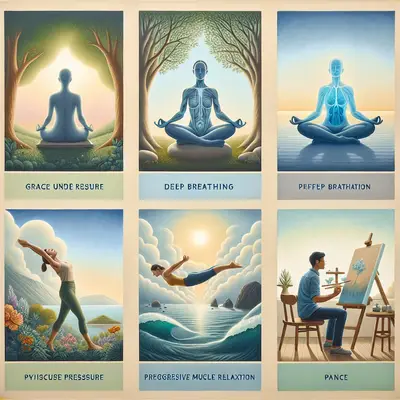
Stress, for the discerning mind, is rarely loud. It is the tension behind the eyes during a late email, the shallow breath before a decisive call, the quiet fatigue that lingers even after an ostensibly “restful” weekend. In a world that glorifies pace, true relief has become an understated luxury—less about escape, more about exquisite, intentional release. This is not the wellness of slogans and quick fixes, but of finely tuned rituals, subtle shifts, and a deeper standard for how you wish your inner life to feel.
Below are five exclusive insights—less common, more nuanced—that honor stress relief as a refined practice rather than a hurried remedy.
1. Curating Micro-Intervals of Absence
Most advice suggests taking breaks; few explore the art of absence. Instead of checking your phone, refreshing your inbox, or skimming headlines between tasks, cultivate deliberate micro-intervals where you are, by design, unavailable—to others and to your own compulsive habits.
For 90–120 seconds, step away from screens and actively reduce sensory input: lower your gaze, soften your jaw, unclench your hands. Imagine temporarily stepping out of circulation, as if removing a rare piece of art from public view for preservation. This is not idleness; it is strategic withdrawal. The nervous system resets more swiftly when demands are briefly reduced to near-zero. Over time, you begin to experience a subtle but profound shift: stress no longer accumulates unchecked; it is continuously drained through understated, artful exits from the noise.
2. Refining Your Nervous System Through Texture and Temperature
Stress is physiological as much as psychological. A cultivated approach to relief recognizes the nervous system’s responsiveness to tangible, sensory cues—particularly texture and temperature. Instead of abstract relaxation advice, think in terms of curated physical experiences.
Keep a deliberately chosen “calm object”: a cool stone paperweight, a linen handkerchief, a weighted pen, or a piece of smooth ceramic. During tense moments, hold it: note the weight, the temperature, the surface. Pair this with a subtle temperature intervention—cool water on the wrists, a warm compress on the back of the neck, or a chilled eye mask in the evening. These refined gestures send direct signals to the body that it is safe to downshift. Over time, these objects and sensations become anchors: discreet, portable symbols that instruct your entire system to soften, without a single word or affirmation.
3. Elevating Boundaries into a Personal Aesthetic
Boundaries are often framed as firm “no’s.” A more elegant approach treats them as part of your personal aesthetic—how you design your time, your attention, and your emotional space. Instead of thinking, “How do I refuse this?” ask, “Does this align with the atmosphere I’m creating in my life?”
Craft a simple internal standard: for example, “I favor depth over overload” or “My presence is reserved for what I can meet with composure.” When requests arise—work, social, digital—you quietly measure them against this standard. You’re not merely protecting your schedule; you’re preserving a certain quality of inner life. Stress diminishes not solely because you do less, but because what you do is more congruent with your values, your energy, and your preferred pace. The result is not a life of avoidance, but one with a notably cleaner emotional aftertaste.
4. Redesigning Evenings as a Gentle Descent, Not an Abrupt Stop
Many people treat the evening like a wall: they work, scroll, engage, and then try to turn everything off at once. The refined nervous system, however, responds best to gradient—a slow, intentional descent rather than a crash landing.
Consider structuring your last 60–90 minutes as a tapering of complexity. Early in the evening, you might handle mild planning or light reading. Then, transition to rhythmic, low-demand tasks: folding clothes, tidying a single surface, slow stretching, or brewing a caffeine-free infusion. Finally, reserve the last portion for near-effortless calm: soft lighting, limited conversation, and minimal digital input. The body and mind learn this cadence. Over time, this descent becomes a cue, and stress that once spilled into the night begins to resolve before your head even meets the pillow.
5. Treating Inner Dialogue as an Etiquette Practice
Stress is not only what happens to you; it is also how you speak to yourself about what happens. A sophisticated approach to relief applies the same etiquette you show others to your internal dialogue. If you would never say, “You’re failing,” “You’re behind,” or “You’re not enough” to a respected colleague, they have no place in your private mental salon either.
Begin by catching the moment your tone turns sharp or contemptuous. Rather than replacing it with unrealistic positivity, aim for dignified neutrality: “This is challenging, and I’m still learning,” or “I am under pressure, but I have handled complexity before.” Over weeks and months, this upgraded civility toward yourself gradually lowers baseline stress. Your mind becomes less of a hostile boardroom and more of a composed, solution-focused chamber—a space where you can think clearly even under strain, because you are no longer battling your own commentary.
Conclusion
True stress relief is not a single technique; it is a standard. It emerges in the way you step out of circulation for a minute instead of pushing through; in the textures you surround yourself with; in the appointments you do not accept; in the way your evenings gently dim rather than abruptly cut off; and in the internal tone you choose when circumstances tighten.
These practices are quiet by design. They do not declare themselves on social media feeds or productivity charts. Yet they accumulate into something unmistakable: a life where calm is not an occasional reward, but an underlying signature—subtle, consistent, and entirely your own.
Sources
- American Psychological Association – Stress Effects on the Body – Overview of how stress impacts different systems of the body
- National Institute of Mental Health – 5 Things You Should Know About Stress – Evidence-based information on stress and healthy coping strategies
- Harvard Health Publishing – Understanding the Stress Response – Explains the physiological mechanisms behind stress and relaxation
- Cleveland Clinic – Progressive Muscle Relaxation – Describes a practical technique for physical stress relief and nervous system calming
- Mayo Clinic – Stress Management – General guidance and strategies for managing and reducing stress
Key Takeaway
The most important thing to remember from this article is that this information can change how you think about Stress Relief.