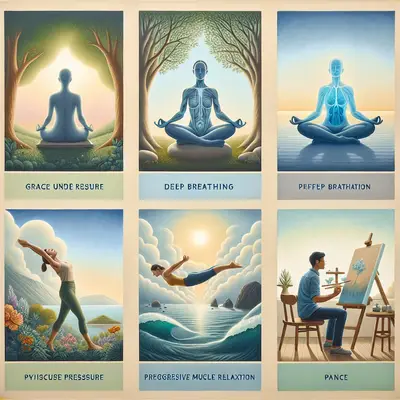
Stress relief, at its most refined, is less about escape and more about calibration. Rather than fighting tension, a discerning approach studies it, softens it, and reshapes it into focus, presence, and quiet authority. This is stress management not as crisis response, but as a cultivated lifestyle—subtle, intentional, and beautifully precise.
Below are five exclusive insights for those who treat their mental wellness with the same care they reserve for their most valuable possessions.
1. Treat Your Nervous System Like a Luxury Instrument
A fine instrument is not forced; it is tuned. The same is true of your nervous system. Instead of viewing stress as a personal failing, consider it a signal that your “instrument” needs recalibration rather than repair.
Begin by noticing your baseline state throughout the day: your breathing pace, muscle tension, and mental speed. High performers often normalize a low-level fight-or-flight mode and only notice distress when it becomes overwhelming. A more refined approach is to notice the earliest whispers—slightly shallower breath, tightening in the jaw, a subtle edge of irritability.
Cultivate micro-adjustments rather than dramatic interventions. For example, before opening your inbox, give yourself three slow breaths, exhaling slightly longer than you inhale. This gentle lengthening of the exhale engages the parasympathetic (“rest and digest”) system, signaling to your body that it is safe to soften. Over time, you create a nervous system that responds to pressure with composure, not chaos.
A luxury mindset toward stress is not indulgent; it is exacting. You are curating the conditions in which your mind performs at its finest.
2. Design “Transitional Rituals” Between Demanding Roles
Stress often accumulates not from a single intense moment, but from uninterrupted switching between roles—professional, partner, parent, caregiver, friend—without any intentional buffer. The result is mental smearing: emotions and tensions from one domain quietly bleeding into the next.
Create elegant transitional rituals—brief, deliberate moments that signal to your mind that one chapter is closed and another can begin. These need not be elaborate; they need to be consistent and meaningful:
- A two-minute hand-washing ritual after work, using warm water and a scent you intentionally associate with “off-duty.”
- A specific song that marks the end of your workday commute or the start of your evening.
- A short journaling line: “What I’m leaving at the door today is…” followed by one sentence.
These rituals act as psychological thresholds, helping the brain release one set of stressors before inviting in the next demand. Over time, your mind learns that it does not have to carry every unfinished concern forward; there is an elegant place to set it down.
The refinement here lies not in the extravagance of the ritual, but in its clarity and repetition. It is a quiet declaration: “This is where work ends. This is where presence begins.”
3. Curate a Sensory Landscape That De-escalates Stress
Most advice on stress relief focuses on thoughts and behavior, yet sensation is often the most direct pathway into the nervous system. A sophisticated stress strategy intentionally curates the sensory environment: what you see, hear, feel, and even smell.
Consider your most frequently occupied spaces—desk, bedside, commute. Ask one simple question: Does this environment ask my body to brace, or to soften? Then, refine:
- Visuals: Reduce visual noise—fewer open tabs, fewer objects on your primary work surface, one thoughtfully chosen visual anchor (a single art piece, a photograph, or a plant) that evokes calm rather than clutter.
- Sound: Replace jarring notification tones with softer cues, or batch notifications so your nervous system isn’t repeatedly startled. Low, consistent ambient sound (like gentle soundscapes) can help stabilize mood and focus.
- Touch: Introduce one comfort texture into your daily routine—a smooth ceramic mug, a weightier pen, or a soft throw on your chair. Small tactile luxuries can offer subtle grounding throughout the day.
- Scent: Opt for restrained, intentional fragrance. A light essential oil, a single candle, or a hint of natural scent reserved only for restorative moments trains your brain to associate that aroma with decompression.
This is not mere aestheticism; it is nervous system architecture. By elevating your sensory landscape with intention, you reduce the ambient strain that keeps your body in quiet vigilance, making genuine rest more accessible.
4. Elevate Recovery to the Same Status as Performance
Chronic stress often flourishes where recovery is treated as optional—something to be squeezed in between important tasks. A more elevated perspective regards recovery as part of the work, not the absence of it.
Start by reframing three core elements as non-negotiable pillars rather than lifestyle accessories:
- Sleep as strategy, not luxury: Guarding your sleep window, dimming lights before bed, and reducing late-night stimulation are not indulgences; they are performance safeguards. High-quality sleep stabilizes mood, sharpens cognition, and enhances emotional regulation—each one a buffer against stress.
- Movement as emotional hygiene: Gentle, consistent movement—walking, stretching, or low-impact exercise—helps metabolize stress hormones like cortisol and adrenaline. Think of it as physical decluttering for your internal state.
- Pauses as mental recalibration: Instead of grinding through fatigue, insert small, deliberate disruptions to stress build-up. A three-minute break to step outside, look at a distant horizon, or simply stand and breathe can prevent the slow boil of tension from turning into burnout.
Treat these elements not as remedial tools when you “can’t cope,” but as premier features of your lifestyle design. When recovery is elevated to the same level as output, your stress response becomes sharper, shorter, and less destabilizing.
5. Develop a Private Vocabulary for Your Stress Signals
Refined stress relief is exquisitely personal. Generic advice (“Just relax,” “Try to slow down”) fails because it ignores the individuality of your signals. One of the most powerful—and underrated—practices is developing a private vocabulary for your own stress patterns.
Instead of broad labels like “stressed” or “overwhelmed,” begin to name with precision:
- Is your mind racing or foggy?
- Is your body tense, restless, or heavy?
- Is your emotion more irritated, anxious, or flat?
You might even assign discreet internal phrases for recurring states: “glass-brittle” for feeling easily shattered, “static-noise” for scattered attention, “low-battery” for emotional depletion. The goal is not poetry for its own sake; it is recognition.
Once identified, you can pair each personal state with a matching intervention:
- “Static-noise” might call for sensory reduction—closing tabs, dimming lights, five minutes of quiet.
- “Glass-brittle” might benefit from grounding—pressing your feet into the floor, holding something solid in your hands, slow breathing.
- “Low-battery” might indicate that no micro-hack will do—you need rest, nourishment, or meaningful disconnection.
The more refined your vocabulary, the earlier you catch your stress shifts, and the more precisely you can respond. This is emotional craftsmanship: subtle, private, and profoundly effective.
Conclusion
True stress relief is not a one-time escape, but a lifelong practice of subtle alignment—between body and mind, effort and rest, stimulus and stillness. When you treat your nervous system as an instrument to be tuned, your transitions as thresholds to be honored, your environment as a sensory ally, your recovery as a strategic priority, and your internal signals as a language to be learned, stress transforms from an adversary into information.
In a world that glorifies relentless pace, choosing to manage stress with elegance and intention is itself a quiet act of luxury. It is the decision to live not merely efficiently, but exquisitely—clear-minded, composed, and deeply at ease within yourself.
Sources
- American Psychological Association – Stress Effects on the Body - Overview of how stress impacts different bodily systems and why regulation techniques matter
- National Institutes of Health – Stress and Your Health - Explains the physiology of stress and evidence-based approaches to managing it
- Harvard Health Publishing – The Science of Breathing - Details how breath control activates the relaxation response and supports stress relief
- Cleveland Clinic – Sleep and Stress - Discusses the relationship between stress and sleep, and why quality rest is protective
- Mayo Clinic – Physical Activity and Stress Relief - Reviews how movement helps reduce stress and improve mood
Key Takeaway
The most important thing to remember from this article is that this information can change how you think about Stress Relief.