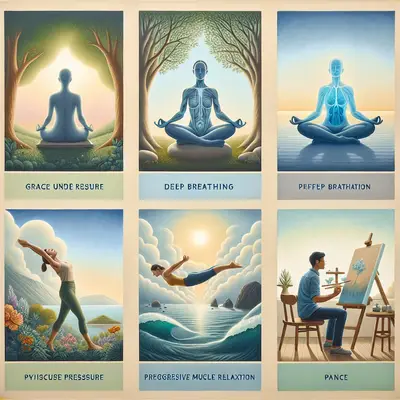
Stress rarely announces itself with drama. It arrives quietly—in the shallow breath between meetings, the late-night scroll, the tightening jaw that pretends everything is fine. For those who care deeply about how they live, stress relief is not about escaping life, but refining it. It is the art of moving through modern pressures with clarity, discretion, and a nervous system that no longer feels perpetually on alert.
This is not a beginner’s guide to “just relax.” It is an invitation into a more nuanced relationship with your inner climate—five exclusive, quietly powerful insights that treat mental wellness not as a trend, but as a long-term, high-quality investment.
Insight 1: Treat Your Nervous System Like a Maison, Not a Motel
Most of us treat our nervous system like temporary lodging—a place we pass through, not a home we curate. Yet the body is the architecture of every thought, mood, and decision. If you want refined calm, you must care for your nervous system as you would a well-designed residence: intentionally, selectively, and with a sense of enduring quality.
Physiologically, chronic stress keeps the sympathetic nervous system—your “fight or flight” mode—over-engaged. The goal is not to eliminate this response, but to develop exquisite flexibility: the ability to move between alertness and restoration with ease. Practices like slow nasal breathing, deliberate exhalations, and gentle movement after long periods of sitting act as subtle “interior design” for your autonomic state. Think of a 3-minute breathing pause before opening your inbox, or a short walk after difficult conversations, as micro-renovations.
Over time, these strategic micro-interventions reshape your baseline. You become less reactive, not because life becomes easier, but because your inner “house” has been quietly soundproofed. The world can be loud; your interior does not have to be.
Insight 2: Emotional Minimalism: Curating What Deserves Your Inner Space
Minimalism is often discussed in terms of objects, rarely in terms of emotional load. Yet the mind can be just as cluttered as a crowded room—filled with outdated obligations, inherited expectations, and unresolved narratives that continually drain your attention.
Emotional minimalism does not mean becoming detached or indifferent. It means discerning what genuinely requires your emotional energy and what is simply habit. Begin with a quiet audit: Which commitments provoke a physical stress response when you see them on your calendar? Which conversations leave a residual tension in your chest or stomach? Which digital threads—group chats, comment sections, news alerts—feel more like emotional debt than nourishment?
The premium version of stress relief is selective: learning to say no not just to events, but to roles you no longer wish to perform. You can be warm and still have boundaries. You can be generous and still be finite. Over time, carefully withdrawing from misaligned emotional commitments creates a sense of inner spaciousness that no quick “self-care” ritual can replicate.
Insight 3: Quiet Rituals of Transition: Protecting the Thresholds of Your Day
Stress accumulates most powerfully in the unmarked transitions: from bed to screen, from work mode to personal life, from stimulation to attempted sleep. Without conscious demarcation, the nervous system never receives a clear signal that it is safe to shift gears. It simply remains on guard.
The refined solution is to create intentional thresholds throughout the day—small, repeatable rituals that tell your mind, “We are entering a different chapter now.” This might look like placing your phone in another room for the first 20 minutes of the morning, paired with a glass of water and two minutes of quiet staring out the window. It might be a specific song you only play at the end of your workday, or a brief stretch and breath sequence you repeat every time you close your laptop.
These rituals do not need to be dramatic; they need to be consistent. Over time, they become neurological cues—anchors your body recognizes. Just as a signature scent can evoke an entire memory, a well-crafted transition ritual can lower stress before you consciously realize you’ve exhaled. The effect is cumulative: less emotional “spillage” from one domain of life into another, and a clearer sense of psychological zoning—like rooms in a thoughtfully designed home.
Insight 4: High-Quality Recovery: Upgrading Rest from Passive to Precise
Many people think they are resting when they are simply distracted. Scrolling, streaming, snacking—these may pause conscious effort, but they often keep the nervous system subtly stimulated. High-quality recovery, by contrast, is deliberate. It asks: What specifically restores me at a physiological level, not just entertains me?
True restoration has certain qualities in common. It often involves slower breathing, reduced sensory input, and a sense of safety and non-performance. This could be a warm bath with the lights dimmed, a short yoga nidra or body-scan audio, lying on the floor with your legs up against the wall, or reading something that does not agitate or provoke. Recovery also becomes more powerful when scheduled, not squeezed into leftover time. Treating rest like a non-negotiable appointment—on par with any high-stakes meeting—signals to your brain that restoration is not a luxury, but a structural necessity.
This shift from vague “rest” to intentional recovery transforms stress resilience. Instead of waiting until you are depleted and then trying to repair, you are quietly topping up your reserves in advance. Like maintaining a well-made object, small, regular care prevents the need for dramatic fixes later.
Insight 5: Refining Your Information Diet to Calm Cognitive Overload
One of the most understated sources of modern stress is informational excess. The human nervous system was not designed to process global crises before breakfast, comparison-inducing highlight reels at lunch, and relentless notifications until midnight. Mentally, we are often “full” long before we notice.
A sophisticated approach to stress relief includes curating not just what enters your home, but what enters your mind. Begin by rethinking your information diet with the same care you might apply to nutrition. Ask: When I consume this—news, content, commentary—how do I feel 20 minutes later? Clearer or more agitated? Expanded or constricted?
You might designate specific windows for news intake, unfollow or mute accounts that subtly provoke tension, and consciously seek sources that prioritize nuance over alarm. Consider a “digital dusk”—a time each evening after which you do not invite the world’s noise into your nervous system. Reducing cognitive load is not about ignorance; it is about respecting the finite nature of your attention. A quieter feed often translates into a quieter mind.
Conclusion
Stress relief at its most elevated is not about escaping your life—it is about editing it with discernment. Honoring your nervous system as a long-term home, practicing emotional minimalism, marking transitions with quiet ritual, investing in high-quality recovery, and curating your information intake are not dramatic moves. They are subtle recalibrations with profound cumulative effect.
In a culture that rewards speed and endurance, choosing to move through the world with a well-regulated nervous system is quietly radical. It is a form of private luxury: the knowledge that, regardless of external pace, your inner world is not perpetually bracing for impact. Over time, this is the true mark of a refined life—not the absence of stress, but the elegant way you meet it.
Sources
- American Psychological Association – Stress: The Different Kinds of Stress - Overview of stress, its types, and its impact on mental and physical health
- National Institute of Mental Health – 5 Things You Should Know About Stress - Evidence-based explanation of how stress affects the brain and body
- Harvard Health Publishing – Understanding the Stress Response - Detailed look at the sympathetic/parasympathetic systems and stress physiology
- Cleveland Clinic – What Is Emotional Exhaustion? - Describes emotional overload, burnout, and strategies for recovery
- Mayo Clinic – Stress Management - Practical, research-informed approaches to reducing and managing stress
Key Takeaway
The most important thing to remember from this article is that this information can change how you think about Stress Relief.