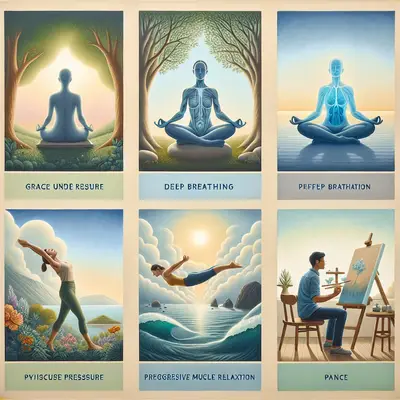
In an increasingly insistent world, genuine calm has become a rarefied luxury. Stress is no longer just a sudden spike before a presentation; it is a low, relentless hum beneath daily life. For those who care about the quality of their inner world as much as the refinement of their outer one, stress relief must go beyond generic tips and into something more considered: subtle, precise, and quietly powerful.
This is an exploration of stress relief as an elevated practice—less about escape, more about deliberate recalibration. Below are five exclusive, nuanced insights designed for those who value mental clarity as a form of modern elegance.
Stress as a Signal, Not a Flaw
Most wellness advice treats stress as an enemy to be vanquished. A more refined approach begins from a different premise: stress is data. It is the nervous system’s language, not a personal failing.
When you feel pressured, overstimulated, or emotionally frayed, your body is publishing a report in real time: something in your environment, schedule, or internal narrative is unsustainable. Rather than silencing the signal with constant distraction, the sophisticated move is to decode it.
Notice where stress shows up first—jaw tension, shallow breathing, compulsive scrolling, irritability. Each pattern is highly individual and therefore invaluable. Once you recognize your early “tells,” you can intervene at the whisper rather than at the crisis.
This reframing also softens self-criticism. Instead of “I shouldn’t be stressed,” you shift to “My system is asking for recalibration.” The difference is subtle, but the psychological impact is profound: curiosity instead of judgment, adjustment instead of shame.
Exclusive Insight #1: Treat your stress patterns as a personalized intelligence briefing. Maintain a brief weekly “nervous system log”—noting triggers, physical cues, and what actually soothed you. Over time, you build a bespoke stress atlas unique to your life and temperament.
Designing Invisible Recovery Into Your Day
True stress relief for a discerning life is rarely about dramatic getaways; it is about invisible, integrated recovery—a series of quiet, intentional micro-adjustments threaded through ordinary hours.
You can think of your day as an architectural plan with load-bearing beams of restoration. Instead of waiting for burnout to schedule rest, you pre-install brief, almost imperceptible “buffer rituals” between demanding segments: between meetings, after intense social interactions, following travel, or before bed.
These interventions are short—often 60 to 180 seconds—but precise:
- Three slow exhalations before opening your email.
- A 90-second transition ritual after work: wash your hands in warm water, change the lighting, and consciously choose your next activity.
- A two-minute gaze break: looking out a window at a distant point to soften visual and mental focus.
When these moments are consistent, your nervous system begins to trust that recovery is predictable, not accidental. This predictability quietly lowers baseline tension.
Exclusive Insight #2: Build a “recovery spine” into your schedule: identify three anchor points (morning, mid-day, evening) and attach a micro-ritual to each. Keep them so minimal they are nearly impossible to skip—yet consistent enough that they become part of your psychological architecture.
Curating Sensory Inputs Like a Connoisseur
The refined mind is often overstimulated not by one grand incident, but by an unfiltered cascade of sensory intrusions: brightness, noise, notifications, cluttered visuals, synthetic fragrances, constant commentary. Over time, this barrage keeps the nervous system slightly braced—even at rest.
Curating your sensory environment is a quietly luxurious form of stress protection. Instead of trying to “relax harder,” you reduce the total sensory load your system must manage.
Consider these adjustments:
- Sound: Replace default background noise with intentional soundscapes—gentle instrumental music, nature sounds, or even structured silence for certain hours.
- Visual field: Clear a single surface (a desk, bedside table, or coffee table) and keep it aesthetically restrained. A visually calm focal point can act as a psychological exhale.
- Lighting: Use layered, warmer light in the evenings. Harsh overhead lighting at night signals your brain to stay alert.
- Digital tone: Curate your digital inputs as rigorously as a wine list—unfollow accounts that spike anxiety, limit news exposure to specific times, and designate “notification-free corridors” in your day.
This is not about living in a sensory void; it is about exercising editorial control. The result is not sterile minimalism but a sense of deliberate refinement—your environment becomes an ally instead of an ongoing demand.
Exclusive Insight #3: Create a “low-stimulation zone” in your home—a specific chair, corner, or room where light, sound, and visual input are all intentionally softened. Use this space for brief resets; over time, your body will associate it with de-escalation and calm almost immediately.
The Subtle Power of Micro-Completion
Unfinished tasks exert a quiet but persistent cognitive pressure. Each unresolved email, delayed decision, or lingering obligation occupies mental real estate. Individually they seem trivial; together they create a fog of diffuse anxiety.
One elegant approach to stress relief is the deliberate use of micro-completion: the intentional closing of tiny loops that your mind keeps rehearsing in the background. It is not about achieving a mythical “inbox zero”; it is about thoughtfully choosing which minor tensions to release.
Examples of micro-completions:
- Finally responding to a uncomplicated message that has sat for weeks.
- Scheduling a long-postponed appointment you think about daily.
- Deciding not to do something and explicitly crossing it off.
- Putting a recurring bill on auto-pay to remove monthly friction.
- Tidying a single, small zone—a drawer, a nightstand, or a single folder.
Each micro-completion gives your nervous system a subtle but palpable sense of resolution. Repeated, they create an atmosphere of psychological order—fewer open loops, less background static.
Exclusive Insight #4: Once a week, hold a 20-minute “mental clutter session.” List every small, nagging task you’ve been mentally revisiting. Then either (a) do it immediately, (b) delegate it, or (c) consciously delete it. The calm that follows is disproportionate to the time invested.
Aligning Your Calendar With Your Nervous System
Stress is often framed as a time-management issue, but at a more sophisticated level, it is a capacity-management issue. You may technically “have the time” for a back-to-back day, but your nervous system may not have the capacity for that level of sustained interaction, decision-making, or exposure.
A refined approach to stress relief involves aligning your calendar with your nervous system’s true bandwidth, not with social expectations or default settings. This means noticing what specifically drains you—and on what timeline.
Ask yourself:
- How many intense interactions can I sustainably hold in a single day?
- When is my cognitive peak, and when does quality drop noticeably?
- Do I recover better through solitude, movement, or quiet conversation?
- How many evenings a week can be socially active without feeling depleted?
With this data, you can begin to structure your commitments differently: spacing demanding meetings, protecting high-focus hours, and preserving genuine recovery windows instead of token gaps.
This is not about becoming unavailable; it is about making your presence more grounded and less frayed when you are available.
Exclusive Insight #5: Treat your calendar as a nervous system contract. Before accepting a new commitment, briefly scan the 24 hours before and after. If there is no meaningful recovery space, adjust—shift the meeting, shorten its duration, or lighten the surrounding schedule. Over time, this single practice can meaningfully reduce cumulative stress.
Conclusion
Stress relief, at its most refined, is less about emergency intervention and more about quiet, continuous calibration. It involves treating your inner life with the same discernment you might bring to art, design, or fine hospitality: attention to detail, appreciation for subtlety, and respect for limits.
By interpreting stress as useful information, embedding invisible recovery into your day, curating sensory inputs, practicing micro-completion, and aligning your calendar with your true capacity, you create a life that does not merely manage stress but steadily lowers its baseline.
Calm then becomes something deeper than a fleeting state—it becomes a signature of how you move through the world.
Sources
- [American Psychological Association – Stress Effects on the Body](https://www.apa.org/topics/stress/body) - Overview of how stress affects different systems in the body and why regulation matters
- [National Institute of Mental Health – Stress Basics](https://www.nimh.nih.gov/health/publications/stress) - Explains stress, its impact on mental health, and approaches to coping
- [Harvard Health Publishing – Understanding the Stress Response](https://www.health.harvard.edu/staying-healthy/understanding-the-stress-response) - Describes the biology of the stress response and strategies to mitigate its effects
- [Mayo Clinic – Chronic Stress: Risk Factors and Management](https://www.mayoclinic.org/healthy-lifestyle/stress-management/in-depth/stress-symptoms/art-20050987) - Details signs of chronic stress and evidence-based management techniques
- [Cleveland Clinic – The Power of Small Habits](https://health.clevelandclinic.org/how-to-build-healthy-habits) - Discusses how small, consistent habits can meaningfully influence well-being and stress levels
Key Takeaway
The most important thing to remember from this article is that this information can change how you think about Stress Relief.