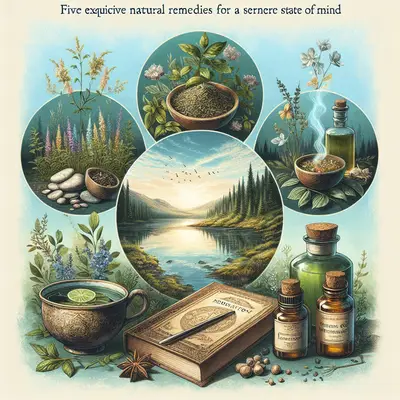
In an overstimulated world, the most exquisite luxury is a mind that moves slowly, chooses carefully, and rests deeply. Natural remedies, when approached with discernment, can offer not just relief from stress or anxiety, but a cultivated atmosphere of mental clarity and emotional poise. This is not about collecting wellness trends; it is about curating a quiet, intelligent relationship with your own nervous system—one that feels as considered as a well-designed interior or a perfectly tailored garment.
Below, you’ll find a refined approach to natural remedies for mental wellness, including five exclusive insights that move beyond clichés and into the realm of subtle but powerful daily practice.
The Art of Intelligent Calm: Rethinking “Natural” Remedies
Natural does not automatically mean gentle, and herbal does not automatically mean safe. A sophisticated approach to natural remedies begins with discernment: understanding that every plant, extract, or ritual carries a chemistry, a history, and a context.
Rather than viewing natural remedies as quick fixes, consider them as collaborators. Adaptogens like ashwagandha, rhodiola, or tulsi do not anesthetize your stress; they work with your body’s stress response systems over time. Essential oils such as lavender or bergamot influence your limbic system through scent, not as magic, but as neurology.
This perspective encourages you to move away from impulse buying and toward intentional selection: one or two well‑chosen remedies that you commit to exploring, rather than a crowded shelf of half‑used tinctures. In a refined mental wellness practice, fewer items, better understood, create a calmer, more coherent environment—externally and internally.
Exclusive Insight #1: Treat Your Nervous System Like a Vintage Instrument
A highly tuned instrument cannot be played aggressively for long without consequence. Your nervous system is no different. Most people attempt to “fix” overwhelm with strong interventions—high doses of herbs, intense detoxes, or drastic routines—when what the body is truly asking for is gentler, consistent care.
Think of magnesium (especially forms such as magnesium glycinate or magnesium threonate) as the equivalent of regular, delicate maintenance for this instrument. Magnesium supports hundreds of biochemical reactions related to muscle relaxation, nerve function, and sleep regulation. Rather than taking it sporadically during crises, treat it as a subtle, ongoing support, integrated into your evening ritual with intention.
Pair it with a simple practice: a slow, 5–10 minute stretch sequence before bed, lights dimmed, screens silenced. The combination—a mineral that quietly nourishes your nervous system and a slow, mindful movement ritual—creates a layered, orchestral effect: less jarring, more sustainable, and deeply respectful of your body’s complexity.
Exclusive Insight #2: Scent as Architecture for the Mind
Most people use aromatherapy as a pleasant add‑on: a diffused oil in the background, a scented candle for ambiance. A more refined approach treats scent as architecture—one of the most immediate ways to shape your mental state and internal environment.
Consider creating a “scent library” with intention rather than accumulation. Choose three distinct olfactory moods for your mind:
- A stabilizing scent (for grounding): Think vetiver, cedarwood, or frankincense—rich, earthy notes that subtly signal safety and stability to the nervous system.
- An illuminating scent (for focus): Rosemary, lemon, or peppermint are associated with alertness, clarity, and cognitive performance.
- A softening scent (for emotional release): Lavender, neroli, or chamomile can help cue the body into a state more conducive to unwinding and vulnerability.
The exclusive insight is this: tie each scent to a specific mental context and never mix their roles. When grounding oils are always used during reflection or journaling, and focusing scents are always used during deep work, your brain learns to anticipate and mirror those states more efficiently. Scent becomes not just pleasant, but strategic—an invisible architecture framing your inner world.
Exclusive Insight #3: The Elegance of Micro-Dosing Nature, Not Intensity
Refined wellness is not about the most dramatic transformation, but about imperceptible recalibrations that, over time, feel like a new standard of normal. When it comes to natural remedies, this means shifting from “How quickly will this work?” to “Can I sustain this without strain?”
Instead of heavy, sporadic doses of herbal teas or tinctures, experiment with “micro‑dosing nature” throughout your day—small, consistent touches:
- A mild, low‑dose infusion of lemon balm or tulsi sipped slowly over an afternoon.
- A short, five‑minute exposure to real daylight between meetings, without your phone.
- A single drop of high‑quality essential oil on a handkerchief or scarf, inhaled intentionally before a demanding conversation or task.
Each is almost invisible on its own. Collectively, they send repeated, gentle signals of safety, presence, and balance to your system. This is the paradox of subtlety: the less dramatic each intervention, the more likely you are to maintain it, and the more profound the cumulative effect on your mood, sleep, and resilience.
Exclusive Insight #4: Pair Every Remedy with a Deliberate Cue
Most people take natural remedies passively—swallowing a capsule, drinking a tea, or applying an oil without any accompanying ritual. This misses a powerful opportunity: the brain’s tendency to associate repeated actions with specific states of mind.
To elevate your remedies into something more intelligent, pair each one with a deliberate cue:
- When you take an adaptogen in the morning, pause for three slow breaths and mentally set a theme for the day: “I respond, I don’t react.”
- When you drink a calming tea in the evening, sit for a moment and consciously lower your shoulders, consciously soften your jaw.
- When applying a calming oil to wrists or temples, repeat a single, precise phrase—not a vague affirmation, but something grounded like “I have enough time for what matters.”
Over weeks, the remedy and the cue begin to link. Your body starts to anticipate calm or clarity as soon as you smell the oil or hold the cup. This is where natural remedies become refined: not only biochemical, but also behavioral, cognitive, and symbolic.
Exclusive Insight #5: Audit Your Inputs Before Adding Another Remedy
There is a quiet misconception that stress can be balanced by simply adding more: more herbs, more supplements, more practices. In reality, the most sophisticated mental wellness strategy often begins with subtraction.
Before layering in additional natural remedies, conduct a discreet audit of your existing inputs:
- Stimulants: How much caffeine are you consuming, and how late in the day? A high‑quality green tea may be more harmonious with your nervous system than multiple coffees.
- Digital noise: How many hours are absorbed in scrolling before bed? Even the most refined herbal sleep blend cannot compete with relentless blue light and mental stimulation.
- Environmental irritants: Artificial fragrance, harsh lighting, and persistent background noise all contribute to a subtle sense of agitation.
This insight is simple but underutilized: a single, well‑chosen remedy becomes dramatically more effective when it is not competing with unnecessary stressors. Sometimes the most premium intervention is not an additional product, but an intentional absence—a quieting of inputs that allows your system to respond more elegantly to what you do choose.
Building a Personal, Quietly Luxurious Remedy Ritual
A refined natural remedies practice is not a collection of impressive products; it is a coherent, lived experience. Start with no more than three elements:
- One internal support (e.g., magnesium in the evening or a calming herbal infusion).
- One sensory anchor (e.g., a specific essential oil reserved for focus or unwinding).
- One environmental adjustment (e.g., dimmed lighting and screen‑free time for the last 30–60 minutes of your day).
Give this simple architecture at least four weeks. Observe with curiosity: Is your sleep quality shifting? Are your emotional reactions slightly less sharp? Do you return to equilibrium a bit more quickly after stress?
From there, refine rather than expand. Upgrade quality, not quantity. Pay attention to how your body speaks back—through sleep patterns, digestion, mood, and energy. True natural wellness is not loud; it does not announce itself. It reveals itself in the way your days feel less jagged, more fluid, and subtly, consistently, more humane.
Conclusion
Natural remedies, approached thoughtfully, are less about escaping discomfort and more about restoring coherence—between body and mind, between routine and intention, between what you say you value and how you actually live. When curated with care, they become quiet partners in a more composed, conscious life.
The ultimate refinement is not the most exotic herb or rarest oil, but the ability to move through your day with an unhurried mind, a responsive nervous system, and a sense that your inner world is deliberately, beautifully tended. Let your remedies be few, your rituals intentional, and your calm so integrated it feels less like a performance—and more like your baseline.
Sources
- [National Center for Complementary and Integrative Health (NCCIH) – Herbs at a Glance](https://www.nccih.nih.gov/health/herbs-at-a-glance) - Evidence-based overviews of many commonly used herbs and botanicals, including safety and effectiveness
- [Harvard Health Publishing – Magnesium: The Forgotten Electrolyte](https://www.health.harvard.edu/staying-healthy/magnesium-the-healthy-mineral-we-may-need-more-of) - Discusses the role of magnesium in the body, including its impact on sleep, muscles, and the nervous system
- [Mayo Clinic – Aromatherapy: Can it help ease anxiety?](https://www.mayoclinic.org/healthy-lifestyle/consumer-health/expert-answers/aromatherapy/faq-20057954) - Reviews how aromatherapy may influence mood and anxiety, and outlines current evidence and limitations
- [Cleveland Clinic – Adaptogens: What You Need to Know](https://health.clevelandclinic.org/what-are-adaptogens) - Explains what adaptogens are, how they may affect the stress response, and what the science currently shows
- [Centers for Disease Control and Prevention – Sleep and Sleep Disorders](https://www.cdc.gov/sleep/index.html) - Provides research and guidance on sleep hygiene and lifestyle factors that influence sleep quality and mental health
Key Takeaway
The most important thing to remember from this article is that this information can change how you think about Natural Remedies.