Stress today is less a dramatic event and more a constant, fine-grained pressure: the unread emails, the late-night scrolling, the quiet hum of never quite being “off.” For a discerning mind, the goal is not escapism, but a more deliberate, composed way of moving through this pressure. Think of it less as “managing stress” and more as cultivating a poised inner atmosphere—one that can hold complexity without collapsing into chaos.
Below are five exclusive, nuanced insights designed for those who value refinement in both lifestyle and inner life. They move beyond generic advice and into the realm of thoughtful, sustainable practice.
1. Treat Your Attention as a Luxury Asset
In a world that treats attention as a commodity, you have the option to treat yours as a luxury good—scarce, curated, and intentionally allocated. Chronic stress is often less about what we do and more about what we continually attend to: alerts, anxieties, unfinished narratives competing for cognitive bandwidth.
Begin by designing a quieter attentional environment rather than relying solely on willpower. Turn off non-essential notifications. Group similar tasks into dedicated “focus blocks” to avoid constant task-switching, which research shows increases cognitive load and perceived stress.
A refined practice: create a brief “attention audit” at the start and end of your day. Each morning, list only three domains that will receive your full mental presence (for example: one professional, one relational, one personal). Everything else becomes secondary by design. In the evening, note where your attention actually went. Over time, you will begin to see patterns—people, platforms, or worries that consistently claim more space than they deserve.
This approach doesn’t just reduce stress; it restores a sense of agency. Your attention is elevated from something endlessly exploited to something selectively, even artfully, offered.
2. Redefine Rest as Cognitive Texture, Not Inactivity
Many high-functioning individuals unconsciously equate “rest” with a total shutdown—lying on the sofa, scrolling in a mild daze, or binge-watching content. Yet the nervous system often responds better to varied “textures” of rest than to pure inactivity.
Consider curating a repertoire of rest with differing levels of engagement and sensory input:
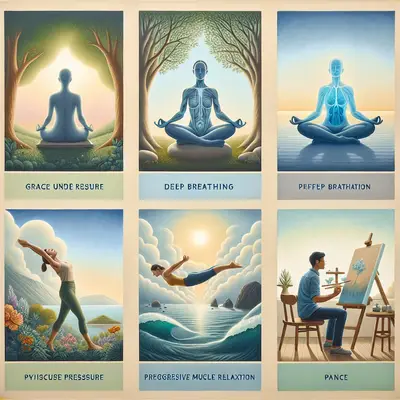
- Regenerative rest: quiet reading, slow breathwork, restorative yoga
- Expressive rest: journaling, sketching, playing an instrument at low intensity
- Sensory rest: time in nature, candlelit baths, unhurried tea rituals without screens
- Social rest: time with a person who requires nothing from you, not even conversation
By consciously varying your forms of rest throughout the week, you reduce a key driver of stress: monotony. The brain thrives on subtle novelty; refined rest offers stimulation that is gentle rather than jarring.
You might experiment with a “rest sequence” in the evening—ten minutes of restorative movement, followed by a sensory ritual (such as preparing a calming herbal infusion), then five minutes of uncluttered stillness. Instead of chasing a sudden switch-off, you are guiding your system through a deliberate softening of intensity.
3. Elevate Micro-Moments into Rituals of Regulation
Many stress strategies focus on what you do once you are already overwhelmed. A more elegant approach is to cultivate micro-moments during the day that quietly regulate your nervous system before it tilts into overload.
The key is to embed subtle, repeatable markers into your existing routines:
- Each time you touch a door handle, pause for one slow, complete breath.
- Before answering a call, exhale fully and relax your jaw.
- At every mealtime, take three breaths before the first bite, noticing scent and texture.
These micro-rituals work because they are anchored to actions you already perform. Over time, they become automatic “pressure valves” that gently modulate your physiologic stress response. Research on brief mindful pauses suggests that even small, frequent interruptions in stress reactivity can reduce overall perceived stress and improve emotional regulation.
Consider treating these not as “hacks,” but as small gestures of self-respect built into your day—discreet, almost invisible from the outside, but deeply felt from within.
4. Curate Your Inputs as Carefully as Your Environment
For many refined lifestyles, aesthetic curation is second nature: selecting furnishings, fragrances, fabrics. Yet what quietly erodes our composure is often not our physical surroundings, but our informational diet—the news feeds, chat threads, and background commentary we ingest without scrutiny.
Begin to curate your inputs with the same discrimination you bring to art, music, or design:
- Replace default news grazing with a single, scheduled check-in from trusted sources.
- Limit exposure to “ambient outrage” content that offers stimulation but no meaningful agency.
- Intentionally follow voices that are measured, nuanced, and evidence-based rather than performative.
This is not about avoidance; it is about proportion. You are reducing the volume of low-quality, high-arousal stimuli and increasing the presence of grounded, thoughtfully constructed perspectives. The result is less emotional whiplash and more mental clarity.
An advanced refinement: introduce a daily “input fast” of one to two hours—no news, no social media, no podcasts. Use this time for output (thinking, creating, reflecting) or for true idleness. This small boundary often has an outsized effect on stress, simply by allowing the mind to metabolize what it has already taken in.
5. Practice “Graceful Boundaries” Instead of Rigid Defense
For many, the word “boundary” evokes harshness—sharp no’s, strict lines, emotional distance. Yet, the most sustainable form of stress relief often comes from boundaries that feel gracious rather than combative.
Graceful boundaries are characterized by clarity, calm delivery, and an underlying tone of respect—for yourself and for others. They sound like:
- “I’m not able to take this on right now, but I can help you think through next steps.”
- “Evenings are when I’m offline; I’ll respond tomorrow morning.”
- “I’d like to continue this conversation when I can give it my full attention.”
The elegance lies in the framing: you are not defending yourself against the world; you are stewarding your energy and attention so you can offer your best where it truly matters. Practicing such language in advance—writing it down, rehearsing it softly—reduces the stress of confrontation and decision fatigue.
Over time, your schedule, your inbox, and your relationships begin to reflect your internal priorities rather than external demands. This alignment is one of the most potent, and often overlooked, forms of lasting stress relief.
Conclusion
A composed inner life is not built from one grand transformation, but from many subtle decisions: how you spend your attention, how you interpret rest, how you punctuate your day with micro-rituals, what you allow into your mental space, and how you communicate your limits.
Stress will not disappear; nor should it. A certain level of challenge is part of a meaningful life. The art lies in carrying that challenge with poise—creating a mental environment where pressure refines you rather than fractures you. By approaching stress relief as a field for nuanced, elegant practice, you transform it from a survival strategy into a quiet, enduring form of self-cultivation.
Sources
- American Psychological Association – Stress Basics - Overview of how stress affects the body and mind, with evidence-based guidance on coping strategies
- National Institute of Mental Health – 5 Things You Should Know About Stress - Research-informed explanation of stress, its impact on health, and practical approaches to management
- Harvard Health Publishing – Understanding the Stress Response - Detailed look at the physiology of stress and approaches to moderating the stress response
- Mayo Clinic – Mindfulness Exercises - Practical, brief mindfulness practices that support micro-moments of regulation throughout the day
- Cleveland Clinic – Benefits of Setting Boundaries - Explores how healthy boundaries reduce stress and improve emotional well-being
Key Takeaway
The most important thing to remember from this article is that this information can change how you think about Stress Relief.