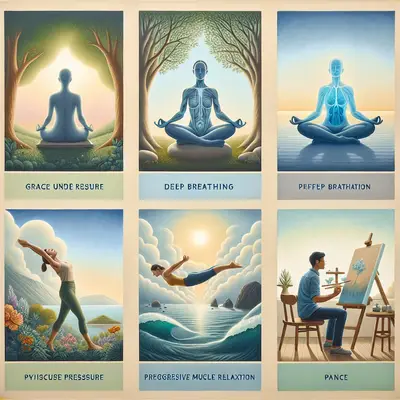
Stress rarely arrives as a single dramatic event; it seeps in through small, unchecked compromises—the late replies, the constant availability, the subtle self-betrayals we label as “being flexible.” A calm mind is not a reward for enduring chaos; it is the outcome of deliberately curating what is allowed to touch your attention, your time, and your nervous system.
Think of stress relief not as an emergency repair, but as a quiet edit of your daily life: a series of elegant, intentional adjustments that restore a sense of control, spaciousness, and inner clarity. Below are five refined, deeply considered insights designed for those who crave mental ease without resorting to clichés or surface-level “self-care.”
1. Curated Input: Treat Your Attention Like a Private Members-Only Space
Most stress begins long before we notice it—at the moment we permit everything and everyone to claim a piece of our attention without discernment. Imagine your attention as an invitation-only club: not every notification, headline, or opinion deserves entry. Curating your inputs does not mean ignoring the world; it means deciding which parts of the world you will actively host in your mind.
Begin with small but firm boundaries. Silence non-essential notifications for specific hours, especially early morning and late evening. Reassess who (and what) gets real-time access to you: messaging apps, work channels, even group chats that leave you subtly agitated. Replace ambient digital noise with intentionally chosen sources—an essay you genuinely want to read, a podcast that leaves you calmer instead of charged, music that softens your breath instead of speeding it up. Over time, you will notice that the absence of constant intrusion allows your nervous system to reset—not in dramatic bursts, but as a steady background luxury of spaciousness.
2. Micro-Rituals of Precision: Elegant Intermissions for the Nervous System
Stress often accumulates not because we lack time off, but because our breaks are imprecise and unfocused. We scroll, we skim, we “half-rest” while remaining physiologically alert. Micro-rituals of precision offer a more elevated alternative: short, exquisitely intentional practices that fully signal “pause” to your mind and body.
Choose one or two micro-rituals and give them the seriousness you would give a business meeting. For example, a three-minute “reset sequence” between tasks: close your laptop with care, stand up, lengthen your spine, and take six unhurried breaths, exhaling slightly longer than you inhale. Or a sensory transition ritual at the end of the workday: dimming the lights, changing into softer fabrics, applying a calming essential oil to your wrists while consciously telling yourself, “The demanding part of the day is now complete.” Precision is the true luxury here. A ritual repeated with deliberate presence becomes a reliable cue to your nervous system that it is safe to downshift, even in a busy life.
3. The Art of Selective Engagement: Saying “No” Without Becoming Harsh
One of the most refined stress-relief skills is the ability to decline without drama. Many people live in a state of chronic tension because they keep agreeing to things their body has already said “no” to—extra tasks, late-night plans, emotional labor, unfiltered access to their energy. Selective engagement is not coldness; it is the quiet recognition that your mental health is a finite resource, not a public utility.
Start by creating a short internal checklist you consult before saying yes: Do I have the actual bandwidth for this? Will this add meaning or only friction? Am I agreeing out of genuine desire, or out of fear of disappointing someone? Allow yourself to respond with elegant boundaries such as, “That sounds meaningful, but I don’t have the capacity to give it the attention it deserves right now,” or, “I’d love to support you in a smaller way.” Over time, this practice prevents the low-grade resentment and depletion that silently feed stress. The result is not a smaller life, but a more distilled one—fewer obligations, more depth, and a nervous system that no longer feels ambushed by your calendar.
4. Quiet Infrastructure: Designing Your Environment to Do the Calming For You
Trying to relieve stress purely through willpower is like trying to sleep under fluorescent lights. One of the most understated luxuries you can give your mind is an environment that does some of the regulation work for you. This is not about perfection or aesthetic performance—it's about designing subtle, supportive “infrastructure” that naturally guides you toward calm.
Consider the visual temperature of your space: reduce clutter in the specific areas where you make decisions (desk, bedside table, kitchen counter). Choose a limited palette of calming tones for these zones so your mind is not constantly processing visual noise. Introduce quiet anchors: a soft chair near natural light where you only read or reflect, a tray with a candle and journal that signals evening wind-down, a car playlist devoted exclusively to decompressing after demanding days. These physical cues act as non-verbal instructions to your body: soften your jaw, lower your shoulders, breathe more deeply. When your surroundings whisper calm, your nervous system doesn’t have to shout for help.
5. Sophisticated Self-Honesty: Reading Your Stress Signals Before They Escalate
Stress becomes overwhelming when we require it to scream before we listen. A more refined approach is to become exquisitely literate in your early signals—those subtle, almost private indicators that your system is entering a zone of strain. This is not self-criticism; it is observational elegance.
Begin by gently tracking your personal “tells” for a week. Do you interrupt people more when you’re depleted? Do you snack mindlessly, scroll longer, or avoid small tasks that usually feel easy? Does your breathing move higher into your chest? Rather than shaming yourself for these patterns, treat them as intelligent alerts that your system is requesting care. When you notice an early signal, respond with a small but concrete intervention: a five-minute walk without your phone, a glass of water sipped slowly, a brief stretch, or a deliberate decision to postpone a non-urgent demand. This partnership with yourself—where your signals are respected instead of overridden—creates a quiet confidence that you can hold your life without burning out from it.
Conclusion
Stress relief, at its most elevated form, is less about dramatic escapes and more about ongoing refinement—curating your inputs, honoring precise rituals, engaging selectively, designing calming environments, and practicing sophisticated self-honesty.
When you begin to view your mind as something worthy of careful design rather than constant endurance, stress becomes less of an inevitable storm and more of a manageable, readable pattern. And in that shift, you don’t just feel calmer—you begin to live as though your inner peace is non-negotiable, which may be the most luxurious remedy of all.
Key Takeaway
The most important thing to remember from this article is that this information can change how you think about Stress Relief.