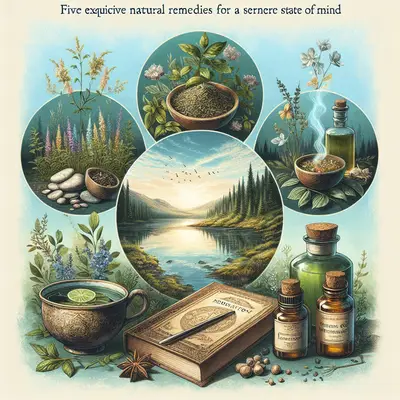
In a culture that rewards urgency, the most luxurious gesture you can offer your mind is slowness—and the natural world remains the most discreet ally in that pursuit. Natural remedies, when chosen with discernment, are not about chasing quick fixes but about curating a quieter internal climate. This is less a shopping list of supplements and more a refined conversation with botanicals, rituals, and sensory cues that help the nervous system remember its own elegance.
This guide explores five exclusive, nuanced insights into natural support for mental wellness—subtle but potent refinements that suit a discerning, detail‑oriented lifestyle.
The Art of Nervous System “Micro‑Tuning” with Botanicals
Most discussions of herbal remedies emphasize single ingredients—“take ashwagandha for stress,” “use chamomile for sleep.” A more elevated approach treats botanicals as instruments in a string quartet: each chosen for tone, timing, and interaction.
Rather than relying on one herb at a high dose, consider low‑dose, layered combinations aligned with different parts of your day. For example, a morning infusion of tulsi (holy basil) and green tea can support calm alertness; both influence stress pathways, but with different textures—tulsi tending toward emotional steadiness, green tea (via L‑theanine) toward focused clarity. Late afternoon, a blend of lemon balm and lavender can help soften the transition between high output and evening decompression without numbing your mind. Night rituals might favor milky oats, passionflower, or chamomile to gently down‑regulate a keyed‑up nervous system.
The refinement lies in matching each herb’s “emotional signature” to your needs: lemon balm for mental agitation, lavender for somatic tension and restlessness, tulsi when stress feels spiritually depleting, milky oats when you feel “nervous system burnout.” Always consult a healthcare professional, especially if you take prescription medications, but think more like a perfumer than a pill‑taker: it’s the layering that creates the experience.
Sensory Precision: Designing a Calm-Forward Environment
Natural remedies are not limited to what you ingest; they also include how you curate light, sound, scent, and texture. The nervous system responds exquisitely to subtle sensory cues, and a well‑designed environment can function as a continuous, background remedy.
Rather than diffusing random essential oils, select one or two “signature calm scents” that your brain comes to associate exclusively with decompression—perhaps bergamot and neroli for early evening, or cedarwood and vetiver for pre‑sleep wind‑down. Use them only during specific rituals (journaling, stretching, reading) so your brain builds a conditioned link between that scent profile and settling.
Lighting is another underused natural intervention. Warm, low‑angled light in the evening—salt lamps, candles, or low‑wattage lamps with warm bulbs—mirrors the setting sun and cues melatonin production. During the day, maximize indirect natural light and create at least one “visual exhale” in your space: a plant arrangement, a single curated shelf, or an uncluttered view intentionally free of screens. Over time, your environment becomes less a backdrop and more a quiet collaborator in nervous system regulation.
The Mineral Undercurrent: Subtle Repletion for a Steady Mind
Behind many experiences of anxiety, irritability, or mental fatigue sits a quieter story: micronutrient depletion. It’s not dramatic; it’s gradual, cumulative, and often overlooked. Certain minerals—particularly magnesium, zinc, and iron when low—can shape mood, sleep quality, and cognitive clarity.
Magnesium is sometimes called the “original natural tranquilizer” because it influences hundreds of enzymatic reactions, including those related to muscle relaxation, sleep, and stress response. Many modern diets, combined with chronic stress, leave people in a semi‑deficient state. Gentle repletion through food (pumpkin seeds, leafy greens, cacao, nuts) and, when appropriate, carefully chosen supplements can create a felt sense of “inner exhale” over weeks, not days. Similarly, zinc supports neurotransmitter balance, and low iron can masquerade as low mood or mental fog.
The refined approach is not to self‑diagnose or scatter supplements impulsively, but to pair clinical curiosity with laboratory data. Working with a practitioner to test key levels—iron studies, B12, vitamin D, magnesium, zinc—allows your natural regimen to become precise rather than approximate. There is an understated power in aligning your internal biochemistry with your mental aspirations.
Rhythm Before Rescue: Natural Remedies as Daily Architecture
Many people treat natural remedies like emergency tools—something you reach for when anxiety spikes or sleep collapses. A more sophisticated stance views them as part of a daily architectural blueprint that gently guides your physiology toward stability long before a crisis point.
For instance, instead of taking adaptogens sporadically “when stressed,” integrate a low, consistent dose into a stable morning routine, in consultation with a professional. Match gentler adaptogens—such as tulsi or rhodiola (if appropriate)—with your circadian rhythm, using them as scaffolding rather than emergency repairs. Similarly, ritualizing a non‑negotiable, screen‑free “transition window” between the workday and evening, supported by a specific tea blend or scent, trains your nervous system to expect—and trust—a daily downshift.
This rhythm-centric view respects the fact that the nervous system prefers predictability to drama. The most elegant remedies often appear unremarkable in the moment but accumulate into resilience. Over time, you become less dependent on “rescue interventions” because your baseline is no longer chronically overstimulated.
Tranquil Micro-Rituals: Elevating the Smallest Moments
The luxury version of mental wellness is not a three‑hour retreat day; it’s the capacity to infuse ordinary moments with precise, calming micro‑rituals. These are 30‑ to 90‑second practices anchored to existing habits, using natural elements to gently redirect your nervous system.
Consider the act of handwashing: instead of a perfunctory task, choose a naturally scented soap with a grounding profile—rosemary and sage, or sandalwood and bergamot. Each time you wash your hands, let the scent and warm water become a cue to take three deliberate breaths, soften your shoulders, and consciously unclench your jaw. You’ve turned a habitual act into a miniature nervous system reset.
Similarly, keep a small, tactile natural object at your workspace—a smooth stone, a piece of driftwood, or a textured ceramic piece. Each time your attention fractures, place one hand on the object, notice its temperature and texture, and let your gaze rest briefly on a plant or the sky. You’re pairing a physical anchor with a micro‑pause, training your brain to re‑associate productivity with groundedness rather than tension. These details might seem subtle, but refinement in mental wellness lives in precisely this scale.
Conclusion
Natural remedies, at their most sophisticated, are less about exotic ingredients and more about deliberate design: choosing botanicals as if composing a score, curating sensory cues with intention, and organizing your days around rhythm rather than reactivity. The most profound shift is not the addition of a pill or a potion, but the quiet recalibration of how you inhabit your own nervous system.
In a world of escalating stimulation, the true premium experience is an inner life that remains unhurried, lucid, and deeply composed. Nature provides the raw materials; refinement lies in how you assemble them.
Sources
- [National Center for Complementary and Integrative Health – Herbs at a Glance](https://www.nccih.nih.gov/health/herbs-at-a-glance) – Evidence‑based overviews of commonly used herbs such as chamomile, lavender, lemon balm, and holy basil
- [Harvard T.H. Chan School of Public Health – Magnesium](https://www.hsph.harvard.edu/nutritionsource/magnesium/) – Detailed review of magnesium’s roles in the body, dietary sources, and connections to stress and sleep
- [Cleveland Clinic – Essential Oils: A Complete Guide](https://my.clevelandclinic.org/health/articles/24031-essential-oils) – Clinical perspective on the use of essential oils, including safety considerations and potential benefits for stress and mood
- [Mayo Clinic – Dietary Supplements: What You Need to Know](https://www.mayoclinic.org/healthy-lifestyle/consumer-health/in-depth/dietary-supplements/art-20044894) – Guidance on using supplements safely and thoughtfully, including when to consult a professional
- [NIH Office of Dietary Supplements – Zinc Fact Sheet for Consumers](https://ods.od.nih.gov/factsheets/Zinc-Consumer/) – Authoritative information on zinc, its functions, food sources, and the effects of deficiency on overall health and wellbeing
Key Takeaway
The most important thing to remember from this article is that this information can change how you think about Natural Remedies.