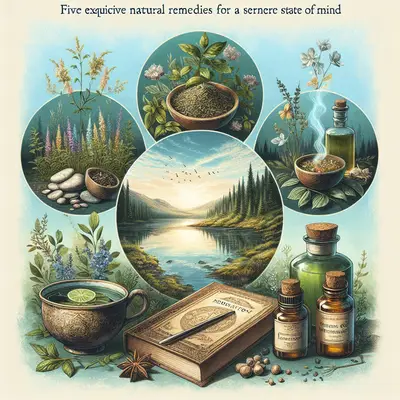
In a world saturated with quick fixes and surface-level “self-care,” there is something quietly radical about tending to the mind with intention, discernment, and respect for nature’s subtler medicines. Natural remedies, when approached with care and rigor, can become less of a trend and more of a personal lexicon—an intimate vocabulary of scents, textures, and rituals that gently recalibrate the nervous system. This is not about accumulating more products; it is about curating a refined ecosystem around you that quietly supports mental clarity, focus, and emotional ease.
Below are five exclusive, elevated insights into natural mental wellness—less about what is popular, and more about what is quietly effective and deeply considered.
1. Aromatic Architecture: Designing a Scent Landscape for Cognitive Clarity
Fragrance, when thoughtfully chosen, acts as an invisible interior architecture for the mind. Essential oils like rosemary, sage, and peppermint have been studied for their supportive effects on cognition and alertness, yet their true luxury lies in how they can be layered, timed, and ritualized.
Begin by assigning distinct scents to distinct mental states. For deep focus, a restrained blend of rosemary and lemon can signal your brain that it is time for structured thinking. For decompression after a demanding day, a softer accord of lavender, bergamot, and neroli can serve as a cue to release tension. Rather than diffusing oils continuously, use short, deliberate intervals—15 to 20 minutes at the start of a work session, or just as you transition out of work mode—allowing scent to function like a subtle on/off switch for mental gears.
The refinement lies in restraint: use high-quality, pure essential oils, avoid overpowering mixtures, and keep your fragrance palette minimal. Over-scenting can be as mentally disruptive as a loud room. When used with intention, scent becomes not just pleasant, but precise—an aromatic architecture that quietly steers you toward clarity.
2. Mineral Intelligence: Subtle Nutrient Tuning for Emotional Equilibrium
Natural mental wellness is rarely about a single miracle supplement; it is more akin to mineral and nutrient “tuning.” Subtle deficiencies—especially magnesium, omega-3 fatty acids, and B vitamins—can influence mood, sleep quality, irritability, and cognitive stamina. Addressing these gently but precisely can be one of the most elegant forms of self-care.
Magnesium, for example, supports both nervous system relaxation and sleep regulation. Instead of chasing stimulant-based productivity, many high-functioning individuals benefit from evening magnesium (often in glycinate or citrate form) to soften nervous system overactivity. Omega-3 fatty acids from sources like wild fish oil or algae-based supplements have been associated with supporting mood regulation and cognitive health. B vitamins, particularly B6, B9, and B12, play an important role in neurotransmitter synthesis and energy metabolism.
The sophisticated approach is neither guesswork nor excess. Work with a healthcare professional to identify potential deficiencies, then introduce targeted supplementation at moderate doses. Pair this with nutrient-dense foods—leafy greens, nuts, seeds, fatty fish, and legumes—so that supplements refine an already-strong nutritional foundation, rather than attempt to replace it. The result is mental steadiness that feels organic, not forced.
3. Botanical Grounding: Transforming Herbal Rituals into Micro-Restorative Pauses
Herbal remedies for the mind are often framed as “tea for relaxation,” but the deeper power lies in how these botanicals orchestrate deliberate pauses throughout the day. Adaptogens like ashwagandha and rhodiola, and calming herbs such as chamomile, lemon balm, and passionflower, can be integrated into your schedule as micro-restorative intervals rather than occasional indulgences.
Consider structuring your day with a quiet herbal cadence. A mid-morning cup of green tea or tulsi (holy basil) can gently sharpen awareness without the volatility of heavy caffeine. A late-afternoon infusion of lemon balm or chamomile can signal a shift from high output to deliberate winding down. The act of brewing becomes a moment of embodied attention—the sound of water, the warmth of the cup, the emerging scent—inviting your nervous system to re-regulate.
Choose whole, high-quality loose herbs where possible, not just for flavor, but to maintain the integrity of the plant compounds. Instead of treating herbal remedies as emergency measures for stress, allow them to become a quiet choreography of daily stability—small, intentional intervals that collectively protect your mind from constant overextension.
4. Nervous System Etiquette: Gentle Somatic Practices as Daily Non-Negotiables
The most potent natural remedy for the mind is often not a substance, but the way we inhabit our own body. Gentle somatic practices—breathwork, micro-stretching, slow intentional movement—create conditions in which natural remedies can work more effectively. Without this nervous system “etiquette,” even the most exquisite herbs or supplements can feel like a whisper in a storm.
Introduce brief somatic rituals as anchors: three minutes of extended exhale breathing before opening your laptop, a slow neck and shoulder sequence between video calls, or a five-minute body scan in the evening before sleep. These are not grand workouts; they are refined recalibrations that teach the body it does not need to remain in defense mode.
Over time, this nervous system literacy changes how you respond to stress: the same workload feels less corrosive, the same conversation less triggering. When combined with natural remedies—calming aromatherapy, magnesium, or herbal teas—these practices amplify their impact. You are no longer relying on nature to rescue you; you are collaborating with it, teaching your body to recognize and receive calm.
5. Sensory Editing: Curating a Mentally Soothing Environment with Natural Elements
Mental wellness is deeply shaped by what your senses quietly absorb all day. Natural remedies extend beyond what you ingest or apply; they include the textures, sounds, and light that define your space. Thoughtful sensory editing—removing subtle irritants and introducing natural elements—can be one of the most understated yet transformative mental health practices.
Begin with light. Swap harsh, cool overhead lighting for warmer, layered light sources that support calm and circadian rhythms, such as soft desk lamps and indirect floor lights. Integrate biophilic elements—plants, natural wood, stone, linen—not as decor, but as stabilizing visual anchors. Even a single tall plant or a small stone tray on your desk can soften visual noise.
Sound is equally potent. Consider a curated soundscape: gentle natural sounds, quiet instrumental music, or silence protected by noise-dampening materials. Finally, reduce sensory clutter. A limited, harmonious color palette and clear surfaces can function as a mental exhale. When your environment is subtly aligned with nature’s aesthetics—organic textures, gentle light, breathable space—it becomes a living remedy that continuously reduces cognitive friction without demanding your attention.
Conclusion
True luxury in mental wellness is not about excess—it is about precision, discernment, and subtlety. Natural remedies, when treated as refined tools rather than casual trends, can create an ecosystem of calm that feels both intelligent and deeply personal. Aromatic architecture, mineral tuning, botanical rituals, somatic etiquette, and sensory editing work together as a quiet network of support, continually guiding the mind back to clarity and ease.
Calm, in this sense, is not a single practice or product. It is a cultivated atmosphere—an ongoing conversation between your nervous system and the natural world, orchestrated with attention, restraint, and respect.
Sources
- [National Center for Complementary and Integrative Health (NCCIH) – Herbs at a Glance](https://www.nccih.nih.gov/health/herbs-at-a-glance) – Overview of commonly used herbs, their uses, and safety considerations
- [Harvard Health Publishing – Magnesium: The Often-Overlooked Mineral](https://www.health.harvard.edu/staying-healthy/magnesium-the-often-overlooked-mineral) – Explores magnesium’s role in muscle, nerve, and mental health
- [Mayo Clinic – Omega-3 Fatty Acids: Good for the Heart and More](https://www.mayoclinic.org/diseases-conditions/heart-disease/in-depth/omega-3/art-20045614) – Discusses omega-3 benefits, including potential effects on brain and mood
- [Cleveland Clinic – Aromatherapy: Do Essential Oils Really Work?](https://health.clevelandclinic.org/aromatherapy-101) – Reviews evidence and best practices for using essential oils safely
- [Yale School of the Environment – The Biophilia Hypothesis](https://environment.yale.edu/news/article/biophilia-hypothesis) – Explains how connection to natural elements can support psychological well-being
Key Takeaway
The most important thing to remember from this article is that this information can change how you think about Natural Remedies.