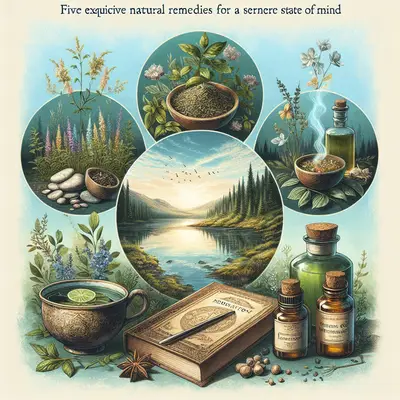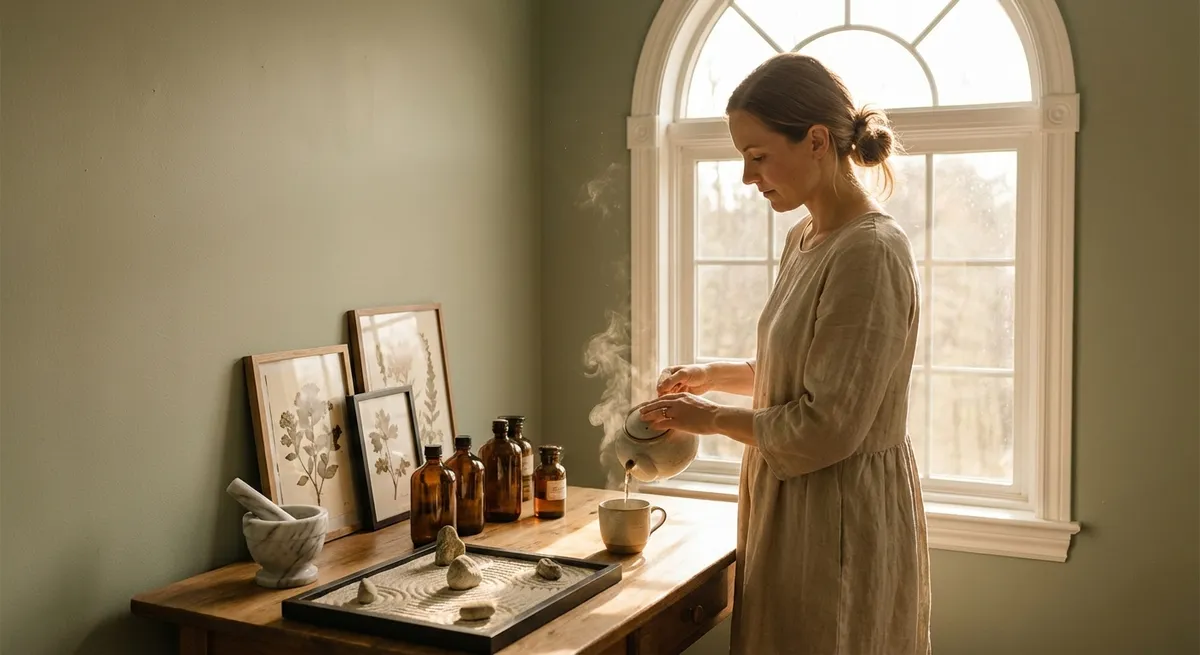
There is a particular kind of calm that does not announce itself with incense smoke or wellness slogans. It is quieter, more architectural: designed through small, deliberate choices that support a clear, steady mind. Natural remedies, when curated with discernment, can become part of this architecture—not as quick fixes, but as subtle instruments that tune the nervous system toward poise, clarity, and resilience.
Below, you’ll find a considered exploration of natural approaches to mental wellness, anchored in research and elevated by attention to detail. Woven throughout are five exclusive insights—less about “hacks,” more about intelligent refinements—that people serious about their inner landscape will appreciate.
The New Standard for Natural Remedies: Efficacy, Not Aesthetic
The world of natural remedies is often crowded with pretty labels and vague promises. A more refined approach starts by reversing the criteria: efficacy first, aesthetics second.
A sophisticated mental wellness routine prioritizes remedies that meet three standards. First, they are physiologically plausible—meaning they work via mechanisms understood or strongly suggested by research (for example, how magnesium influences GABA receptors and muscle relaxation). Second, their benefits are measurable in your actual life: deeper sleep, steadier mood, less cognitive fatigue. And third, they integrate seamlessly into your daily ritual without disruption or drama.
This is not about building an apothecary shelf for display. It is about building a toolkit. Think of chamomile not as a “tea” but as a gentle anxiolytic with apigenin that can support better sleep latency. Consider omega-3s not as a supplement trend but as structural components of neuronal membranes influencing mood regulation. The elegance lies in knowing why you’re using something—not just that it’s “natural.”
Exclusive Insight #1: Treat your remedies like tailoring, not fashion.
What looks promising on paper must be altered to fit your nervous system. The premium approach is to commit to one carefully chosen change at a time (for instance, magnesium glycinate in the evening), track its effect over 2–3 weeks, and keep only what demonstrably elevates your mental clarity or ease. This is not accumulation; it is curation.
The Nervous System as a Luxury Ecosystem
Your nervous system is not a machine to be forced into performance; it is more like a luxury ecosystem—responsive, layered, and exquisitely sensitive to its environment. Natural remedies can be understood as micro-conditions that nurture that ecosystem.
Adaptogens such as ashwagandha, rhodiola, or holy basil do not function like sedatives; they modulate stress responses over time, smoothing the peaks and valleys of cortisol. Gentle nervines—like lemon balm, passionflower, or lavender—invite the parasympathetic system forward, softening edge and reactivity. Even simple, consistent hydration, supported by mineral-rich water or light herbal infusions, can reduce subtle stress signals mistaken for anxiety.
Exclusive Insight #2: The most powerful remedy may be the one you never “feel.”
In a refined practice, success is often the absence of drama: a day without emotional whiplash, a night of unremarkably deep sleep, a meeting that doesn’t trigger inner turbulence. Many high-quality natural interventions work not by creating obvious sensations, but by removing friction. The sign of an elevated nervous system is not intensity—it is evenness.
Sensory Minimalism: Using Fewer, Better Inputs
One understated but potent “natural remedy” is what you remove from your sensory field. Visual, auditory, and digital overload continually recruit the stress response, even when you feel “fine.” Creating a minimalist sensory environment is an advanced form of mental hygiene.
Start with light. Natural morning light helps anchor circadian rhythms, which in turn regulate mood, energy, and cognitive performance. Dimming artificial light and avoiding intense blue light in the last hour before sleep is not merely sleep advice—it’s a neurochemical intervention, preserving melatonin and supporting emotional regulation the next day. Similarly, reducing chronic background noise (through sound-dampening, curated playlists, or intentional quiet pockets) tells your nervous system it can stand down.
Exclusive Insight #3: Think of your home as a pharmacological agent.
The textures, lighting, colors, and sounds in your space form a constant “dose” to your nervous system. Linen instead of synthetic bedding, warm rather than harsh overhead lighting, and the restrained use of scent (for example, a single, high-quality essential oil like bergamot or neroli, used sparingly) can collectively shift your baseline anxiety without a single pill. Your environment becomes a living, continuous remedy.
The Subtle Chemistry of Daily Beverages
Most people underestimate how profoundly their daily beverages set their mental tone. A refined mental wellness practice treats drinks as neurochemical instruments rather than background habits.
Caffeine is the most ubiquitous psychoactive substance in the world, and how you use it matters. Pausing coffee for at least 60–90 minutes after waking can reduce the jolt to your cortisol rhythm and prevent the mid-afternoon crash that mimics anxiety. Pairing caffeine with L-theanine—found in high-quality green tea or as a supplement—can transform stimulation into smooth alertness, reducing jitteriness and improving focus.
On the other end of the spectrum, herbal infusions like lemon balm, chamomile, or lavender in the evening are more than “soothing rituals.” They provide mild anxiolytic and sedative effects, enhancing sleep quality and nervous system repair. Even the temperature of your beverage matters: a warm drink can promote parasympathetic dominance, while ice-cold drinks can be slightly activating.
Exclusive Insight #4: Use beverages as time-specific “emotional signatures.”
Design a small, repeatable beverage sequence for morning, mid-day, and evening that corresponds to the mental state you want. For instance:
- Morning: green tea for calm alertness
- Midday: plain water or light herbal infusion to avoid overstimulation
- Evening: a magnesium-containing beverage or herbal blend to signal closure
Over time, your nervous system begins to associate each drink with a predictable state, amplifying their effect through conditioning. This transforms simple hydration into a refined mental ritual.
Micro-Rituals for Cognitive Luxury
Mental wellness is often portrayed as a grand transformation. In practice, the most effective natural remedies operate at the scale of micro-rituals: 30 to 180 seconds of deliberate, repeated action that gently recalibrates the mind.
A few examples: a 1–2 minute nasal breathe-only pause before opening your laptop; a 3-breath reset before answering any emotionally loaded message; a short, eyes-softened gaze out a window every hour to diffuse visual focus and release cognitive tension. These are not optional “extras” but structural reinforcements for your nervous system.
Pairing these micro-rituals with a physical anchor—a specific essential oil you only use before sleep, a particular texture under your feet during a 2-minute grounding practice, or a palm of herbal salve you always apply before journaling—tells your brain, “We are entering a different state now.”
Exclusive Insight #5: Luxury in mental health is often invisible from the outside.
The most elevated practices rarely draw attention. No elaborate equipment, no public performance. A 90-second window of diaphragmatic breathing between tasks, or a brief stand in natural light at the same time each day, can stabilize mood and sharpen cognition more effectively than sporadic, dramatic interventions. Exclusivity here is not about access; it is about awareness and consistency.
Conclusion
Natural remedies for the mind are often misunderstood as soft alternatives to “real” interventions. In truth, when selected with discernment and woven into daily life with intention, they become a sophisticated framework for mental poise—subtle yet powerful, grounded in physiology yet expressed as aesthetics.
The refined approach is not to collect more products or practices, but to curate a small, intelligent ecosystem around your nervous system: fewer, better inputs; beverages that carry deliberate emotional signatures; micro-rituals that act as quiet structural supports; and an environment that behaves like a constant, benevolent prescription.
Mental wellness at a higher level is not loud. It is the quiet confidence of a nervous system that has been thoughtfully, consistently cared for.
Sources
- [National Center for Complementary and Integrative Health (NCCIH) – Herbs at a Glance](https://www.nccih.nih.gov/health/herbs-at-a-glance)
Overview of common herbs such as chamomile, lavender, and lemon balm, including evidence, safety, and uses.
- [Harvard T.H. Chan School of Public Health – Omega-3 Fatty Acids](https://www.hsph.harvard.edu/nutritionsource/omega-3-fats/)
Explains the role of omega-3s in brain health, mood regulation, and overall inflammation.
- [Cleveland Clinic – Adaptogens: What You Need to Know](https://health.clevelandclinic.org/what-are-adaptogens/)
Reviews what adaptogens are, how they may affect the stress response, and the current state of evidence.
- [National Institute of General Medical Sciences – Circadian Rhythms Fact Sheet](https://www.nigms.nih.gov/education/fact-sheets/Pages/circadian-rhythms.aspx)
Describes circadian biology and its role in sleep, mood, and overall physiological regulation.
- [Sleep Foundation – How Blue Light Affects Sleep](https://www.sleepfoundation.org/bedroom-environment/blue-light)
Discusses the impact of blue light on melatonin, circadian rhythm, and sleep quality, relevant to sensory and environmental interventions.
Key Takeaway
The most important thing to remember from this article is that this information can change how you think about Natural Remedies.