A composed mind is no longer a luxury; it is a form of quiet power. In a culture that rewards urgency and constant visibility, the most elegant rebellion is a nervous system that refuses to be rushed. Natural remedies—when chosen with discernment and practiced with intention—offer more than “stress relief.” They become a private standard of living: subtle, sensory, and deeply restorative.
Below, you’ll find five exclusive insights into natural mental wellness that go beyond surface-level advice. Each one is less about “doing more” and more about curating fewer, better practices—approached with the same care you might give to a fine object or a well-designed space.
1. The Art of Nervous System Pairing: Matching Remedies to Your Inner Climate
Most people choose calming remedies like they choose background music—something vaguely soothing, applied at random. A more refined approach treats your nervous system the way a sommelier treats a wine list: you pair the remedy to the “climate” of your inner state.
If your stress is sharp, restless, and wired—racing thoughts, jaw tension, fragmented sleep—consider botanicals and practices that gently “turn the volume down.” L-theanine from green tea, magnesium glycinate, and adaptogens like ashwagandha have been studied for their potential to modulate the stress response and support more balanced cortisol levels. For this jittery, overcaffeinated mind, anything that invites slowness—warm teas, restorative yoga, extended exhalations in breathwork—tends to harmonize well.
If your stress is heavy, foggy, or apathetic—dull mood, low drive, emotional flatness—your pairings shift. Here, lightly stimulating yet grounding botanicals such as rhodiola, rosemary, or citrus aromatherapy can be more appropriate, along with brisk walks, cool water on the skin, and bright natural light. The refinement lies in not asking every remedy to do the same thing. You become a quiet curator of your own inner weather, matching each practice to your immediate emotional “season.”
2. Sensory Minimalism: Curating a Single Signature Soothing Stimulus
Rather than overwhelming yourself with an entire toolbox of wellness tricks, consider selecting one “signature” sensory anchor—your personal shorthand for calm. This could be a specific scent, a particular texture, or a simple soundscape that your nervous system comes to recognize as a signal of safety.
For some, it may be a single, well-chosen essential oil—lavender, bergamot, or sandalwood—that is used consistently and intentionally: on the wrists before a demanding meeting, diffused in the evening, or placed on a handkerchief in your bag. Over time, your brain begins to associate that single note with decompression, creating a conditioned response that can be accessed almost anywhere.
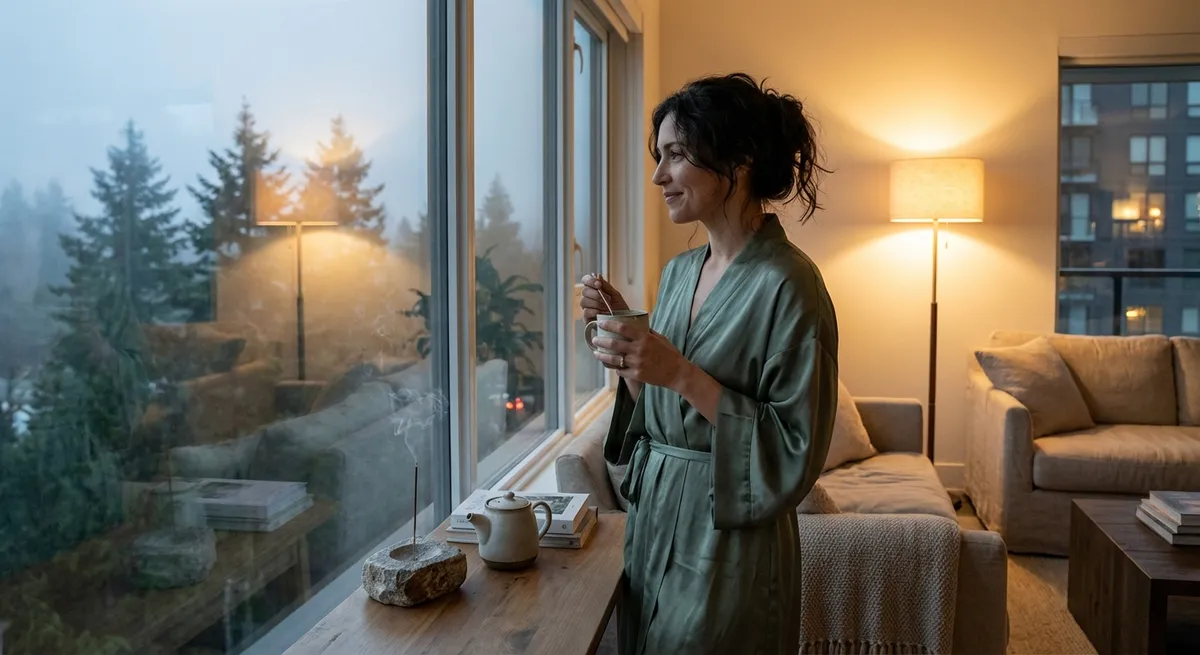
Others may find their anchor in tactile rituals: the weight of a cashmere throw during evening reflection, the feel of warm ceramic in the hand as you hold a cup of herbal tea, the coolness of a stone or metal object that sits on your desk as a grounding talisman. The sophistication lies in restraint—choosing one or two consistent sensory cues and using them with deliberate repetition. A mind that knows what to expect learns how to soften more quickly.
3. Circadian Elegance: Using Light, Temperature, and Timing as Medicine
A truly premium approach to mental wellness doesn’t start with supplements; it begins with light and time. Your circadian rhythm is the silent conductor of mood, focus, and emotional resilience, and the way you orchestrate light and temperature can subtly recalibrate your inner world.
Morning light—especially direct outdoor light within the first hour of waking—helps anchor your internal clock, stabilizing sleep-wake cycles and supporting more balanced cortisol and melatonin rhythms. This, in turn, affects mood, energy, and even how easily you return to calm after stress. Think of this as a daily, invisible tonic for your nervous system.
Equally important is the cooling of the body in the evening. Lowering the ambient temperature slightly, dimming lights, and minimizing blue light exposure signal to your body that it is safe to downshift. Gentle practices like a warm bath followed by cooler bedroom air, or herbal teas that encourage relaxation, turn bedtime from a crash into a ritual descent. When your days and nights are elegantly structured by natural cues, your mental resilience becomes less reactive and more quietly assured.
4. Micro-Rest as a Status Symbol: The Power of Subtle, Frequent Unplugging
The modern badge of honor is endurance—how long you can go without a break. Yet the brain is built for rhythm, not constant output. A sophisticated mental wellness strategy treats micro-rest as a form of silent status: the ability to step back, briefly and often, without announcing it to the world.
Instead of scheduling a single, grand “self-care session,” intersperse your day with discrete interventions that are almost invisible to others but deeply recognized by your nervous system. Two minutes of 4–6 breathing (inhale for 4, exhale for 6). A short walk around the block between calls. A brief gaze out a window at something distant to reset visual and cognitive tension. These are not grand gestures—they are micro-signals of safety to your body.
Natural remedies can be integrated seamlessly into these pauses. A measured moment to sip a nervine herbal tea (like lemon balm or chamomile), a spritz of a calming facial mist, or a slow application of a lightly scented hand cream becomes not just functional, but ritualistic. Over time, your days become punctuated by small, refined intervals of restoration that prevent stress from hardening into burnout.
5. Inner Architecture: Designing a Private Recovery Ritual You Don’t Post About
In a world where wellness is often performed for public consumption, one of the most exclusive luxuries is a ritual no one else sees. The most powerful natural remedies are amplified by privacy: a practice that belongs only to you, unphotographed and unshared.
This might be a nightly “decompression sequence” that blends multiple natural supports: dim lighting, a cup of a personally curated herbal blend, 10–15 minutes of journaling or quiet reading, followed by light stretching with slow breathing. Or it could be a weekly reset: a digital-free evening bath with magnesium salts, soft music, and a single candle, followed by early sleep.
The details matter: the quality of the items you use, the consistency of the timing, the intention with which you enter and exit the ritual. Over time, this becomes a kind of inner architecture—a structure your psyche can lean against when the external world becomes chaotic. What makes it feel truly premium is not its complexity, but its intentionality and the fact that it exists purely for your own restoration, not as content.
Conclusion
Natural remedies for mental wellness are most powerful when they are treated not as quick fixes, but as elements of a refined personal ecosystem. Pairing remedies to your emotional climate, curating a single signature soothing stimulus, working with light and timing, honoring micro-rest, and cultivating private rituals all contribute to a quieter, more resilient mind.
This is not about living a slower life—many responsibilities cannot and will not be paused. It is about living with an upgraded nervous system: one that can meet intensity with composure, return to balance more quickly, and find restoration in carefully chosen, natural supports. In that sense, calm is not the absence of pressure—it is the most elegant way of holding it.
Sources
- [National Center for Complementary and Integrative Health (NCCIH) – Stress and Relaxation Techniques](https://www.nccih.nih.gov/health/stress) - Overview of evidence-based approaches for managing stress, including mind-body practices
- [Harvard Medical School – Blue Light Has a Dark Side](https://www.health.harvard.edu/staying-healthy/blue-light-has-a-dark-side) - Explains how light exposure impacts circadian rhythms, sleep, and mood
- [Cleveland Clinic – Adaptogens: What You Need to Know](https://health.clevelandclinic.org/what-are-adaptogens) - Reviews current knowledge about adaptogenic herbs like ashwagandha and rhodiola
- [Sleep Foundation – How Light Affects Sleep](https://www.sleepfoundation.org/bedroom-environment/how-light-affects-sleep) - Details the role of natural and artificial light in regulating circadian rhythms
- [Mayo Clinic – Meditation: A Simple, Fast Way to Reduce Stress](https://www.mayoclinic.org/tests-procedures/meditation/in-depth/meditation/art-20045858) - Discusses the benefits of meditation and relaxation rituals for mental well-being
Key Takeaway
The most important thing to remember from this article is that this information can change how you think about Natural Remedies.