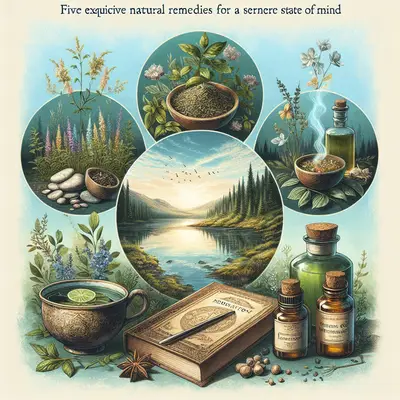
In a world that rewards speed and constant commentary, true luxury is no longer material—it’s mental. A refined mind is not merely calm; it is clear, discerning, and quietly powerful. Natural remedies, when chosen with intention and applied with discernment, can become part of a sophisticated mental wellness practice: less about escape, more about fine-tuning your inner instrument. This is not self-care as a trend, but as a cultivated art. What follows are five exclusive, elevated insights—subtle shifts in how you use natural tools—to support a mind that is both unburdened and brilliantly awake.
The Art of Micro-Dosing Stillness with Botanicals
Most people reach for natural remedies only when stress is already overflowing. A more refined approach is to work ahead of the surge, using botanicals in micro-doses throughout the day to shape your mental state, rather than chase it.
Instead of a single large cup of calming tea in the evening, consider a sequence of smaller, thoughtfully timed infusions. For instance, a delicate cup of lemon balm or chamomile in the late morning can soften the sharp edges of caffeine without dulling your clarity. In the mid-afternoon, when mental fatigue arrives, a light green tea—rich in L-theanine—can create an alert but unagitated focus, contrasting the jangly stimulation of strong coffee. In the evening, a blend of passionflower and lavender can gently signal the nervous system to unwind, not as an emergency intervention, but as a graceful tapering of the day.
The key is subtlety: lower doses, consistent rhythms, and high-quality sources. By distributing botanical support throughout the day, you cultivate a mind that experiences fewer dramatic swings and more of a soft, continuous equilibrium. Natural remedies become less like fire extinguishers and more like architectural supports for your mental landscape.
Aromatic Intelligence: Using Scent as a Cognitive Switch
Scent is often treated as a pleasant accessory, yet it can be one of the most precise tools for mental recalibration. The olfactory system is intimately connected to brain regions involved in emotion and memory, which means essential oils and natural aromas can function like quiet mental switches—subtle, fast-acting, and deeply associative.
Rather than diffusing a random blend, assign specific high-quality essential oils to distinct mental states. For focused work, consider a restrained combination of rosemary and peppermint, both studied for their potential to enhance alertness and cognitive performance. For decompression after intense interaction or screen time, a single-note oil such as frankincense or cedarwood can signal psychological “closure” to the day, functioning almost like a scent-based punctuation mark.
Over time, these pairings become cues: rosemary becomes your “focus mode,” lavender your “deep rest,” citrus your “light reset.” The sophistication lies in consistency and restraint—avoiding constant mixing and novelty that confuses the brain’s associations. In this way, scent evolves from background ambiance to an intentional form of aromatic intelligence, guiding your mind between states with grace rather than force.
Nutritional Elegance: Calming the Mind by Stabilizing the Micro-Details
Refined mental wellness is as much about invisible micro-decisions as it is about rituals. One of the most potent natural “remedies” for an overtaxed mind is not an herb or a supplement, but the quiet stability of your blood sugar and micronutrient status.
Seemingly subtle choices—such as pairing your morning coffee with protein and healthy fats instead of a sugary pastry—can dramatically alter your mental volatility across the day. Unstable blood sugar is often experienced not as physical hunger, but as irritability, anxiety spikes, or sudden crashes in motivation. Likewise, low levels of key nutrients like magnesium, B vitamins, and omega-3 fatty acids have been associated with mood dysregulation and increased stress sensitivity.
A sophisticated approach prioritizes nutritional elegance: fewer ultra-processed foods, more whole, thoughtfully composed meals. Think of breakfast as your first natural remedy: oats with nuts and seeds, a soft-boiled egg, or a chia pudding with berries—all quietly supportive to your nervous system. Magnesium-rich foods (pumpkin seeds, leafy greens, dark chocolate with high cocoa content) can become an evening ritual rather than an afterthought. This is mental luxury at the biochemical level—unseen, but deeply felt.
The Nervous System as Instrument: Gentle Tonics over Shock Interventions
Many people treat their nervous system like a machine to be overridden, relying on extremes: heavy sedation to counter insomnia, intense stimulation to combat fatigue. A more elevated philosophy is to treat the nervous system like a fine instrument—tuned daily, not forced into compliance.
Adaptogens such as ashwagandha, rhodiola, and holy basil are often promoted as catch-all solutions, but they are best used with nuance. If your stress expresses as wired exhaustion—tired but unable to switch off—calming adaptogens like ashwagandha or reishi may be appropriate in the evening, in low to moderate doses. If your stress presents as sluggishness and low mood, gently stimulating adaptogens such as rhodiola may be better suited to earlier in the day.
Beyond herbs, simple physical interventions—warm Epsom salt baths rich in magnesium, a brief contrast of warm and cool water on the wrists and face, a weighted blanket—can downshift the nervous system without pharmaceuticals. The sophistication lies in learning your own patterns: when your system needs softening, when it needs enlivening, and how to choose natural tonics that guide it back toward a poised middle, rather than to another extreme.
Ritualized Transitions: Natural Remedies as Threshold Markers
Most modern distress accumulates not only from what we do, but from how we transition—or fail to transition—between modes of living. Work bleeds into evening; screens bleed into sleep. One of the most powerful uses of natural remedies is to mark thresholds: small, repeatable gestures that tell the mind, “This phase is ending; another is beginning.”
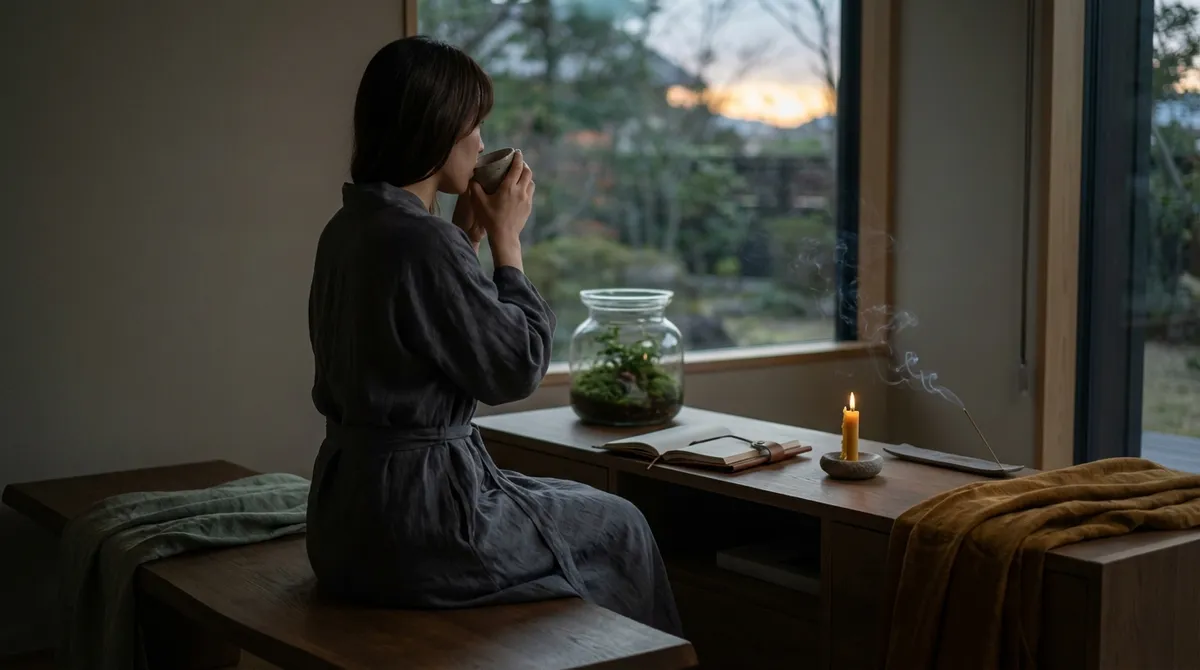
Imagine closing your workday with a specific herbal infusion in a dedicated cup—say, tulsi (holy basil) with a hint of rose. You sit, undistracted, for five minutes while you drink it and mentally review what is complete, what will wait for tomorrow, and what does not deserve another thought. Over time, that flavor, that cup, and that sequence become a psychological gateway out of productivity and into presence.
Before sleep, you might anoint your wrists with a consistent essential oil blend and set your phone in another room, turning instead to a single printed page or a brief written reflection. In the morning, a splash of cool water infused with a slice of cucumber or a sprig of mint can serve as your awakening ritual—simple, sensory, and renewing. These gestures are understated yet powerful: natural remedies not as occasional interventions, but as refined markers of intentional living.
Conclusion
Sophisticated mental wellness is not about accumulating more products or more complex routines. It is about precision: knowing which natural supports to use, when to use them, and how to weave them into the architecture of your days. When botanicals, scent, nutrition, gentle tonics, and ritualized transitions are chosen with care, they do more than soothe—they subtly elevate your cognitive and emotional landscape.
In this refined approach, natural remedies are not escapist; they are instruments of quiet mastery. They invite you into a life where your mind is not perpetually managing crises, but moving through the day with a kind of serene intelligence: alert, receptive, and beautifully at ease.
Sources
- [National Center for Complementary and Integrative Health (NCCIH) – Herbs at a Glance](https://www.nccih.nih.gov/health/herbs-at-a-glance) - Overview of commonly used herbs such as chamomile, lemon balm, and passionflower, including safety and evidence summaries
- [Harvard Health Publishing – Foods linked to better brainpower](https://www.health.harvard.edu/mind-and-mood/foods-linked-to-better-brainpower) - Explores the connection between nutrition, brain function, and mood stability
- [Cleveland Clinic – Essential Oils: Do They Work?](https://health.clevelandclinic.org/essential-oils-101-do-they-work-how-do-you-use-them) - Reviews the potential benefits and uses of essential oils for stress, mood, and relaxation
- [Harvard T.H. Chan School of Public Health – The Nutrition Source: Carbohydrates and Blood Sugar](https://www.hsph.harvard.edu/nutritionsource/carbohydrates/carbohydrates-and-blood-sugar) - Explains how blood sugar regulation influences energy, mood, and overall mental steadiness
- [Mayo Clinic – Stress management: Enhance your well-being by reducing stress and building resilience](https://www.mayoclinic.org/healthy-lifestyle/stress-management/in-depth/stress-management/art-20044151) - Provides evidence-based strategies for stress regulation, complementing natural remedy approaches
Key Takeaway
The most important thing to remember from this article is that this information can change how you think about Natural Remedies.