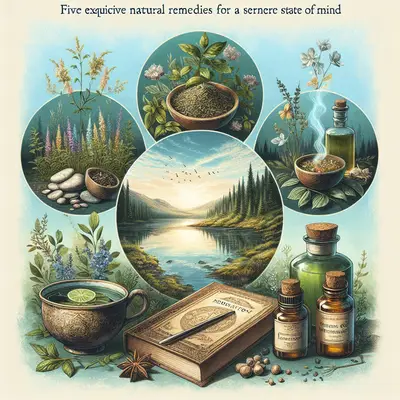
In a world that rewards speed and noise, genuine calm has become a discreet form of luxury. Beyond quick fixes and surface-level self-care, there is a quieter realm of natural remedies—subtle, evidence-informed practices that restore the nervous system, refine mental clarity, and elevate daily life into something more intentional. This is not about perfection or rigid routines; it is about curating a personal landscape of rituals that feel both deeply effective and exquisitely considered.
Below are five exclusive, research-informed insights into natural calm—each designed for those who approach mental wellness with discernment, curiosity, and a taste for the quietly exceptional.
Insight One: Treat Your Nervous System Like a Sensory Salon
Before reaching for a supplement or an app, consider the most immediate access point to your calm: your senses. The nervous system is constantly sampling the environment, and refined sensory choices can either agitate or soothe your internal climate.
Begin with sound. Low, steady rhythms and nature-based audio—rainfall, ocean waves, distant birdsong—have been shown to reduce sympathetic nervous system arousal and support parasympathetic “rest-and-digest” activity. Curate a personal “sound wardrobe”: a short playlist for morning grounding, another for deep work, and one exclusively reserved for pre-sleep decompression. Limit its use to those times so your brain learns to associate specific sounds with specific states of calm.
Then consider scent as a form of nervous system curation rather than mere decoration. High-quality essential oils—particularly lavender, bergamot, and Roman chamomile—have been associated in studies with reduced anxiety and improved sleep quality when used with intention. Instead of diffusing constantly, reserve certain scents for specific rituals: one oil for evening journaling, another for restorative stretching, perhaps another only when you travel and need to recreate a sense of familiar ease.
Visual calm matters as much as auditory and olfactory. A single, well-composed “rest corner”—a chair, soft indirect light, and minimal visual clutter—can become a psychological cue for the body to soften. Over time, the brain begins to map that corner not just as furniture, but as a reliable portal into a quieter inner state. This is natural medicine through design: small changes in the sensory landscape that create outsized shifts in mental ease.
Insight Two: Use Botanicals as Conversation, Not Command
Herbal remedies for mental calm are often discussed as if they are magic switches: take this, feel that. A more sophisticated relationship with botanicals treats them as collaborators in a long-term dialogue with your nervous system, not blunt instruments of control.
Adaptogens, such as ashwagandha and rhodiola, are frequently celebrated for stress resilience. Yet their effects can be nuanced and person-specific. Some individuals find ashwagandha profoundly calming; others experience mild stimulation or digestive shifts. A refined approach begins low, observes closely, and adjusts gradually—treating each new herb like an introduction to someone who will live in your home, not a stranger handed the keys.
Gentler, time-honored botanicals—like lemon balm, passionflower, and chamomile—can be integrated as daily micro-rituals. A carefully prepared herbal infusion in the evening is not only about its phytochemical content; it is also about the thermal comfort, the slowing of pace, the signal to your body that the day is softening at the edges. In many studies, these herbs show modest but meaningful benefits for anxiety and sleep, yet their real power appears when they are woven into a consistent ritual scaffold.
Quality is non-negotiable. Choose suppliers that provide third-party testing for purity and potency, and favor single-herb preparations when you are learning how your body responds. And crucially, use herbs as complements—never substitutes—for foundational care: nutrition, movement, sleep hygiene, and where necessary, professional mental health support. Botanicals are at their most elegant when they refine an already thoughtful lifestyle, not when they are pressed into service as a solitary solution.
Insight Three: Glycemia as an Understated Calm Lever
Many discussions of mental wellness overlook a remarkably practical axis of calm: blood sugar stability. The nervous system is exquisitely sensitive to sharp rises and falls in glucose, and what we often label as “sudden anxiety” or “afternoon mood crash” can, for some people, be a physiological response to volatile blood sugar.
A premium approach to natural calm therefore includes sophisticated glucose care. Instead of extreme diets, think in terms of elegant structure: protein-first meals, minimally refined carbohydrates, and fiber-rich plants as the default. Eating protein and healthy fats before or alongside carbohydrates can slow glucose absorption, leading to a smoother energetic curve and a more consistent mood.
Caffeine timing also becomes part of this equation. Consuming coffee on an empty stomach—especially in high doses—can both spike cortisol and exacerbate jitteriness in those already prone to anxiety. Pairing caffeine with a balanced meal, or shifting to lower-caffeine options like high-quality green tea, offers a far more refined approach. L-theanine, a naturally occurring amino acid in tea, has been shown to promote relaxation without drowsiness when combined with caffeine, helping to preserve mental clarity without tipping into nervous agitation.
For those who track their experience closely, even a simple mood and meal journal over two weeks can reveal patterns: irritability after sugar-heavy lunches, late-afternoon tension after skipped snacks, or bedtime restlessness after late-night desserts. Gentle improvements to glycemic stability often feel less dramatic than a new supplement, but over time, they create the kind of steady mental terrain on which deeper calm can genuinely flourish.
Insight Four: Micro-Rest as a Daily Luxury Practice
We tend to frame rest as something earned and scheduled: weekends, vacations, full evenings off. Yet the nervous system responds beautifully to something less dramatic and more discreet—micro-rest: brief, intentional pauses layered into the architecture of the day.
Micro-rest can be as simple as three minutes of extended exhale breathing after closing one meeting and before opening the next. Lengthening the exhale (for example, inhaling for four counts, exhaling for six or eight) stimulates the vagus nerve and gently nudges the body toward parasympathetic dominance. Done repeatedly, these tiny interludes reshape the day’s nervous system imprint from a single continuous strain into multiple opportunities for recalibration.
Another form of micro-rest is intentional “visual distance”: every hour, pausing to look at a faraway object—a skyline, a tree, the edge of a building—for 30–60 seconds. This relaxes eye muscles, reduces digital fatigue, and subtly lowers cognitive load. It is a naturally accessible reset for the overstimulated mind, no app required.
Even posture transitions can act as nervous system punctuation. Moving from a forward-hunched, screen-focused posture to an open-chested, grounded stance and taking two slow breaths is a meaningful internal shift. Over time, these micro-moments of recalibration accumulate into a day that feels less like a continual surge and more like a composed sequence of movements, with rest not as absence of activity, but as refinement within it.
Insight Five: Create “Calm Anchors” Instead of Chasing Motivation
Most people wait for motivation to take care of their mind; the more discerning approach is to architect the environment so that calm is almost the default. This is where the concept of “calm anchors” becomes profoundly effective.
A calm anchor is a physical or temporal cue that gently nudges you into a chosen practice, requiring minimal willpower. Placing a beautiful glass carafe of water and a favorite cup on your desk is an anchor for hydration—a simple, natural support for cognitive function and mood. Laying out a soft mat in the same corner every evening is an anchor for restorative stretching. Keeping a slim, tactile notebook on your nightstand is an anchor for mind-clearing reflection before sleep.
The elegance lies in making these anchors aesthetically pleasing and intentionally minimal. A single, well-crafted blanket folded at the end of the bed that you only use for pre-sleep reading. A curated herbal tin that lives next to your kettle, containing just one or two trusted botanicals. A specific, gentle chime set on your phone that plays once in the afternoon—a cue to breathe, stand, or step away for two minutes.
Instead of relying on discipline to “remember” calm, you create a series of touchpoints that invite it into your day with almost effortless regularity. Over time, these anchors become part of your identity: not someone who is trying to be calm, but someone whose life is quietly, thoughtfully arranged around nervous system respect.
Conclusion
Natural calm is not a single technique, plant, or product; it is the cumulative effect of dozens of subtle decisions made with care. When you treat your senses as a curated gallery, your botanicals as nuanced allies, your blood sugar as a hidden stabilizer, your rest as a series of micro-luxuries, and your environment as a field of calm anchors, mental ease becomes less of a rare event and more of a refined standard.
This is the quiet privilege of a well-designed inner life: not the absence of challenge, but the presence of graceful, natural support at every layer of your day.
Sources
- [National Center for Complementary and Integrative Health: Mind and Body Practices](https://www.nccih.nih.gov/health/mind-and-body-practices) – Overview of evidence-based mind–body practices for stress and mental wellness
- [NCCIH: Lavender Oil](https://www.nccih.nih.gov/health/lavender) – Evidence and safety considerations for using lavender as a calming botanical
- [Harvard T.H. Chan School of Public Health: Carbohydrates and Blood Sugar](https://www.hsph.harvard.edu/nutritionsource/carbohydrates/carbohydrates-and-blood-sugar/) – How blood sugar regulation impacts energy and mood
- [Cleveland Clinic: Adaptogens](https://health.clevelandclinic.org/what-are-adaptogens/) – Clinical perspective on adaptogenic herbs and their effects on stress
- [National Library of Medicine – L-theanine, a Natural Constituent in Tea, and its Effect on Mental State](https://pubmed.ncbi.nlm.nih.gov/18296328/) – Research exploring L-theanine’s impact on relaxation and attention
Key Takeaway
The most important thing to remember from this article is that this information can change how you think about Natural Remedies.