In a world that rewards speed and spectacle, cultivating a composed inner life has become a quiet mark of discernment. Natural remedies, when chosen with intention and applied with elegance, offer more than symptom relief—they can become a language of self-respect. This is not about quick fixes or rustic nostalgia; it is about curating evidence-informed, sensory-rich practices that honor both the nervous system and the intellect. What follows are five exclusive, subtly powerful insights for those who expect their mental wellness rituals to be as considered as the rest of their life.
Insight 1: Treat Your Nervous System Like a Luxury Material
Fine materials—cashmere, silk, hand-finished leather—require specific conditions to maintain their integrity. Your nervous system is no different. Natural remedies become exponentially more effective when you view your stress response as something to be preserved, not endlessly tested.
Begin with the essentials: hydration, micronutrients, and predictability. Mild dehydration alone can impair mood and cognitive performance, while inadequate magnesium, B vitamins, and omega-3 fatty acids can subtly erode resilience over time. A “luxury-grade” internal environment means:
- A consistent sleep-wake schedule anchored by natural light exposure in the morning
- A baseline of whole, unprocessed foods that stabilize blood sugar and, by extension, mood
- Minimizing stimulants and screens in the late evening to protect melatonin production
Onto this refined foundation, natural calm-enhancing botanicals (such as chamomile, passionflower, or lemon balm) can then work with far more precision. Without the basics, supplements are like placing a silk cushion on a collapsing chair—decorative, but structurally irrelevant.
Insight 2: Invisible Architecture—Designing Space for Mental Ease
Natural remedies are often discussed as teas, tinctures, or capsules. Yet one of the most potent natural interventions is architectural: the way your physical environment communicates with your nervous system before a single herb is brewed.
Consider how a gallery or boutique hotel orchestrates calm—air quality, acoustics, lighting, and visual simplicity. Your home can be edited with the same intention:
- Light: Choose warm, indirect light sources in the evening and avoid stark overheads. Soft pools of light are naturally soothing and signal “off-duty” to the brain.
- Scent: A single, consistent calming scent (lavender, neroli, or sandalwood) used only in your evening wind-down associatively trains your mind to exhale on cue.
- Sound: A carefully curated soundscape—low-tempo classical, gentle piano, or nature-based sound—can become a sonic boundary between “outer obligations” and “inner restoration.”
The remedy here is not just environmental; it is neurological. By repeatedly pairing a specific sensory profile with decompression, you are quietly rewiring your stress response to recognize safety. Natural calm, in this frame, is not an event. It is a subtle architecture you inhabit.
Insight 3: Herbal Intelligence—Curating a Personal Calm Portfolio
For the discerning mind, herbal remedies are less about “one miracle plant” and more about building a small, intelligent portfolio that reflects your specific stress patterns. Instead of chasing novelty, curate a limited number of evidence-informed allies and learn them deeply.
Some broad categories to consider:
- Gentle soothers for daily composure: Chamomile, lemon balm, and tulsi (holy basil) can help smooth the edges of daily stress without sedation.
- Nervous system buffers for sustained resilience: Adaptogens like ashwagandha and rhodiola, when used thoughtfully, may help regulate the stress response and support a more stable mood over time.
- Evening unwinding for sleep onset: Valerian root, passionflower, and lavender (via aromatherapy or capsules) are often used to ease the transition into sleep.
The elegant approach is to treat these not as trends, but as instruments in a chamber ensemble. You do not play them all at once, nor at full volume. Instead, you introduce one at a time, observe its “sound” in your body for a few weeks, and then decide whether it deserves a permanent place in your repertoire.
Crucially, this is also where medical literacy becomes a premium habit. Reviewing interactions with existing medications, understanding appropriate dosages, and consulting a trusted practitioner transform herbal use from casual experimentation into refined self-stewardship.
Insight 4: The Physics of Pause—Using Micro-Rest as a Precision Tool
Extended retreats and long weekends are restorative, but the nervous system also responds extraordinarily well to something more subtle: micro-rest. These are deliberate, ultra-brief interruptions in your day in which you recalibrate your internal “speed setting” using entirely natural mechanisms.
A refined micro-rest ritual might look like:
- Two minutes of intentional breath: A simple pattern such as exhaling slightly longer than you inhale (for example, four-count inhale, six-count exhale) can activate the parasympathetic nervous system, the body’s built-in calm circuit.
- One minute of sensory anchoring: Gently noticing five things you can see, four you can feel, three you can hear, two you can smell, and one you can taste pulls the mind out of anxious forecasting and into the present.
- Thirty seconds of release: A slow scan of the jaw, shoulders, and abdomen, followed by deliberate softening, can disrupt the subtle bracing that often goes unnoticed throughout the day.
These micro-rests are not dramatic, but they are cumulative. Over weeks, repeatedly signaling safety to your body creates a quieter baseline from which natural remedies can work more efficiently. The practice is elegantly simple, but the physiological effects—lowered heart rate, reduced muscle tension, improved emotional clarity—are substantial.
Insight 5: Ritual as Remedy—Elevating Consistency into a Luxury Practice
The most exclusive insight is also the least glamorous: consistency is the ultimate natural remedy. What distinguishes a passing wellness experiment from a refined mental health practice is ritual—repetition, timing, and intention.
Consider transforming a basic evening routine into a calm-inducing ritual:
- Choose a specific time window each night where you transition from “input” to “integration”—no news, no email, no scrolling.
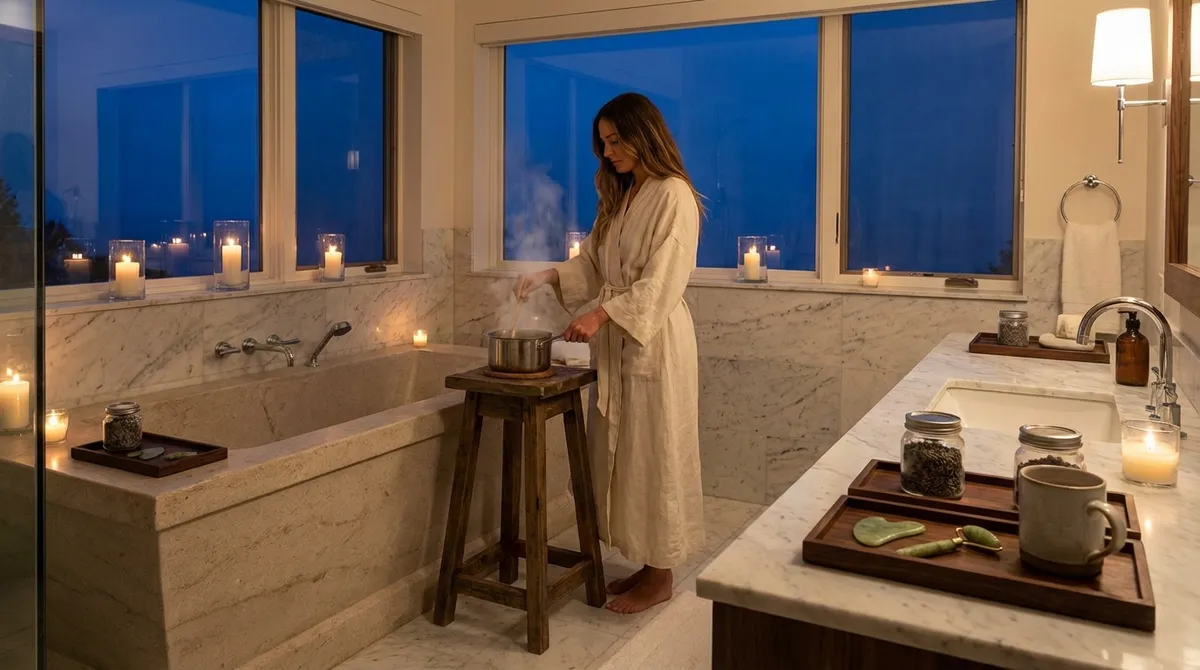
- Prepare a carefully chosen herbal infusion (for example, lemon balm with a hint of lavender), served in a vessel you genuinely enjoy using.
- Pair this with a single reflective practice: two or three lines of journaling, a brief body scan, or a gentle stretch sequence.
The point is not complexity; it is coherence. When the same cues, in the same order, appear each evening, your body begins to anticipate calm. Your herbal tea, your chosen scent, your lighting, your posture—they become a choreography of reassurance.
Over time, this quiet ritual does more than reduce stress. It conveys an unmistakable message to yourself: your inner world is worth curating with the same care you give to your external life. That sense of self-worth, reinforced nightly, may be the most powerful natural remedy of all.
Conclusion
Natural remedies for mental calm are most potent when treated not as rustic curiosities or wellness fads, but as components in a sophisticated system of self-care. When you protect your nervous system like a luxury material, design your space as a sanctuary, curate an intelligent herbal portfolio, leverage micro-rest, and anchor it all in consistent ritual, you are not just managing stress—you are cultivating a refined, quietly resilient way of being.
Calm, in this light, is not accidental. It is an art form, crafted moment by moment, with nature as your most enduring collaborator.
Sources
- National Center for Complementary and Integrative Health (NCCIH) – Stress and Relaxation Techniques – Overview of evidence-based approaches to stress management and relaxation
- NCCIH – Herbs at a Glance – Research summaries and safety considerations for commonly used herbs such as chamomile, valerian, and lemon balm
- Harvard T.H. Chan School of Public Health – Nutrition and Mental Health – Discussion of how diet, hydration, and key nutrients influence mood and cognitive health
- Cleveland Clinic – Breathing Exercises for Anxiety – Practical guidance on breathing patterns that support the parasympathetic nervous system
- Mayo Clinic – Sleep Hygiene: Healthy Sleep Habits – Evidence-based sleep practices that enhance the effectiveness of natural calming strategies
Key Takeaway
The most important thing to remember from this article is that this information can change how you think about Natural Remedies.